



From school and extracurriculars to friend groups and social media, today’s teens are dealing with a lot every day.
So it’s no surprise that adolescence often brings sudden skin flare-ups, energy dips, and those unpredictable mood swings that seem to come out of nowhere. And while puberty and hormones often get the blame, many of these challenges can be traced back to someplace unexpected: the gut.
Supporting their gut health early on, and nurturing it throughout the teen years, can play a powerful role in helping teens feel their best, inside and out.
Let’s take a closer look at what’s really going on with your teen, and why a healthy gut may be the key to smoother adolescence and lasting benefits.
What Is Gut Health?
Inside the digestive system, the gut microbiome is home to a vast community of bacteria that play a role in everything from digestion to immune function and even mood. Some of these are “good” (beneficial) bacteria, supporting optimal health and a balanced mental state. Others are “bad” (pathogenic) bacteria, which can potentially disrupt both physical and emotional well-being.
The colonies of good and bad bacteria coexist in a precarious balance, fighting for space and resources. When one flourishes, it tends to crowd out the other. Ideally, the beneficial bacteria are thriving, keeping the harmful ones in check and maintaining stability throughout the body.
But if that balance shifts and bad bacteria take over, a state known as dysbiosis can occur. When that imbalance tips, you start seeing things like:[1]
- Bloating, gas, indigestion, and other digestive issues
- Unpredictable mood swings
- Fatigue or exhaustion, even after getting plenty of rest
- Acne and other skin concerns
- A weakened immune response
So your teen’s moodiness after a long school day or their tendency to sleep until noon on weekends? It’s easy to chalk this up to “typical teen behavior.” But sometimes there’s more going on; it may be a direct reflection of what’s happening in the gut.
 Want to listen instead of read? CLICK HERE
Building the Microbiome Starts with Day One
Your teen’s gut microbiome doesn’t just appear overnight. It began developing at birth, shaped by early exposure from mom and continuing to develop from there.
At birth, babies who are born via vaginal delivery pick up their mother’s vaginal and intestinal bacteria, giving them a similar microbiome. During a C-section, however, babies get the majority of their gut bacteria from their mother’s skin (plus bacteria in the delivery room), which can result in a less diverse microbiome.[2] This initial exposure to bacteria helps “seed” the gut.
From there, the first 1,000 days play a major role in developing the gut microbiome.[3] Breast milk, bottle feeding, skin-to-skin contact, their daily environment, and the introduction to solid foods all help shape a baby’s microbiome.
These early experiences set the tone for digestion, immune health, and overall physiological function. But the microbiome isn’t fixed. It continues to evolve in response to diet, environment, and even lifestyle.
By the time the teen years roll around, the gut is still very much a work in progress. And with all the changes happening during adolescence, keeping it balanced becomes more important than ever.

4 Factors that Cause Major Gut Shifts During the Teen Years
As babies grow into adolescence, their microbiomes undergo major shifts, moving into a more diverse, adult-like environment.[4] In fact, development is so swift and significant that it’s often referred to as the “second window of opportunity” (after those crucial first 1,000 days of life).
These are some of the biggest players in adolescent gut health.
1. Hormones
One of the biggest drivers of this microbiome evolution is rising hormone levels, particularly estrogen, progesterone, and cortisol. As teen bodies go through puberty, hormonal changes can influence the microbiome’s balance, helping to shape which bacteria thrive. Hormones and gut shifts can also cause some digestive discomfort, including bloating and gas.[5]
At the same time, the gut can impact how strongly teens feel the effects of those hormonal changes, especially when it comes to stress levels and mood. Add in other stress factors (schoolwork, peer pressure, family challenges, their changing bodies, and more), and the gut-hormone relationship can quickly start a downward spiral.
2. Diet
Most teens gravitate towards “junk” food: sodas, chips, vending machines, and drive-thru meals between activities. And while these snacks are quick and cheap, they can also disrupt gut balance.
The typical teen diet, high in sugar and processed food, can lead to less microbial diversity and more bad bacteria, throwing the microbiome off-balance.[6]
3. Stress
Whether it’s academic, packed schedules, friendship dynamics, or social media, teens are under immense, and almost constant, pressure. And it can directly impact gut health.
The gut-brain axis exists at every age, a two-way highway that sends messages between the microbiome and the nervous system. If everything is working as it should, these messages are generally positive and support good health. But if either of these is disrupted, it could be sending “distress signals” that impact the other.[8]
For example, the stress of exam week can upset a teen’s stomach. And if diet or hormones throw a teen’s microbiome off-balance, it could make it more difficult for them to manage everyday stress.
4. Antibiotics
From school to sports to just hanging out, teens spend a lot of time around other teens. And that close contact can result in them catching all sorts of illnesses, eventually leading to a prescription for antibiotics.
While sometimes necessary, antibiotics don’t just target harmful bacteria. They also wipe out the population of good microbes in your teen’s gut, leaving room for less beneficial bacteria to grow and making it harder to maintain balance.
Is Your Teen’s Gut Imbalanced?
With so much going on, gut imbalances can become common during the teen years. And when the gut is out of balance, it can show up in ways that go far beyond digestion, affecting how teens feel and function every day.
While some of these may seem like “just part of growing up,” they’re actually clear signs that something is going on with your teen’s gut.
- Digestion: This is where gut issues are most noticeable. Teens might experience bloating, gas, indigestion, constipation, or stomach aches when their microbiomes aren’t properly balanced, making everyday eating feel uncomfortable or unpredictable.[8]
- Skin issues: Breakouts are often blamed on teen hormones, but the gut also plays a role.[9] An imbalanced microbiome (dysbiosis) can contribute to inflammation throughout the body, including the skin where it shows up through things like acne or flare-ups. Another factor? If the gut is less than healthy, it can impact how effectively the body eliminates waste, which can also affect skin health.
- Mood: Emotional ups and downs are normal in adolescence, but gut health (through the gut-brain axis) can play a role in the intensity or frequency of those mood swings.[10] If your teen is more prone than usual to mood swings, stress, or trouble focusing, it could be coming from their gut.
- Energy: When teens are juggling a flurry of activities or staying up late to study, it might seem normal for them to be feeling run down. But gut health might be coming into play here, too. The gut is responsible for breaking down and absorbing nutrients, and if it’s not doing its job properly, it can leave teens feeling constantly tired…even when they’re getting plenty of sleep.
With effects that reach the whole body, supporting your teen’s gut health is essential to their overall well-being. And that’s where probiotics come in.
How Probiotics Can Support Your Teen’s Gut Health
Probiotics are live, beneficial bacteria that can contribute to a healthy gut. Think of them as reinforcements, supporting the colonies of good bacteria your teen’s microbiome needs to function at its best.
One of the key benefits of probiotics is replenishing good bacteria, allowing them to thrive and naturally crowd out the less helpful microbes. So when hormones and lifestyle factors throw things off, probiotics can help promote and maintain a stable gut environment, which can have a positive ripple effect throughout the body.
That said, not all probiotics are created equal. Many strains cannot survive the harsh journey through the digestive system, meaning they never make it to where they’re needed. Spore probiotics, however, come equipped with a hardy endospore shell that protects them until they reach the gut, 100% alive and ready to work.
And certain probiotic strains could have a stronger impact on your teen’s gut:
- Bacillus clausii can resist the damage caused by antibiotics, which means it can help repopulate the gut with good bacteria. It also supports gut barrier function and integrity and contributes to gut microbiota diversity and homeostasis.[11]
- Bacillus coagulans supports digestion and overall gut health, helping with occasional issues like diarrhea, bloating, and abdominal pain. It also encourages the production of digestive enzymes that help with nutrient absorption, a key player in maintaining teen energy levels.[12]
- Bacillus indicus HU36™ helps create 15 powerful antioxidants right where your teen’s body can use them most effectively: in their gut. Along with supporting a healthy microbiome, antioxidants also help counter oxidative stress and support a healthy inflammatory response.[13,14]
- Bacillus subtilis HU58™ is one of the most widely researched probiotics, known for its ability to form 12 potent defenders that can help support microbial balance. It also encourages nutrient absorption and promotes the growth of good bacteria.[15]
Together, these spore strains form a powerful combination that helps support a healthy, balanced gut, which in turn encourages digestive comfort, steady energy, emotional well-being, and healthy-looking skin.
Just Thrive Gut Health Products

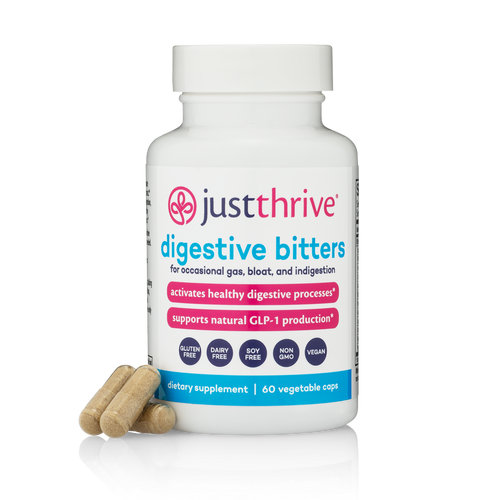
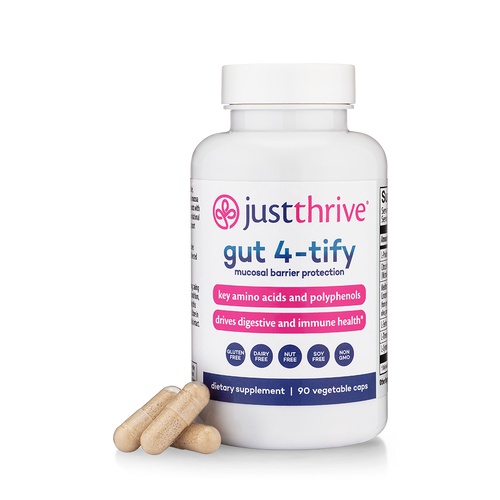

Give Your Teen the Gut Support They Need
While daily habits like improving their diet or managing stress can play a role in your teen’s gut health, they need consistent, reliable support to keep their gut balanced. And that starts with the right probiotic.
Just Thrive Probiotic Gummies are a daily, chewable supplement that provides your teen with four potent beneficial bacteria:
- Bacillus indicus HU36™
- Bacillus subtilis HU58™
- Bacillus coagulans
- Bacillus clausii
These high-quality spore probiotics deliver real results, supporting microbiome balance, digestion, immune function, and overall well-being. And with their amazing “berry blast” flavor, you won’t have to fight with your teen—they’ll actually look forward to taking their probiotic!
>> Support your teen’s gut health with Just Thrive Probiotic Gummies.
Not sure if Just Thrive Probiotic Gummies will work for your teen? We’ve got this covered.
Every single Just Thrive purchase is covered by our Bottom of the Bottle, 100% money back guarantee. So your teen can try Just Thrive Probiotic Gummies to see if it works for them…. And we’re betting they will!
But if for any reason they don’t feel a difference, you can ask for a full product refund at any time. Even if it’s been 3 weeks, 3 months, or 3 years… Even if the bottle is empty.

Sources
- Carías Domínguez AM, de Jesús Rosa Salazar D, Stefanolo JP, Cruz Serrano MC, Casas IC, Zuluaga Peña JR. Intestinal Dysbiosis: Exploring Definition, Associated Symptoms, and Perspectives for a Comprehensive Understanding - a Scoping Review. Probiotics Antimicrob Proteins. 2025 Feb;17(1):440-449. doi: 10.1007/s12602-024-10353-w. Epub 2024 Sep 5. PMID: 39235661; PMCID: PMC11832579.
- Mueller NT, Bakacs E, Combellick J, Grigoryan Z, Dominguez-Bello MG. The infant microbiome development: mom matters. Trends Mol Med. 2015 Feb;21(2):109-17. doi: 10.1016/j.molmed.2014.12.002. Epub 2014 Dec 11. PMID: 25578246; PMCID: PMC4464665.
- Pantazi AC, Balasa AL, Mihai CM, Chisnoiu T, Lupu VV, Kassim MAK, Mihai L, Frecus CE, Chirila SI, Lupu A, Andrusca A, Ionescu C, Cuzic V, Cambrea SC. Development of Gut Microbiota in the First 1000 Days after Birth and Potential Interventions. Nutrients. 2023 Aug 20;15(16):3647. doi: 10.3390/nu15163647. PMID: 37630837; PMCID: PMC10457741.
- Carson MD, Westwater C, Novince CM. Adolescence and the Microbiome: Implications for Healthy Growth and Maturation. Am J Pathol. 2023 Dec;193(12):1900-1909. doi: 10.1016/j.ajpath.2023.07.004. Epub 2023 Sep 4. PMID: 37673331; PMCID: PMC10699129.
- Esposito P, Ismail N. Linking Puberty and the Gut Microbiome to the Pathogenesis of Neurodegenerative Disorders. Microorganisms. 2022 Oct 31;10(11):2163. doi: 10.3390/microorganisms10112163. PMID: 36363755; PMCID: PMC9697368.
- Fülling C, Lach G, Bastiaanssen TFS, Fouhy F, O'Donovan AN, Ventura-Silva AP, Stanton C, Dinan TG, Cryan JF. Adolescent dietary manipulations differentially affect gut microbiota composition and amygdala neuroimmune gene expression in male mice in adulthood. Brain Behav Immun. 2020 Jul;87:666-678. doi: 10.1016/j.bbi.2020.02.013. Epub 2020 Feb 28. PMID: 32119901.
- McVey Neufeld KA, Luczynski P, Dinan TG, Cryan JF. Reframing the Teenage Wasteland: Adolescent Microbiota-Gut-Brain Axis. Can J Psychiatry. 2016 Apr;61(4):214-21. doi: 10.1177/0706743716635536. Epub 2016 Feb 24. PMID: 27254413; PMCID: PMC4794958.
- Saeed NK, Al-Beltagi M, Bediwy AS, El-Sawaf Y, Toema O. Gut microbiota in various childhood disorders: Implication and indications. World J Gastroenterol. 2022 May 14;28(18):1875-1901. doi: 10.3748/wjg.v28.i18.1875. PMID: 35664966; PMCID: PMC9150060.
- Lee YB, Byun EJ, Kim HS. Potential Role of the Microbiome in Acne: A Comprehensive Review. J Clin Med. 2019 Jul 7;8(7):987. doi: 10.3390/jcm8070987. PMID: 31284694; PMCID: PMC6678709.
- Yu Bai, Chang Shu, Shufang Zhang, Gui Gui, Rui Zhang, Siye Yu, Chengzhen Dong, Rui Duan, Xu Ai, Ruijie Liu, Hexiao Shen, Yongling Lv, Gaohua Wang, The role of gut microbiota in adolescent depression: Insights from adverse childhood experiences, Journal of Affective Disorders, Volume 392, 2026, 120141,ISSN 0165-0327, https://doi.org/10.1016/j.jad.2025.120141.
- Ghelardi E, Abreu Y Abreu AT, Marzet CB, Álvarez Calatayud G, Perez M 3rd, Moschione Castro AP. Current Progress and Future Perspectives on the Use of Bacillus clausii. Microorganisms. 2022;10(6):1246. Published 2022 Jun 17. doi:10.3390/microorganisms10061246
- Jiang Cao, Zhiming Yu, Wenyin Liu, Jianxin Zhao, Hao Zhang, Qixiao Zhai, Wei Chen, Probiotic characteristics of Bacillus coagulans and associated implications for human health and diseases, Journal of Functional Foods, Volume 64, 2020, 103643, ISSN 1756-4646, https://doi.org/10.1016/j.jff.2019.103643.
- Yala Stevens, Iris Pinheiro, Bouke Salden, Cindy Duysburgh, Selin Bolca, Jeroen Degroote, Maryam Majdeddin, Noémie Van Noten, Béatrice Gleize, Catherine Caris-Veyrat, Joris Michiels, Daisy Jonkers, Freddy Troost, Sam Possemiers, Ad Masclee, Effect of a carotenoid-producing Bacillus strain on intestinal barrier integrity and systemic delivery of carotenoids: A randomised trial in animals and humans, Journal of Functional Foods, Volume 80, 2021, 104445, ISSN 1756-4646, https://doi.org/10.1016/j.jff.2021.104445.
- Tran JT, Diaz MJ, Rodriguez D, Kleinberg G, Aflatooni S, Palreddy S, Abdi P, Taneja K, Batchu S, Forouzandeh M. Evidence-Based Utility of Adjunct Antioxidant Supplementation for the Prevention and Treatment of Dermatologic Diseases: A Comprehensive Systematic Review. Antioxidants (Basel). 2023 Jul 27;12(8):1503. doi: 10.3390/antiox12081503. PMID: 37627498; PMCID: PMC10451863.
- Guannan Li, Yujie Tong, Yi Xiao, Shengquan Huang, Tianfu Zhao, Xuejuan Xia, Probiotic Bacillus subtilis contributes to the modulation of gut microbiota and blood metabolic profile of hosts, Comparative Biochemistry and Physiology Part C: Toxicology & Pharmacology, Volume 272, 2023, 109712, ISSN 1532-0456, https://doi.org/10.1016/j.cbpc.2023.109712.


