



You may not have known this, but most probiotics bought off the shelf don’t survive the trip to your gut microbiome. Sometimes they’re already dead in the bottle. Other times, they’re killed off by your body heat or stomach acid.
But that doesn’t mean they don’t still provide some value. In fact, research suggests that inactivated (dead) probiotic cells can still support gut function and general well‑being… most of the time.
Unfortunately, they can make some health conditions like SIBO or histamine intolerance much worse. So it’s important to choose probiotics that fit your digestive needs and tolerance.
And that can be tricky to figure out… unless you know what to look for.
Quick Answer: Yes, dead (inactivated) bacteria can still help your gut. Even when probiotic cells die in the bottle or during digestion, they carry metabolic byproducts and cellular pieces that research suggests can support gut function and general well-being. Live probiotics offer more, though, because only living cells keep producing postbiotics, the bioactive compounds that support immunity, microbiome balance, and a healthy gut barrier. Fermented foods deliver mostly dead probiotics and postbiotics and work well for many people, but they can worsen conditions like SIBO or histamine intolerance. For a sensitive gut, spore-forming probiotics offer a gentle option because they stay dormant until they reach the large intestine and emerge alive.
Do Probiotics Work When They Are Dead?
Yes, to a degree. Scientists once believed dead, or inactivated, probiotics did nothing, but studies now suggest they may provide some of the same gut-supporting benefits as live strains. Live probiotics, though, can deliver more, especially through postbiotics.
Probiotics are beneficial bacteria that support digestive and immune health. Their main home is the gut microbiome, where they share space with trillions of other probiotic bacteria along with some pathogens and other types of microbes.
And while scientists previously believed that dead, sometimes referred to as inactivated, probiotics do nothing at all, we now know that’s not correct. Studies suggest that inactivated probiotics may provide some of the same gut‑supporting benefits as live strains.[1]
Dead probiotics carry all of their metabolic byproducts and cellular pieces with them.
While dead probiotics do offer some health benefits, live probiotics can deliver additional support. Especially when it comes to postbiotics.
 Want to listen instead of read? CLICK HERE
What Are Postbiotics and How Do They Work?
Postbiotics are bioactive compounds created by probiotics, including antimicrobial substances, antioxidants, enzymes, amino acids, vitamins, and short chain fatty acids. Many of them support immune function, microbiome balance, and a healthy mucosal barrier.
Postbiotics are bioactive compounds created by probiotics. Some of them are designed to protect the probiotic, like substances that repel or kill pathogens. Others are produced when probiotics consume their favorite foods, prebiotics. And when the probiotic itself breaks down, its components become postbiotics too.
However they come into being, many postbiotics help support immune function, gut microbiome balance, and a healthy mucosal barrier, which can contribute to overall wellness and deliver significant health benefits throughout your body.[2,3] A scientific review of 16 studies involving 477 participants found that postbiotics may help support exercise capacity, body composition, and positive mood states.[4]
Examples of postbiotics include:[5]
- Antimicrobial substances
- Antioxidants
- Pieces of bacterial cells
- Enzymes
- Amino acids
- Vitamins, including vitamin K and B vitamins
- Short chain fatty acids (SCFAs)
Postbiotics like these support both gut health and overall wellness.

Are Fermented Foods Good for Everyone?
Fermented foods help many people because they deliver prebiotics, dead probiotics, and postbiotics. But for very sensitive digestion, or conditions like SIBO or histamine intolerance, they can sometimes cause more discomfort.
You may be eating fermented foods like sauerkraut, yogurt, and kefir to boost your gut health. And most of the time, that’s a good idea. They can help keep your gut microbiome in healthy balance, keep you regular, and even aid your immune system.
During fermentation, microbes (like bacteria and yeasts) break down certain components of food, which can make them easier to digest for some people. In this process, prebiotics are created and probiotic bacteria may grow and multiply… at first. After processing, fermented foods often contain only dead probiotics and their postbiotics. So fermented foods can be good for a healthy gut because they deliver prebiotics, dead probiotics, and some postbiotics into your system.
But not all microbes that thrive during fermentation are beneficial. Undesirable bacteria and yeasts can survive and flourish during the process too. In a healthy gut, their numbers aren’t enough to knock the microbiome out of balance. But if your digestive system is very sensitive, fermented foods can sometimes cause even more discomfort.
With SIBO, for example, the microbes and prebiotics in fermented foods can make their way to your small intestines. They can feed both probiotic and pathogenic bacteria in the environment, feeding the overgrowth.
Fermented foods can also trigger histamine sensitivity because they contain naturally occurring compounds called biogenic amines.[6] Those include histamine, and it can become concentrated during fermentation.[7] When histamine enters your digestive tract, it sets off an overreactive immune response that can cause a rash of symptoms and irritate other gut issues.[8]
So you may want to think twice about incorporating fermented foods into your diet when you’re looking for microbiome support.
What Is the Best Probiotic for a Sensitive Gut?
Spore-forming probiotics can offer a gentle way to support gut balance. They stay dormant in a protective shell until they reach the large intestine, then emerge alive to help crowd out unwanted bacteria and support a diverse microbiome.
A well-balanced gut microbiome is an essential part of good health in your gut and beyond. Maintaining that balance with probiotics can help ensure it stays that way.
If your gut tends to be on the sensitive side though, you don’t want to send it over the edge. Spore‑forming probiotics can offer a gentle way to support gut balance.[9,10]
Unlike most probiotics, spore probiotics stay encased in a protective endospore shell until they’ve gotten all the way to your large intestine where they belong. They remain dormant until they reach your gut microbiome, where they shed their shells and emerge alive and ready to get to work.
In the large intestine, spore probiotics help to crowd out unwanted bacteria to create a welcoming environment for a wide variety of beneficial bacteria. Supporting desirable bacterial populations helps maintain healthy balance in the gut microbiome.
| Dead (inactivated) probiotics | Live spore probiotics | |
|---|---|---|
| Provide metabolic byproducts and cell pieces | Yes | Yes |
| Keep producing postbiotics in the gut | No, they are no longer active | Yes, while alive in the gut |
| Survive heat and stomach acid to arrive alive | No | Yes, protected by an endospore shell |
| Fit for a sensitive gut | Depends on the source (fermented foods may not suit everyone) | Often a gentle option |
Frequently Asked Questions About Dead vs. Live Probiotics
Do dead probiotics actually do anything?
Yes. Research suggests inactivated (dead) probiotic cells can still support gut function and general well-being because they carry their metabolic byproducts and cellular pieces with them. Live probiotics can offer additional support, especially through postbiotics.
What are postbiotics?
Postbiotics are bioactive compounds created by probiotics, including antimicrobial substances, antioxidants, enzymes, amino acids, certain vitamins, and short chain fatty acids. Many of them help support immune function, gut microbiome balance, and a healthy mucosal barrier.
Are fermented foods good for everyone?
Not always. Fermented foods deliver prebiotics, dead probiotics, and some postbiotics, which is helpful for many people. But for very sensitive digestion, or conditions like SIBO or histamine intolerance, they can sometimes cause more discomfort.
Why might fermented foods bother a sensitive gut?
With SIBO, the microbes and prebiotics in fermented foods can reach the small intestine and feed an overgrowth. Fermented foods also contain biogenic amines like histamine, which can trigger an overreactive response in people with histamine sensitivity.
What probiotic is best for a sensitive gut?
Spore-forming probiotics can offer a gentle way to support gut balance. They stay encased in a protective shell until they reach the large intestine, then emerge alive to help crowd out unwanted bacteria and support a diverse, balanced microbiome.
Support your best gut health. Try Just Thrive Probiotic today!
Just Thrive Probiotic (30/90)
The only probiotic guaranteed to arrive 100% alive
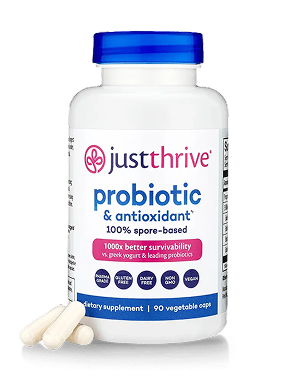


Keep Sensitive Guts in Healthy Balance with Just Thrive
When your gut microbiome is well-balanced, you can enjoy comfortable digestive health every day. And spore probiotics can help you keep that comfort going… even for people with sensitive guts.
Just Thrive Probiotic contains a clinically studied team of spore probiotics including:
- Bacillus indicus HU36™
- Bacillus subtilis HU58™
- Bacillus coagulans (SC-208)
- Bacillus clausii (SC-109)
Just Thrive Probiotic helps you maintain a well-balanced gut and supports a flourishing population of diverse beneficial probiotic bacteria to promote digestive, immune, and overall wellness.
Not quite sure about trying Just Thrive Probiotic? We can help with that.
EVERY Just Thrive purchase is covered by our Bottom of the Bottle, 100% money back guarantee.
That means you can try it to see if it works for you… and we’re betting you’re going to love the way you feel.
But if for any reason you don’t feel a difference, you can ask for a full product refund at any time. Even if it’s 3 months or 3 years later. Even if the bottle is empty!

Sources
- Akter S, Park JH, Jung HK. Potential Health-Promoting Benefits of Paraprobiotics, Inactivated Probiotic Cells. J Microbiol Biotechnol. 2020 Apr 28;30(4):477-481.
- Zhao X, et al. Unlocking the power of postbiotics: A revolutionary approach to nutrition for humans and animals. Cell Metab. 2024 Apr 2;36(4):725-744.
- Ma L, Tu H, Chen T. Postbiotics in Human Health: A Narrative Review. Nutrients. 2023 Jan 6;15(2):291.
- Kerksick CM, Moon JM, Jäger R. It's Dead! Can Postbiotics Really Help Performance and Recovery? A Systematic Review. Nutrients. 2024 Mar 1;16(5):720.
- Wegh CAM, et al. Postbiotics and Their Potential Applications in Early Life Nutrition and Beyond. Int J Mol Sci. 2019 Sep 20;20(19):4673.
- Doeun D, Davaatseren M, Chung MS. Biogenic amines in foods. Food Sci Biotechnol. 2017 Dec 13;26(6):1463-1474.
- Sánchez-Pérez S, et al. Low-Histamine Diets: Is the Exclusion of Foods Justified by Their Histamine Content? Nutrients. 2021 Apr 21;13(5):1395.
- Schnedl WJ, Enko D. Histamine Intolerance Originates in the Gut. Nutrients. 2021 Apr 12;13(4):1262.
- Catinean A, et al. Bacillus spp. Spores-A Promising Treatment Option for Patients with Irritable Bowel Syndrome. Nutrients. 2019 Aug 21;11(9):1968.
- Gabrielli M, Lauritano EC, Scarpellini E, Lupascu A, Ojetti V, Gasbarrini G, Silveri NG, Gasbarrini A. Bacillus clausii as a treatment of small intestinal bacterial overgrowth. Am J Gastroenterol. 2009 May;104(5):1327-8.