



This blog has been updated for quality and relevancy on February 19, 2026.
Keystone species. It might be a new term for you, but it’s a category of gut bacteria that keep you at your healthiest!
Even with all the press around probiotics, keystone species are rarely mentioned, but they have the biggest impact on your life and health.
Keystone species exist in low abundance, yet have enormous effects on their ecosystems – the environments where they live. They encourage biodiversity, meaning they help many other species thrive. If these special species disappear, they can’t be replaced with something else.
In fact, without the keystones, the whole ecosystem changes shape, almost always in a negative way.
And when it comes to your microbiome, your gut ecosystem also relies on special keystone species to promote diversity and support rich populations of beneficial bacteria (probiotics).
Quick Answer: Keystone species are gut bacteria that exist in low numbers but have an outsized effect on the whole microbiome, encouraging diversity and helping other beneficial bacteria thrive. The three most important are Akkermansia muciniphila, Faecalibacterium prausnitzii, and Bifidobacterium, which support metabolism, the gut barrier, and lifelong immune health. Everyday factors like antibiotics, stress, poor diet, glyphosate, and pesticides easily deplete them. The best way to nourish keystone species is to feed them their preferred prebiotic fibers, oligosaccharides (GOS, FOS, and XOS). A prebiotic blend of these three fibers helps keystone bacteria multiply and keeps the gut microbiome diverse and resilient.
What Are the Three Keystone Gut Bacteria?
The three keystone species are Akkermansia muciniphila, Faecalibacterium prausnitzii, and Bifidobacterium. The healthiest people tend to have strong populations of all three, and each produces special nutrients the body relies on.
Everyone has a different makeup of bacteria in their microbiome, the trillions of bacteria (good and bad) that live in the gut. BUT, the very healthiest people usually have strong populations of three species of beneficial bacteria known as keystone species:
- Akkermansia muciniphila
- Faecalibacterium prausnitzii
- Bifidobacterium
These keystone species can mean the difference between good health and bad. All three produce special nutrients that your body needs to keep your gut, and the rest of you, strong and vital.
 Want to listen instead of read? CLICK HERE
1. A. mucin Supports Your Metabolism
Akkermansia muciniphila, also known as A. mucin, plays a key role in metabolism; how your body transforms food into energy. That means it also has a big influence on your weight, cholesterol, and blood sugar levels.
In a clinical trial involving overweight and obese individuals, increases in A. muciniphila populations were associated with improvements in markers related to metabolic health[1], including:
- Support for healthy insulin sensitivity
- Improvements in cholesterol markers within normal ranges
- Reductions in measures of body fat
- Decreases in hip circumference
- Support for healthy body weight
Another study[2] found that individuals with more abundant A. muciniphila tended to have more favorable blood sugar and triglyceride markers, along with healthier patterns of body fat distribution.
2. F. Prau Helps Keep Your Gut Barrier Strong
Healthy guts contain an abundance of Faecalibacterium prausnitzii (or F. prau). This keystone probiotic species helps keep your gut strong and resilient, especially the delicate barrier that lines the inside of your colon.[3]
Your body needs an army of F. prau to keep that barrier healthy and strong so undigested food particles and toxins can’t escape from your gut into your bloodstream.
F. prau is also the biggest producer of a crucial nutrient, a short-chain fatty acid (SCFA) called butyrate. Butyrate reduces intestinal inflammation and nourishes cells in the colon.
People with serious intestinal disorders, such as Crohn’s disease, ulcerative colitis, and colorectal cancer, have been shown to have lower levels of F. prausnitzii.[4]
This has prompted growing interest in how supporting keystone probiotic strains may contribute to gut barrier integrity.

3. Bifidobacteria Set the Stage for Lifelong Health
Members of the Bifidobacterium genus are some of the first probiotics to appear in the gut microbiome after birth. These essential keystone bacteria support the developing immune system in the gut and beyond. In fact, a 2019 study found that infants with higher levels of Bifidobacteria showed stronger markers of immune response following routine vaccinations at age 2.[5]
Additionally, Bifidobacteria produce SCFAs like butyrate, which have been studied for their role in supporting colon health.[6]
These probiotic allies also help maintain balance by discouraging the overgrowth of less beneficial bacteria.
Something interesting about your body is that when you take the right probiotic, your body will supply itself with the correct balance of Bifidobacteria…and taking a probiotic with Bifidobacteria does NOT mean it will help to restore your gut, since most of those probiotics die before even making it all the way to the intestines, where they are needed.
What Depletes Your Keystone Gut Bacteria?
Keystone bacteria are easily depleted by everyday foes, including antibiotics, chronic stress, a poor diet, glyphosate and other weed killers, pesticides, and other environmental toxins. Counteracting these depleters every day is key to keeping keystone populations plentiful.
Unfortunately, keystone bacteria are very easily depleted by everyday foes, including
- Antibiotics
- Chronic stress
- Poor diet
- Glyphosate and other weed killers
- Pesticides
- Other environmental toxins
To keep your keystone populations alive, well, and plentiful, you need to counteract those “depleters” every day.
How Do You Nourish and Support a Keystone-Rich Gut?
The best way to nourish keystone species is to feed them their preferred prebiotic fibers, oligosaccharides such as GOS, FOS, and XOS. When keystone bacteria get plenty of these fibers, they multiply and help keep the whole gut microbiome in top shape.
Keystone bacteria set the stage for your overall health. Strengthening and supporting these crucial strains can have a significant impact on your health, both inside your gut and throughout your whole body. So it’s important to give your keystone strains what they need to survive, thrive, and flourish.
Feeding Your Keystone Strains
They’re preferred food is oligosaccharides, special prebiotic fibers that journey through your digestive system until they get to your colon, where they preferentially feed keystone species and other beneficial bacteria. Oligosaccharides come in three main forms:
- Galactooligosaccharides (GOS)
- Fructooligosaccharides (FOS)
- Xylooligosaccharides (XOS)
And your keystone strains love their favorite foods. When they get plentiful amounts of these prebiotics, all three types of keystone bacteria are more likely to thrive and multiply, keeping your gut microbiome in top shape.
Studies show that…
- FOS increases A. muciniphila populations by 8,000% in just 5 weeks
- FOS increases F. prausnitzii populations by 100% in just 4 weeks
- GOS increases Bifidobacteria populations by 10% in 6 weeks
- XOS increases Bifidobacteria populations by 9% in 8 weeks
(Credit: Microbiome Labs)
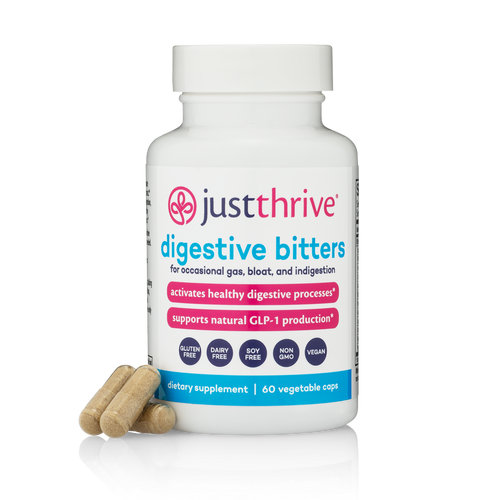
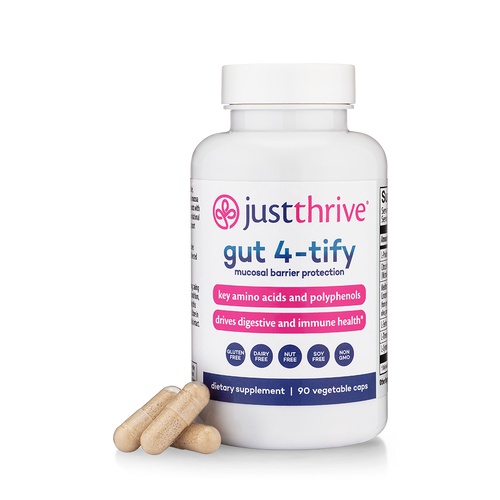
Just Thrive Gut Health Products


Frequently Asked Questions About Keystone Gut Bacteria
What are keystone species in the gut?
Keystone species are gut bacteria that exist in low numbers but have an outsized effect on the whole microbiome. They encourage biodiversity and help many other beneficial bacteria thrive, so if they disappear the whole ecosystem can change for the worse.
What are the three keystone gut bacteria?
The three keystone species are Akkermansia muciniphila, Faecalibacterium prausnitzii, and Bifidobacterium. They support metabolism, gut barrier strength, and the developing immune system, respectively.
What depletes keystone gut bacteria?
Common depleters include antibiotics, chronic stress, a poor diet, glyphosate and other weed killers, pesticides, and other environmental toxins. Counteracting these every day helps keep keystone populations strong.
How do you nourish keystone gut bacteria?
Feed them their preferred prebiotic fibers, oligosaccharides such as GOS, FOS, and XOS. These fibers travel to the colon, where they preferentially feed keystone species and other beneficial bacteria.
What is the difference between a prebiotic and a probiotic?
A probiotic supplies beneficial bacteria, while a prebiotic supplies the fibers that feed them. A prebiotic blend of FOS, GOS, and XOS acts as fertilizer for beneficial bacteria, including keystone species.
Nourish Your Keystone Species with Just Thrive
Supporting keystone species becomes much easier with the right prebiotic blend.
Just Thrive PREbiotic contains a blend of FOS, GOS, and XOS designed to nourish a diverse population of beneficial bacteria, including keystone species. These targeted fibers act as fertilizer for only probiotic bacteria, helping support a balanced and resilient gut environment.
Plus, when combined with Just Thrive Probiotic, studies show it can more than DOUBLE your population of good bacteria. (Bundle and save on both here.)
You can get these three smart fibers in a convenient daily capsule or drink mix. The drink mix dissolves easily in water and can be added to your favorite beverage, while the capsules can be opened and mixed into food or drinks.
>> Nourish your gut's keystone species today and every day with Just Thrive PREbiotic.
Not sure if Just Thrive PREbiotic is right for you? We've got your back!
We’re confident that when you take the PREbiotic as directed, you’ll love the way you feel.
But if you aren’t completely happy, let us know. Every Just Thrive purchase comes with our Bottom of the Bottle, 100% money back guarantee. So, if you’re not satisfied with your purchase for any reason, you can request a full product refund at any time. Even if it’s been 3 days… 3 weeks… or 3 months. Even if the bottle is empty!

Sources
- Depommier C, Everard A, Druart C, et al. Supplementation with Akkermansia muciniphila in overweight and obese human volunteers: a proof-of-concept exploratory study. Nat Med. 2019;25(7):1096-1103. doi:10.1038/s41591-019-0495-2
- Dao MC, Everard A, Aron-Wisnewsky J, et al. Akkermansia muciniphila and improved metabolic health during a dietary intervention in obesity: relationship with gut microbiome richness and ecology. Gut. 2016;65(3):426-436.
- Martín R, Miquel S, Benevides L, et al. Functional Characterization of Novel Faecalibacterium prausnitzii Strains Isolated from Healthy Volunteers: A Step Forward in the Use of F. prausnitzii as a Next-Generation Probiotic. Front Microbiol. 2017;8:1226. Published 2017 Jun 30. doi:10.3389/fmicb.2017.01226
- Lopez-Siles M, Duncan SH, Garcia-Gil LJ, et al. Faecalibacterium prausnitzii: from microbiology to diagnostics and prognostics. ISME J. 2017;11(4):841-852. doi:10.1038/ismej.2016.176
- Huda MN, Ahmad SM, Alam MJ, et al. Bifidobacterium abundance in early infancy and vaccine response at 2 years of age. Pediatrics. 2019;143(2):e20181489. doi:10.1542/peds.2018-1489
- O'Callaghan A, van Sinderen D. Bifidobacteria and Their Role as Members of the Human Gut Microbiota. Front Microbiol. 2016;7:925. Published 2016 Jun 15. doi:10.3389/fmicb.2016.00925


