



Stress never seems to stop. You feel upset… edgy… irritated… practically all the time. Your neck and shoulders tense up. Your brain doesn’t want to work or focus or decide what to have for dinner. And your gut keeps churning and bloating and generally feeling off.
It seems like you can never calm all the way down. And there’s a reason for that.
You’re stuck in a stress cycle, super-charged by faulty messages between your brain and your gut. That leads to perpetual feelings of stress, trouble sleeping, uncomfortable gut issues, and more issues you wish would disappear.
That’s why you need to take a two-pronged approach to destressing and promoting whole-body calm. And that all begins with your gut.
Quick Answer: Chronic stress is often fueled by faulty signaling between the brain and gut, so the most effective approach works on both at once. The two prongs are: first, rebalance your gut microbiome to shut down LPS toxins that keep the stress response switched on, using clinically studied spore probiotics; and second, support your brain and nervous system directly with calming probiotics like Bifidobacterium longum 1714, which help your body produce GABA and manage stress hormones. Together these steps help interrupt the stress cycle so your body can fully calm down.
What are the hidden symptoms of chronic stress?
Beyond the obvious signs like irritability, muscle tension, and headaches, long-term stress can quietly drive symptoms that seem unrelated, such as high blood sugar, blood pressure spikes, joint pain, digestive issues, and mood changes. Breaking the stress cycle can help ease this wider fallout.
You’re familiar with the obvious symptoms of stress: Irritability, muscle tension, insomnia, headaches, stomachaches. They’re how you know when you feel stressed out.
But living in a long-term stress cycle can cause other symptoms that you can’t see clearly or that don’t seem to connect. Those include things like:
- High blood sugar
- Altered immune response
- Unbalanced inflammatory responses
- Blood pressure spikes
- Joint pain
- Sexual dysfunction
- Anxiety and depression
- Diarrhea
- Constipation
Breaking the stress cycle – and letting your body fully calm down – can help ease all of this stress fallout. But you have to interrupt that cycle in the right way to really make a difference.
What does stress actually do inside your body?
Stress triggers your built-in fight-or-flight alarm, which shifts energy toward survival and activates an inflammatory response, mainly in the brain and gut. Normally the system shuts off once the stressor passes, but with chronic stress it can stay switched on.
You face dozens of different stressors – things like work deadlines, arguments, and traffic jams – all the time. But they all have the same effects on your body.
Your internal alarm system is pre-programmed with fight-or-flight responses that kick in any time you feel stress… even if you aren’t facing physical danger. Your body shuts down some functions and activates others, making sure all of your energy gets directed toward survival. A normal stress reaction includes triggering an inflammatory response, mainly in your brain and gut as an extra protective measure.
Once the stressor disappears and the danger has passed, the entire stress response shuts down and your whole body relaxes. With chronic stress, though, the alarm system never fully shuts down. And that can lead to a prolonged stress response… and all of those lingering stress effects.
How do gut toxins keep your stress response switched on?
When the gut is out of balance, harmful bacteria release LPS toxins that can damage the gut barrier and slip into the bloodstream. Your immune system responds with ongoing inflammation, which keeps the body primed for stress until the gut is rebalanced.
Your gut microbiome contains trillions of bacteria. A healthy gut contains a highly diverse population of beneficial probiotic bacteria along with some stray pathogenic bacteria.
These pathogens have a different structure than probiotic bacteria. Their cell membranes include lipopolysaccharides, or LPS toxins. And when those pathogens die off, the LPS toxins get released and do damage wherever they can.
In a healthy gut, probiotic bacteria keep LPS toxins under control. But when your gut is out of balance – called dysbiosis – and pathogens outnumber probiotics, LPS toxins can cause serious problems. They start by attacking your protective gut barrier, a sort of defensive wall that keeps food particles, pathogens, and toxins safely inside your gut so they can’t enter your bloodstream.
When your gut barrier gets too damaged by LPS toxins, you end up with a leaky gut. Then those LPS toxins escape into your bloodstream, where they can circulate throughout your body.
When your immune system detects those circulating LPS toxins, it goes on the attack, triggering a proper inflammatory response to tackle the threat. And with leaky gut, the LPS toxins keep coming… forcing your immune system to constantly respond. That makes your body even more vulnerable to stressors… and makes it harder to ever turn off the stress reaction.
Bottom line: Until your gut is back in balance, your body faces a constant stream of internal stressors.
What is the 2-pronged approach to beating stress?
The two-pronged approach means rebalancing your gut microbiome to shut down LPS toxins, then supporting your brain and nervous system so they can handle stressors and fully calm down. Spore probiotics and calming probiotic strains help with both steps.
When you’re working to break the stress cycle, you need to do two important things:
- Get your gut microbiome in healthy balance to wipe out the LPS toxin threat
- Help your brain and nervous system deal with stressors more effectively so you can fully calm down
Step 1: Balance your gut to shut down LPS toxins
To control LPS toxins and reboot a healthy inflammatory response, you need to get your gut microbiome in healthy balance. The easiest – and best – way to do that is with a clinically studied combination of spore probiotics.
In a groundbreaking clinical trial, researchers learned that a specific blend of spore probiotics significantly reduced LPS toxins in just 30 days. The probiotic strains used in the study included:
- Bacillus subtilis HU58™
- Bacillus indicus HU36™
- Bacillus coagulans
- Bacillus clausii
Spore probiotics also quickly encourage microbiome balance by crowding out pathogens and creating space for a diverse population of probiotic bacteria. Beneficial gut bacteria help your body mount both healthy inflammatory responses and more effective stress responses.
Step 2: Manage stress with calm clarity
Probiotic bacteria also play a key role in your body’s stress shut-off protocol.
These beneficial bacteria help deliver a sense of calm through multiple pathways. They produce GABA, a calming neurotransmitter that helps your brain and body settle down. And some probiotic bacteria even help manage stress hormones, keeping them on track to turn off at the right time.
A special probiotic called Bifidobacterium longum 1714™ produces unique effects when it comes to calming your body and brain. B. longum 1714™ helps turn down signals so you can fully relax.
Clinical trials found that B. longum 1714™ helps manage stress by:
- Managing healthy stress responses
- Maintaining healthy sleep quality and duration while enduring stress
- Decreasing nervous brain activity and calming negative emotions during social stress
- Promoting concentration and clear thinking during periods of stress
Taking this 2-pronged approach to managing stress offers an effective pathway toward consistent calm, even in the face of everyday stressors.
Just Thrive Stress Support Products


Frequently Asked Questions About Stress and Gut Health
How are stress and gut health connected?
The brain and gut communicate constantly, so an unbalanced gut can keep your stress response activated, while chronic stress can worsen gut symptoms. Supporting the gut helps calm this two-way feedback loop.
What are LPS toxins and why do they matter for stress?
LPS (lipopolysaccharides) are toxins released by certain harmful gut bacteria. When the gut barrier is damaged, LPS can enter the bloodstream and trigger ongoing inflammation that keeps the body in a stressed state.
Can probiotics help with stress?
Certain probiotic strains can. They help produce GABA, a calming neurotransmitter, and help manage stress hormones, while spore probiotics support gut balance that underlies a healthy stress response.
What is the 2-pronged approach to managing stress?
It combines rebalancing the gut microbiome to reduce LPS toxins with directly supporting the brain and nervous system. Addressing both at once is more effective than focusing on either alone.
How long does it take to feel calmer?
Everyone is different, but in one clinical trial a specific blend of spore probiotics significantly reduced LPS toxins in about 30 days. Consistent daily support tends to work best over time.
Just Thrive Supports a 2-Pronged Approach to Healthy Stress Management
Effectively taking on stress requires a well-balanced gut microbiome and a healthy stress response.
Just Thrive Probiotic delivers a powerful blend of 4 proven spore probiotics that work quickly to keep your gut microbiome in healthy balance. Just Thrive Probiotic contains:
- Bacillus subtilis HU58™
- Bacillus indicus HU36™
- Bacillus coagulans
- Bacillus clausii
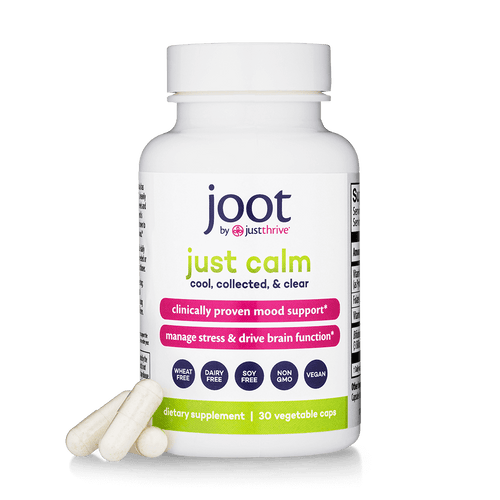
Just Calm contains clinically studied Bifidobacterium longum 1714™ and a stress-soothing blend of vitamins B6, B9, and B12.
Keep your brain and body cool and relaxed with Just Thrive Probiotic and Just Calm for a 2-pronged approach to healthy stress management.


