



Vaginal health isn’t necessarily something you think about every day… until you are forced to. Whether it’s unusual discharge, pain during sex, or a yeast infection that comes out of nowhere, these issues have a way of getting your attention, and fast.
What you might not realize is that while you’re certainly feeling these issues in your vagina, they may have started somewhere completely unexpected: your gut.
Most people think of gut health and vaginal wellness as being completely unrelated. But your body doesn’t work in isolated systems. It’s connected in ways that might surprise you, like the gut-vagina axis.
So if things feel off “down there,” your gut is likely part of the bigger picture. Let’s look at some ways you can support both, with simple, everyday habits.
What Is the Gut-Vagina Axis?
There’s a well-established connection between the bacteria in your gut and your vaginal health. This relationship, the gut-vagina axis, can influence everything from hormone balance to how well your body protects itself against unwanted bacteria or yeast.
Both your gut and vagina are home to their own microbiome, an environment containing a mix of good (beneficial) and bad (pathogenic) bacteria.
In your gut, these microbes impact things like your digestion and immune response, with effects that can be felt over your whole body. At the same time, beneficial bacteria in your vaginal microbiome help maintain a balanced environment by supporting a healthy pH level and keeping unwanted microbes in check.
When your gut is balanced, meaning there are more good bacteria than bad, it contributes to your overall well-being. But when that balance is thrown off, a condition known as dysbiosis, it can create ripple effects that your whole body will feel—including your vagina.1 And that’s where things get tricky, because gut dysbiosis can disrupt your vaginal microbiome, potentially triggering dysbiosis there, too.
Some signs of an unbalanced vaginal microbiome could include things like:
- unusual discharge (changes in color or consistency)
- a strong odor
- discomfort or even pain during sex
- occasional infections, like Bacterial Vaginosis (BV) or yeast infections
- things just don’t feel right: stinging, burning, or even itching
 Want to listen instead of read? CLICK HERE
How Do Your Gut and Your Vagina Communicate?
Your gut and vagina “talk” to each other in a few different ways, and some might surprise you.2
- Microbes: when the bacteria living in your gut make their way to your vagina
- Metabolites: your gut produces substances like short-chain fatty acids that can travel to your vagina
- Hormones: gut bacteria help regulate hormone levels, which can affect vaginal wellness
- Immune signals: your gut health can influence how your vagina responds to unwanted microbes
Here’s what all of that looks like in real life.
Microbes: Traveling Bacteria
So, how do the bacteria in your gut get to your vagina? It comes down to proximity and movement. The vaginal opening is very close to the anus. When your body eliminates bacteria, good or bad, it can transfer to your vaginal area.
A balanced gut may help support the presence of beneficial Lactobacillus species in the vaginal microbiome. These bacteria contribute to a thriving vaginal microbiome and help maintain a healthy (acidic) pH. Interestingly, the rectum can serve as a natural supply of these good bacteria, helping replenish and support vaginal wellness.
But harmful bacteria, like E. Coli, can also make their way to the vaginal area too. Instead of supporting balance, these traveling microbes could disrupt the vaginal microbiome, potentially increasing the likelihood of issues like BV, yeast infections, UTIs, and vaginal discomfort.
Which is why gut health can play a supportive role in vaginal balance. Because the gut serves as a reservoir for microbes, bacteria may transfer between these areas—potentially supporting balance or contributing to disruption, depending on the microbes and other factors that influence vaginal health.
Metabolites: Tiny Messengers, Big Impact
As your gut breaks down food, it produces compounds, often called metabolites, as a natural byproduct.3 These tiny messengers can travel throughout your body and influence different systems.4
Metabolites are generally a good thing, as they perform beneficial functions. For example, in your gut, short-chain fatty acids (SCFAs) help support a healthy inflammatory response, a strong gut barrier, a balanced immune response, and even act as a source of energy.
But in your vagina, where pH and microbial balance are delicate, getting the concentration right is crucial. Here, a high level of SCFAs isn’t always as helpful. In fact, shifts in vaginal balance can sometimes be associated with issues like raised pH levels, irritation, or infections (like BV) or even trigger an inflammatory response.
Hormones: The Estrobolome Connection
Another key link between your gut and vaginal health is hormones, especially estrogen. The primary sex hormone for women, estrogen is regulated by a very specific group of gut bacteria, known as the estrobolome.5
The estrobolome can influence how estrogen is broken down, reactivated, or eliminated. In a healthy gut, beneficial bacteria play a role in supporting balanced estrogen levels.
Why does this matter down there? Because estrogen contributes to maintaining healthy vaginal tissues, promoting elasticity, blood flow, healthy pH levels, and overall resilience.
On the other hand, when the gut microbiome is out of balance, the estrobolome might not be working as well as intended. Over time, you could notice changes like dryness, itching, and general discomfort.6
Immune Signals: The Final Link
Here’s an unexpected fact: roughly 80% of your immune system is housed in your gut.
So in a balanced gut, your immune response is also balanced—protecting from bad bacteria and unwanted invaders without being overreactive. But when your gut is dealing with an overgrowth of bad bacteria, those pathogenic microbes can also influence your immune response.
When your immune system is healthy and functioning properly, your vaginal microbiome is better equipped to handle unwanted bacteria or yeast, while providing a stable environment for beneficial bacteria. Your immune system can also help maintain the right pH level within your vagina—more in the acidic range that discourages the growth of bad bacteria.7

4 Everyday Habits that Promote Vaginal Wellness
Supporting your vaginal health doesn’t require complicated routines or drastic changes. Many of the most impactful changes come from small, everyday habits that also benefit your gut and overall balance.
Here are simple ways you can drive vaginal wellness.
1. Eat the Right Foods
What you eat has a direct impact on your gut balance.8
Fresh organic produce, whole grains, and lean protein help feed the good bacteria, leaving less room in your gut for the not-so-helpful ones. On the other hand, bad bacteria love sugary and ultra-processed food.
Over time, these dietary patterns can influence which bacteria thrive in your microbiome, affecting factors like inflammation and hormone balance that contribute to vaginal wellness. Even simple additions, like fiber-rich or fermented foods, can help maintain a more balanced gut and vaginal microbiome.
2. Avoid Antibiotics When Possible
Antibiotics can be helpful, and, at times, absolutely necessary. The problem? They don’t discriminate between bacterial strains. So while you may be taking them to help eliminate harmful bacteria, they can also wipe out the good ones too.
This disruption can make it harder for your gut and vaginal microbiomes to maintain balance, sometimes creating an opening for unwanted bacteria or yeast to take hold. That’s why issues like yeast infections or stomach troubles can sometimes follow a course of antibiotics.9
Of course, you should follow medical advice and take antibiotics when you need them, but it helps to be aware of the possible impacts and take extra steps to encourage your beneficial bacteria when you do.
3. Support Your Urinary Tract, Too
Some of the most effective microbiome care comes directly from Mother Nature!
Plant-based ingredients have been traditionally used to promote urinary health in targeted yet gentle ways. And because the urinary and vaginal systems are so closely connected, supporting one can often benefit the other.
Here are a few plant compounds that are especially helpful at maintaining overall vaginal wellness.
- Whole cranberry powder can promote urinary tract health due to an anti-adhesion effect that makes it more difficult for harmful microbes (like E. coli) to stick to the urinary lining.10
- Widely studied black cumin seed has been used around the world for centuries to promote a healthy urinary system. It contains thymoquinone, an immune-supporting, natural compound that fights potentially harmful bacteria. Black cumin seed also helps balance hormones by encouraging optimal levels of estradiol, the most potent form of estrogen.11,12
- The botanical extract Ellirose™ hibiscus has numerous benefits, including contributing to immune, urinary, and digestive health by playing a role in balanced microbiomes. It may also support a healthy vaginal environment, helping the body stay resilient when challenges arise.13
By adding these all-natural, plant-derived compounds into your daily routine, you can support your urinary tract and the gut-vagina axis from the inside out.
4. Add Spore Probiotics
Another easy way to help maintain balance in both your gut and vaginal microbiomes is with a daily spore probiotic supplement.
Spore probiotics are beneficial bacterial strains that help support and strengthen the good microbes already living in your gut. What makes them unique is their ability to erect a natural protective shell, called an endospore, which helps them survive the harsh environment of your digestive tract and reach your gut intact.
Once there, they promote healthy microbiome balance by promoting good bacteria and crowding out less helpful ones.
For maximum impact, look for these gut-supporting spore probiotic strains:
- Bacillus indicus HU36™ helps your body produce 15 potent antioxidants right in your gut, where they’re most easily absorbed. These antioxidants help counter oxidative stress and support immune health.14
- With the remarkable ability to form 12 powerful defenders, Bacillus subtilis HU58™, one of the most well-researched probiotics, promotes a balanced microbial environment where beneficial bacteria dominate as well as a healthy immune response.15
- Along with contributing to overall gut health and balance, Bacillus clausii is known as one of the few strains that can resist antibiotic damage. If you’ve ever taken antibiotics, this strain can help repopulate the gut with beneficial bacteria.16
- Bacillus coagulans promotes microbiome balance, supporting digestion and overall health—including vaginal wellness.17
And these probiotics don’t just benefit your gut. Through the gut-vagina connection, they can also play a role in maintaining a healthy vaginal microbiome.
Why a spore probiotic instead of a Lactobacillus supplement or yogurt?
While Lactobacillus plays a central role in a healthy vaginal microbiome, they typically do not survive the journey through the digestive tract. Stomach acid, bile, and digestive enzymes can kill them before they ever reach your gut, where they’re actually needed.
But spore probiotics, with their endospore shell, are different. Nature designed these strains to survive digestion. They make it to the gut alive and intact, helping create a balanced environment where native beneficial bacteria, including Lactobacillus, can thrive.
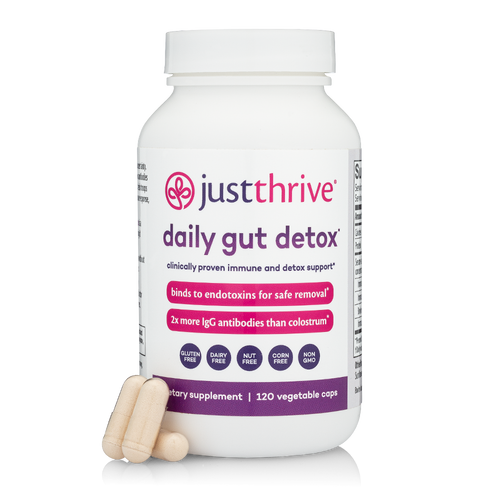
Just Thrive Urinary Health Products



How to Maintain Optimal Vaginal Health
Understanding the gut-vagina connection is only the first step. The real results come from consistent, targeted daily support that helps maintain a balanced gut and healthy vaginal microbiome. That’s where Just Thrive comes in.
Just Thrive UT123 is formulated with three botanical extracts that promote a healthy urinary tract:
- Pacran® Whole Cranberry Matrix
- Nigellin® BCS (Black Cumin Seed)
- Ellirose™ Hibiscus Extract
These all-natural ingredients help maintain vaginal wellness by promoting balance in your urinary tract, which is closely linked to vaginal health.
Just Thrive Probiotic supports digestive health, gut balance, and overall well-being with four potent spore bacteria:
- Bacillus indicus HU36™
- Bacillus subtilis HU58™
- Bacillus coagulans
- Bacillus clausii
Through the gut-vagina axis, these high-quality spore probiotics help maintain overall balance and health for both systems.
>> Maintain vaginal wellness with UT123 and Just Thrive Probiotic.
(Note: For maximum effectiveness, we recommend taking these products at least two hours apart.)
Not sure if UT123 and Just Thrive Probiotic will work for you? We can help with that.
Every Just Thrive purchase is backed by our Bottom of the Bottle, 100% money back guarantee. So you can try UT123 and Just Thrive Probiotic to see how they work with you. And we’re confident you’ll be happy with the results!
But if for any reason they don’t feel a difference, you can ask for a full product refund at any time. Even if it’s been 3 weeks, 3 months, or 3 years… Even if the bottle is empty.
>> Try UT123 and Just Thrive Probiotic 100% RISK FREE today, and save 30% on your first month’s subscription with code SUB30.

Sources
- Han Y, Liu Z, Chen T. Role of Vaginal Microbiota Dysbiosis in Gynecological Diseases and the Potential Interventions. Front Microbiol. 2021 Jun 18;12:643422. doi: 10.3389/fmicb.2021.643422. PMID: 34220737; PMCID: PMC8249587.
- Takada K, Melnikov VG, Kobayashi R, Komine-Aizawa S, Tsuji NM, Hayakawa S. Female reproductive tract-organ axes. Front Immunol. 2023 Jan 31;14:1110001. doi: 10.3389/fimmu.2023.1110001. PMID: 36798125; PMCID: PMC9927230.
- Rahman S, O'Connor AL, Becker SL, Patel RK, Martindale RG, Tsikitis VL. Gut microbial metabolites and its impact on human health. Ann Gastroenterol. 2023 Jul-Aug;36(4):360-368. doi: 10.20524/aog.2023.0809. Epub 2023 May 29. PMID: 37396009; PMCID: PMC10304525.
- Amabebe E, Anumba DOC. Female Gut and Genital Tract Microbiota-Induced Crosstalk and Differential Effects of Short-Chain Fatty Acids on Immune Sequelae. Front Immunol. 2020 Sep 10;11:2184. doi: 10.3389/fimmu.2020.02184. PMID: 33013918; PMCID: PMC7511578.
- Larnder AH, Manges AR, Murphy RA. The estrobolome: Estrogen-metabolizing pathways of the gut microbiome and their relation to breast cancer. Int J Cancer. 2025 Aug 15;157(4):599-613. doi: 10.1002/ijc.35427. Epub 2025 Apr 3. PMID: 40177842; PMCID: PMC12178105.
- Christina Escobar, Nirit Rosenblum, Vaginal Estrogen—What a Urologist Should Know, Urology, Volume 151, 2021, Pages 37-43, ISSN 0090-4295, https://doi.org/10.1016/j.urology.2020.05.034.
- Santacroce, L., Palmirotta, R., Bottalico, L., Charitos, I. A., Colella, M., Topi, S., & Jirillo, E. (2023). Crosstalk between the Resident Microbiota and the Immune Cells Regulates Female Genital Tract Health. Life, 13(7), 1531. https://doi.org/10.3390/life13071531
- Mansour SR, Moustafa MAA, Saad BM, Hamed R, Moustafa AA. Impact of diet on human gut microbiome and disease risk. New Microbes New Infect. 2021 Feb 2;41:100845. doi: 10.1016/j.nmni.2021.100845. PMID: 34035924; PMCID: PMC8138677.
- Patangia DV, Anthony Ryan C, Dempsey E, Paul Ross R, Stanton C. Impact of antibiotics on the human microbiome and consequences for host health. Microbiologyopen. 2022 Feb;11(1):e1260. doi: 10.1002/mbo3.1260. PMID: 35212478; PMCID: PMC8756738.
- Stonehouse W, Benassi-Evans B, Bednarz J, Vincent AD. Whole cranberry fruit powder supplement reduces the incidence of culture-confirmed urinary tract infections in females with a history of recurrent urinary tract infection: A 6-month multicenter, randomized, double-blind, placebo-controlled trial. Am J Clin Nutr. 2025 Apr;121(4):932-941. doi: 10.1016/j.ajcnut.2025.01.022. Epub 2025 Jan 23. PMID: 39863114; PMCID: PMC12002188.
- Sukatendel K, Hasibuan RH, Siregar MF, Faradina D, Edianto D, Lintang LS, Rusda M, Inriani V. Effect of Nigella sativa seed extract on estradiol, FSH levels, and vaginal maturity index in menopausal women: A randomized controlled trial. Narra J. 2025 Apr;5(1):e1399. doi: 10.52225/narra.v5i1.1399. Epub 2025 Feb 17. PMID: 40352190; PMCID: PMC12059838.
- Bordoni L, Fedeli D, Nasuti C, Maggi F, Papa F, Wabitsch M, De Caterina R, Gabbianelli R. Antioxidant and Anti-Inflammatory Properties of Nigella sativa Oil in Human Pre-Adipocytes. Antioxidants (Basel). 2019 Feb 25;8(2):51. doi: 10.3390/antiox8020051. PMID: 30823525; PMCID: PMC6406245.
- Alshami I, Alharbi AE. Hibiscus sabdariffa extract inhibits in vitro biofilm formation capacity of Candida albicans isolated from recurrent urinary tract infections. Asian Pac J Trop Biomed. 2014 Feb;4(2):104-8. doi: 10.1016/S2221-1691(14)60217-3. PMID: 25182280; PMCID: PMC3819477.
- Yala Stevens, Iris Pinheiro, Bouke Salden, Cindy Duysburgh, Selin Bolca, Jeroen Degroote, Maryam Majdeddin, Noémie Van Noten, Béatrice Gleize, Catherine Caris-Veyrat, Joris Michiels, Daisy Jonkers, Freddy Troost, Sam Possemiers, Ad Masclee, Effect of a carotenoid-producing Bacillus strain on intestinal barrier integrity and systemic delivery of carotenoids: A randomised trial in animals and humans, Journal of Functional Foods, Volume 80, 2021, 104445, ISSN 1756-4646, https://doi.org/10.1016/j.jff.2021.104445.
- Guannan Li, Yujie Tong, Yi Xiao, Shengquan Huang, Tianfu Zhao, Xuejuan Xia, Probiotic Bacillus subtilis contributes to the modulation of gut microbiota and blood metabolic profile of hosts, Comparative Biochemistry and Physiology Part C: Toxicology & Pharmacology, Volume 272, 2023, 109712, ISSN 1532-0456, https://doi.org/10.1016/j.cbpc.2023.109712.
- Ghelardi E, Abreu Y Abreu AT, Marzet CB, Álvarez Calatayud G, Perez M 3rd, Moschione Castro AP. Current Progress and Future Perspectives on the Use of Bacillus clausii. Microorganisms. 2022 Jun 17;10(6):1246. doi: 10.3390/microorganisms10061246. PMID: 35744764; PMCID: PMC9230978.
- Jiang Cao, Zhiming Yu, Wenyin Liu, Jianxin Zhao, Hao Zhang, Qixiao Zhai, Wei Chen, Probiotic characteristics of Bacillus coagulans and associated implications for human health and diseases, Journal of Functional Foods, Volume 64, 2020, 103643, ISSN 1756-4646, https://doi.org/10.1016/j.jff.2019.103643.


