



Have you ever had that nagging feeling that something isn’t quite right with your gut? Maybe it shows up as bloating or discomfort. Or it’s a heavy, unsettled feeling after meals that just won’t go away. Small signs that your digestion isn’t working as smoothly as it used to, but persistent enough to make you question what’s going on.
It’s frustrating, especially when you know you’re eating healthy and genuinely trying to take care of your gut. Yet nothing you do provides lasting relief.
So what’s really going on in your gut?
In some cases, it could come down to what’s living in your stomach! H. pylori is a surprisingly common (and often overlooked) bacteria that can hide out in your stomach lining and may influence digestion over time. Many people have it and don’t even realize it, while others experience a range of symptoms that feel vague and hard to pin down to one thing.
The upside is that H. pylori is well studied. So once you understand what H. pylori is and how it affects your body, you can take meaningful steps to support your gut and improve overall digestive comfort.
Here’s what you need to know about the potential signs of H. pylori, what it does, and simple ways you can maintain a healthy, balanced gut moving forward.
Quick Answer: H. pylori (Helicobacter pylori) is a common bacteria that can live in the stomach lining, where it survives the acidic environment by neutralizing the acid around it. It is very widespread, and many people carry it without noticing, while others experience vague digestive symptoms like bloating, burping, nausea, feeling full quickly, or a dull stomach ache. Because the signs are often mild and inconsistent, it can be easy to overlook. If you have ongoing digestive discomfort, a healthcare provider can confirm it with breath, stool, or blood tests. Beyond medical options, gentle daily habits, balanced nutrition, stress management, probiotics, prebiotics, and supporting your stomach lining, can help maintain healthy, comfortable digestion.
What Is H. pylori?
H. pylori is a common bacteria that can settle in the stomach lining, where it survives the acidic environment by neutralizing the acid around it. Many people carry it quietly, with no symptoms at all.
H. pylori (short for Helicobacter pylori) is a bacteria that can live in the stomach.1 Unlike many microbes, it can actually survive in the stomach’s harsh, acidic environment. It settles into the stomach lining, where it produces enzymes (including urease) that help neutralize the gastric acid around it. This creates a protective “pocket” for H. pylori that allows it to live and multiply, potentially sticking around for years if left unaddressed.2
It’s also incredibly common. In fact, some estimates say that about half of the world’s population is living with H. pylori right now!3 And many of them don’t even realize it, as this often-asymptomatic microbe exists quietly in the background. Others, however, feel its effects as it begins to disrupt their digestion, changing how it feels and functions.
 Want to listen instead of read? CLICK HERE
How do you get H. pylori?
Most people get H. pylori in one of two ways:4
- Contaminated food or water (the fecal-oral route): Drinking water or eating food that is contaminated with fecal matter
- Close contact with an infected person (the oral-oral route): H. pylori can be transmitted in saliva, such as sharing utensils, food, or drinks with someone who has the bacteria, or by kissing them
A person can also acquire H. pylori through poor hygiene, like not washing their hands after using the bathroom or before handling food. And, perhaps not surprisingly, given how often kids put things in their mouths, most infections occur during childhood, often spreading between family members.
But it doesn’t stop there! Almost half of Americans with H. pylori are over the age of 50. Infection rates are also higher in developing countries.

What Are the Signs of H. pylori?
Symptoms vary widely from person to person, and some people notice none at all. When signs do appear, they tend to be mild and inconsistent, such as bloating, burping, nausea, feeling full quickly, indigestion, a dull stomach ache, or unexplained bad breath.
Ever heard the saying, Life isn’t what happens to you, it’s how you react to it? Well, the same can be said about H. pylori: it’s not just about the presence of the microbe; it often depends on how your digestive system responds to it.
Symptoms can vary greatly from person to person. Some people never experience anything notable. Many others deal with varying levels of digestive discomfort.
So while you may have H. pylori and no symptoms, here are some of the signs that you might be carrying this bacteria:5,6
- Bloating
- Burping
- Feeling full/loss of appetite
- Nausea
- Indigestion/upset stomach
- A dull, burning sensation in the stomach
- Unexplained bad breath, which may be linked to changes in the stomach environment
These symptoms are often mild or inconsistent, easily brushed off as “normal” digestive issues, which makes it even harder to connect them to a specific cause. But it’s important to remember that you might not experience anything at all, which is why it’s so easy to overlook.
What H. pylori can do to your body
So, if the symptoms are generally mild, and sometimes not present at all, why does H. pylori matter?
For starters, this microbe has been linked to gastritis, an inflammation of the stomach lining (where it usually resides). This may affect your body’s ability to break down food and absorb nutrients, leading to lower levels of key vitamins and minerals like iron or B12.7
Over time, H. pylori may also contribute to more serious conditions, like peptic ulcers and anemia (from low iron levels), or other complications connected to chronic stomach inflammation.8
And while not everyone with H. pylori will experience these, it highlights why you should pay attention to any noticeable discomfort.
Could You Have H. pylori?
If digestive discomfort lingers despite a generally healthy diet, it can help to notice patterns in how you feel after meals. At-home stool tests can check for certain markers, and a healthcare provider can confirm it with breath, stool, or blood tests.
If you’ve been dealing with digestive discomfort that doesn’t seem to improve, it’s worth taking a closer look at what your body may be trying to tell you.
One helpful thing is to pay attention to patterns. Ask yourself:
- Do my symptoms stick around even when my diet is generally healthy?
- Do I tend to feel more bloated or uncomfortable after even light meals?
- Do I frequently experience minor problems, like burping or bad breath?
While answering yes might not automatically mean that you’re carrying H. pylori, it can help you understand what’s going on with your body. At-home stool tests can check for specific markers associated with H. pylori, making self-testing even easier.
If your symptoms continue or begin to interfere with your everyday life, you may want to consult with your healthcare provider. They can confirm a diagnosis with non-invasive methods like breath, stool, or blood tests.

What Are 7 Ways to Naturally Support Digestive Health When H. pylori Is a Concern?
You can support a healthy gut environment with everyday habits: choosing the right foods, managing stress, adding a spore-based probiotic and prebiotic fibers, supporting your body's natural defenders, nourishing your stomach lining, and using digestive bitters to kickstart digestion before meals.
Medical treatments exist for H. pylori, but there are natural, more gentle ways to support your system and overall digestive health.
Gut balance affects nearly every part of digestion. Your gut microbiome houses trillions of bacteria, including both “good” (beneficial) bacteria and “bad” (potentially disruptive) bacteria. When one type of bacteria flourishes, it can crowd out the other. Ideally, the good microbes are thriving and dominating, supporting a healthy, balanced microbiome, but that is not always the case.
Together, the following habits help create a healthy environment, where good microbes can thrive and your digestive system can function at its best.
1. Choose the Right Foods
Whenever possible, choose nutrient-dense organic, whole foods to support your digestive system, like fresh fruit and vegetables, whole grains, lean protein, and healthy fats. These foods help nourish beneficial microbes and support your overall digestion.
Meanwhile, a diet heavy in ultra-processed foods may encourage the growth of less helpful microbes and potentially contribute to imbalances in the gut microbiome.10
2. Manage Stress
Not all of your digestive issues start in the gut. Through the gut-brain axis, those two very distinct body parts are constantly exchanging messages and influence.11 When your microbiome is thriving, its positive signals may encourage a balanced mood and emotional well-being. And while a calm, stress-free mind sends supportive signals to your gut, the reverse is also true.
If you are under a great deal of stress or pressure, your gut may be receiving signals that interfere with the microbiome balance. By managing your stress through healthy habits like meditation, journaling, exercising, and getting enough sleep, you can help promote a healthy gut environment where helpful bacteria are plentiful.
3. Add a Probiotic Supplement
Probiotics are live bacteria that can help support and replenish the good bacteria in your microbiome, reinforcing a balanced gut and healthy digestion.
But not all probiotics are equal. Some are simply not strong enough to withstand the harsh journey through the digestive tract. You’ll want to look for spore probiotics, which have the unique ability to form a protective endospore shell that allows them to reach your gut alive and ready to get to work.
Some of the most effective and well-researched spore probiotics include:12–15
- Bacillus indicus HU36™: produces powerful antioxidants right in your gut, supporting digestive health and countering oxidative stress
- Bacillus subtilis HU58™: supports your immune system (which is housed primarily in the gut) by producing 12 “defenders” and encourages microbial balance by promoting the growth of good bacteria
- Bacillus coagulans: promotes a balanced gut, healthy digestion, and overall gut health, thanks to its ability to “crowd out” less beneficial bacteria
- Bacillus clausii: helps recondition your microbiome with beneficial bacteria after antibiotics, improves digestion, and supports immune function
You can also add probiotic-rich fermented foods to your diet, such as kefir, tempeh, miso, sauerkraut, and probiotic yogurts. However, as the quantity and quality of probiotics they contain is difficult to measure accurately, and these bacteria do not always survive digestion, a supplement may be a more consistent source.
4. Fuel Good Bacteria
Prebiotics are natural, plant-based fibers that your body can’t process, so they’re broken down and digested by gut bacteria.[16] While some of them can fuel any bacteria, certain “smart” fibers only nourish helpful microbes.
These supportive prebiotics are often found in fruits and vegetables, including onions, leeks, asparagus, and bananas. But just like with probiotics, it can be difficult to get enough of the right prebiotics through diet alone, making supplements a more convenient option.
Look for a high-quality prebiotic with these fibers:17–19
- Actazin®, from organic kiwifruit powder, which promotes healthy digestion and thriving colonies of good bacteria
- Xylooligosaccharide, which selectively nourishes good bacteria to support a healthy gut, digestive regularity, a balanced immune response, nutrient absorption, and the production of short-chain fatty acids
- Galactooligosaccharide, which contributes to the growth of good bacteria and supports nutrient absorption
And for the most powerful benefit, pairing prebiotics with a spore-based probiotic can more than double the population of good bacteria in your gut!20
5. Increase Your Body’s Natural Defenders
Immunoglobulins (also known as antibodies) are proteins that play an important role in your body’s immune system, and your overall health, by recognizing, neutralizing, and eliminating unwanted microbes.
When it comes to overall health, these are your body’s most important immunoglobulins:21
- Immunoglobulin G (IgG), your body’s number one defender, neutralizes any unwanted gut invaders. It also plays a role in immune memory, which allows IgG to react more quickly in the future.
- Immunoglobulin M (IgM) rushes to address potential threats, giving other immunoglobulins extra time to respond.
- Immunoglobulin A (IgA) provides surveillance of the gut lining and stomach lining while also supporting beneficial bacteria and overall microbial balance.
By contributing to a healthier microbiome, immunoglobulins can be a helpful piece of the digestive health puzzle.
6. Support Your Stomach Lining
H. pylori lives and thrives within your mucosal barrier, a protective layer found throughout your body. In your digestive system, it lines your stomach, helping to shield your body from stomach acids while also acting as a first line of defense against unwanted microbes.
When H. pylori is present, it can potentially irritate or weaken this stomach lining.22 As a result, your digestive system may feel more sensitive or uncomfortable.
But certain nutrients can help maintain the overall health of this defensive barrier:23–25
- Specific amino acids (theonine, serine, proline, and cysteine) help your body produce and maintain the mucin proteins that make up the vast majority of your stomach’s mucosal barrier.
- Polyphenols, a plant compound, can promote a strong gut lining while also contributing to mucin production.
By supporting the integrity of your stomach lining, you can help maintain your digestive health even when H. pylori is present.
7. Start Digestion (Before You Eat!)
Stomach acid tends to get a bad reputation. After all, antacids are commonly used to alleviate digestive discomfort. But digestive bitters, which stimulate acid production, can actually support your stomach’s day-to-day functioning.
In many cultures, bitters were taken before meals to encourage the body’s natural digestive process. All-natural herbs like dandelion root, ginger, dong quai, and peppermint send signals to the stomach to produce digestive juices, including stomach acid, which plays an important role in your body’s ability to break down food and absorb its nutrients.26–29
H. pylori, which neutralizes acids in its immediate surroundings, can create imbalances in the stomach environment, which contributes to symptoms like bloating or feeling full. Bitters may help meals feel easier to digest and reduce that heavy, sluggish feeling.
Frequently Asked Questions
Just Thrive Gut Health Products


The Gut Health Essentials
Gut health always matters. But when H. pylori is part of the picture, supporting your overall digestive health becomes especially important.
Just Thrive can help you focus on your gut’s foundational needs, contributing to a balanced microbiome and promoting healthy digestive function as part of your everyday wellness routine.
Just Thrive Probiotic is formulated with four clinically researched spore-based probiotics, specifically chosen to support a balanced gut and healthy digestion.
- Bacillus indicus HU36™
- Bacillus subtilis HU58™
- Bacillus clausii
- Bacillus coagulans
Just Thrive PREbiotic contains “smart” fibers that fuel good microbes, and only the good ones, to drive optimal digestive function:
- Actazin®
- Xylooligosaccharides (XOS)
- Galactooligosaccharides (GOS)
Daily Gut Detox provides the immunoglobulins IgG, IgM, and IgA to support a healthy immune response and digestive system.
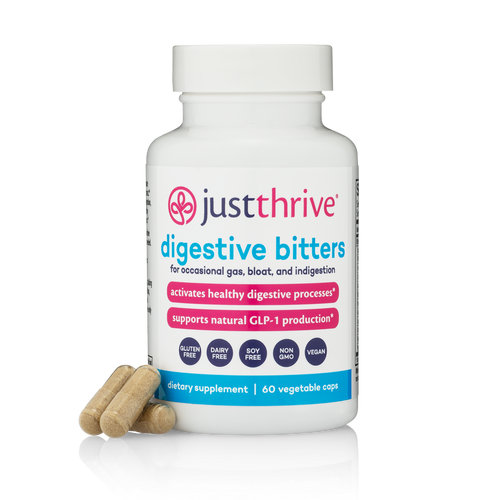
Digestive Bitters features 12 of the most well-studied and traditionally used bitters, including ginger root, dong quai, Chinese gentian root extract, and peppermint, to promote the digestive process even before you’ve started eating.
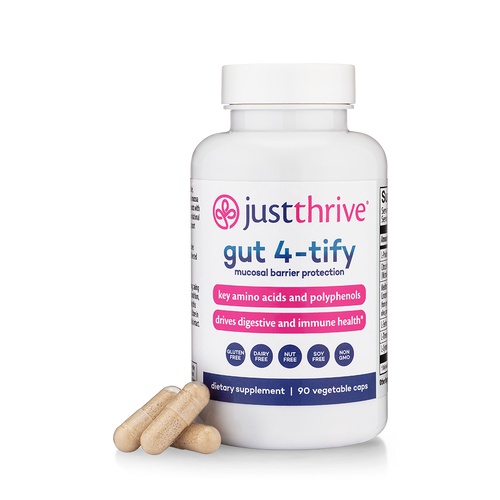
Gut 4-tify delivers essential nutrients that support a strong stomach lining:
The amino acids L-threonine, L-serine, L-proline, and L-cysteine
Oxxynea® and MicrobiomeX®, two powerful polyphenol blends
>> Give your gut daily gut support with Just Thrive Probiotic, PREbiotic, Daily Gut Detox, Digestive Bitters, and Gut 4-tify.
Not sure whether these Just Thrive products will work for you? We can help.
Every Just Thrive product comes with our Bottom of the Bottle, 100% money back guarantee. So you can try Just Thrive Probiotic, PREbiotic, Daily Gut Detox, Digestive Bitters, and Gut 4-tify to see if they work for you.
And if for any reason you don’t feel a difference in your digestive health, simply ask for a full product refund at any time. Even if it’s been 3 weeks, 3 months, or 3 years… Even if the bottle is empty!
>> Try Just Thrive Probiotic, PREbiotic, Gut 4-tify, Daily Gut Detox, and Digestive Bitters, and 100% RISK FREE today, and save 30% on your first month’s subscription with code SUB30.

Sources
- Öztekin M, Yılmaz B, Ağagündüz D, Capasso R. Overview of Helicobacter pylori Infection: Clinical Features, Treatment, and Nutritional Aspects. Diseases. 2021 Sep 23;9(4):66. doi: 10.3390/diseases9040066. PMID: 34698140; PMCID: PMC8544542.
- Berger A. Scientists discover how helicobacter survives gastric acid. BMJ. 2000 Jan 29;320(7230):268. PMID: 10650011; PMCID: PMC1117475.
- Brown LM. Helicobacter pylori: epidemiology and routes of transmission. Epidemiol Rev. 2000;22(2):283-97. doi: 10.1093/oxfordjournals.epirev.a018040. PMID: 11218379.
- Kayali S, Manfredi M, Gaiani F, Bianchi L, Bizzarri B, Leandro G, Di Mario F, De' Angelis GL. Helicobacter pylori, transmission routes and recurrence of infection: state of the art. Acta Biomed. 2018 Dec 17;89(8-S):72-76. doi: 10.23750/abm.v89i8-S.7947. PMID: 30561421; PMCID: PMC6502203.
- Parikh NS, Ahlawat R. Helicobacter Pylori. [Updated 2023 Aug 8]. In: StatPearls [Internet]. Treasure Island (FL): StatPearls Publishing; 2026 Jan-. Available from: https://www.ncbi.nlm.nih.gov/books/NBK534233/
- Malfertheiner P, Camargo MC, El-Omar E, Liou JM, Peek R, Schulz C, Smith SI, Suerbaum S. Helicobacter pylori infection. Nat Rev Dis Primers. 2023 Apr 20;9(1):19. doi: 10.1038/s41572-023-00431-8. PMID: 37081005; PMCID: PMC11558793.
- Franceschi F, Annalisa T, Teresa DR, Giovanna D, Ianiro G, Franco S, Viviana G, Valentina T, Riccardo LL, Antonio G. Role of Helicobacter pylori infection on nutrition and metabolism. World J Gastroenterol. 2014 Sep 28;20(36):12809-17. doi: 10.3748/wjg.v20.i36.12809. PMID: 25278679; PMCID: PMC4177464.
- Wroblewski LE, Peek RM Jr, Wilson KT. Helicobacter pylori and gastric cancer: factors that modulate disease risk. Clin Microbiol Rev. 2010 Oct;23(4):713-39. doi: 10.1128/CMR.00011-10. PMID: 20930071; PMCID: PMC2952980.
- Kayali S, Aloe R, Bonaguri C, Gaiani F, Manfredi M, Leandro G, Fornaroli F, Di Mario F, De' Angelis GL. Non-invasive tests for the diagnosis of helicobacter pylori: state of the art. Acta Biomed. 2018 Dec 17;89(8-S):58-64. doi: 10.23750/abm.v89i8-S.7910. PMID: 30561419; PMCID: PMC6502209.
- Rondinella D, Raoul PC, Valeriani E, Venturini I, Cintoni M, Severino A, Galli FS, Mora V, Mele MC, Cammarota G, Gasbarrini A, Rinninella E, Ianiro G. The Detrimental Impact of Ultra-Processed Foods on the Human Gut Microbiome and Gut Barrier. Nutrients. 2025 Feb 28;17(5):859. doi: 10.3390/nu17050859. PMID: 40077728; PMCID: PMC11901572.
- Appleton J. The Gut-Brain Axis: Influence of Microbiota on Mood and Mental Health. Integr Med (Encinitas). 2018 Aug;17(4):28-32. PMID: 31043907; PMCID: PMC6469458.
- Sy, C., Dangles, O., Borel, P., & Caris-Veyrat, C. (2015). Interactions between Carotenoids from Marine Bacteria and Other Micronutrients: Impact on Stability and Antioxidant Activity. Marine Drugs, 13(11), 7020-7039. https://doi.org/10.3390/md13117020
- Sorensen, K., Khanna, S., Porwal, A., Dharmendra, B.L., Soni, P., Siddavaram, D., Holz, C., & Jadhav, S. (2026). Effects of a Bacillus subtilis HU58 and Heyndrickxia faecalis SC208 spore-forming probiotic formula on gastrointestinal health: results of a randomised, double-blind, placebo-controlled pilot study. Beneficial Microbes (published online ahead of print 2026). https://doi.org/10.1163/18762891-bja00113
- Jiang Cao, Zhiming Yu, Wenyin Liu, Jianxin Zhao, Hao Zhang, Qixiao Zhai, Wei Chen, Probiotic characteristics of Bacillus coagulans and associated implications for human health and diseases, Journal of Functional Foods, Volume 64, 2020, 103643, ISSN 1756-4646, https://doi.org/10.1016/j.jff.2019.103643.
- Ghelardi E, Abreu Y Abreu AT, Marzet CB, Álvarez Calatayud G, Perez M 3rd, Moschione Castro AP. Current Progress and Future Perspectives on the Use of Bacillus clausii. Microorganisms. 2022 Jun 17;10(6):1246. doi: 10.3390/microorganisms10061246. PMID: 35744764; PMCID: PMC9230978.
- Davani-Davari D, Negahdaripour M, Karimzadeh I, Seifan M, Mohkam M, Masoumi SJ, Berenjian A, Ghasemi Y. Prebiotics: Definition, Types, Sources, Mechanisms, and Clinical Applications. Foods. 2019 Mar 9;8(3):92. doi: 10.3390/foods8030092. PMID: 30857316; PMCID: PMC6463098.
- Emma Graham, Starin McKeen, Erin D. Lewis, Malkanthi Evans, Zhaoping Li, Susanne M. Henning, Neville Jopson, Jennifer Gu, Doug Rosendale, Actazin® green kiwifruit powder consumption at 600 mg per day for 28 days improves stool form and relieves occasional constipation in healthy individuals: A randomized controlled trial, Bioactive Carbohydrates and Dietary Fibre, Volume 32, 2024, 100436, ISSN 2212-6198, https://doi.org/10.1016/j.bcdf.2024.100436.
- Valladares-Diestra KK, de Souza Vandenberghe LP, Vieira S, Goyzueta-Mamani LD, de Mattos PBG, Manzoki MC, Soccol VT, Soccol CR. The Potential of Xylooligosaccharides as Prebiotics and Their Sustainable Production from Agro-Industrial by-Products. Foods. 2023 Jul 12;12(14):2681. doi: 10.3390/foods12142681. PMID: 37509773; PMCID: PMC10379617.
- Ignatova I, Arsov A, Petrova P, Petrov K. Prebiotic Effects of α- and β-Galactooligosaccharides: The Structure-Function Relation. Molecules. 2025 Feb 9;30(4):803. doi: 10.3390/molecules30040803. PMID: 40005114; PMCID: PMC11858185.
- Duysburgh C, Van den Abbeele P, Krishnan K, Bayne TF, Marzorati M. A synbiotic concept containing spore-forming Bacillus strains and a prebiotic fiber blend consistently enhanced metabolic activity by modulation of the gut microbiome in vitro. Int J Pharm X. 2019;1:100021. Published 2019 Jul 6. doi:10.1016/j.ijpx.2019.100021
- Schroeder HW Jr, Cavacini L. Structure and function of immunoglobulins. J Allergy Clin Immunol. 2010 Feb;125(2 Suppl 2):S41-52. doi: 10.1016/j.jaci.2009.09.046. PMID: 20176268; PMCID: PMC3670108.
- Wei YF, Li X, Zhao MR, Liu S, Min L, Zhu ST, Zhang ST, Xie SA. Helicobacter pylori disrupts gastric mucosal homeostasis by stimulating macrophages to secrete CCL3. Cell Commun Signal. 2024 May 10;22(1):263. doi: 10.1186/s12964-024-01627-5. PMID: 38730482; PMCID: PMC11084090.
- Faure M, Mettraux C, Moennoz D, Godin JP, Vuichoud J, Rochat F, Breuillé D, Obled C, Corthésy-Theulaz I. Specific amino acids increase mucin synthesis and microbiota in dextran sulfate sodium-treated rats. J Nutr. 2006 Jun;136(6):1558-64. doi: 10.1093/jn/136.6.1558. PMID: 16702321.
- Song Zh, Tong G, Xiao K, Jiao le F, Ke Yl, Hu Ch. L-cysteine protects intestinal integrity, attenuates intestinal inflammation and oxidant stress, and modulates NF-κB and Nrf2 pathways in weaned piglets after LPS challenge. Innate Immun. 2016 Apr;22(3):152-61. doi: 10.1177/1753425916632303. Epub 2016 Feb 25. PMID: 26921254.
- Li H, Gao J, Peng W, Sun X, Qi W, Wang Y. Dietary Polyphenols-Gut Microbiota Interactions: Intervention Strategies and Metabolic Regulation for Intestinal Diseases. Biology (Basel). 2025 Nov 30;14(12):1705. doi: 10.3390/biology14121705. PMID: 41463478; PMCID: PMC12730813.
- Li Y, Chen Y, Sun-Waterhouse D. The potential of dandelion in the fight against gastrointestinal diseases: A review. J Ethnopharmacol. 2022 Jul 15;293:115272. doi: 10.1016/j.jep.2022.115272. Epub 2022 Apr 8. PMID: 35405251.
- Lemlem Gebremariam Aregawi, Csiki Zoltan, Ginger's nutritional implication on gastrointestinal health, Clinical Nutrition Open Science, Volume 61, 2025, Pages 1-13, ISSN 2667-2685, https://doi.org/10.1016/j.nutos.2025.02.008.
- Ling FANG, Xue-feng XIAO, Chang-xiao LIU, Xin HE, Recent Advance in Studies on Angelica sinensis, Chinese Herbal Medicines, Volume 4, Issue 1, 2012, Pages 12-25, ISSN 1674-6384, https://doi.org/10.3969/j.issn.1674-6384.2012.01.004. (https://www.sciencedirect.com/science/article/pii/S1674638412600306)
- Chumpitazi BP, Kearns GL, Shulman RJ. Review article: the physiological effects and safety of peppermint oil and its efficacy in irritable bowel syndrome and other functional disorders. Aliment Pharmacol Ther. 2018 Mar;47(6):738-752. doi: 10.1111/apt.14519. Epub 2018 Jan 26. PMID: 29372567; PMCID: PMC5814329.


