



Most parents know how to prepare for the more obvious adjustments. You go shopping for supplies and have talks on how to navigate new classrooms and new friendships.
However, there’s one change that’s often overlooked: how the back-to-school transition can affect a child’s gut. As their daily routines shift, it’s not unusual for kids to experience tummy aches, changes in bowel habits, and other digestive ups and downs.
Luckily for everyone, these changes are often temporary, and a few simple habits can support a healthy gut as your child settles into the school year.
Here are seven common back-to-school changes to keep an eye on, and what you can do to keep your child’s digestion on track.
Quick Answer: The transition back to school can affect your child’s digestive health in several unexpected ways. Changes in meal and sleep schedules, hydration, physical activity, bathroom habits, food choices, and everyday stress can all influence the gut, sometimes leading to temporary stomach aches, changes in bowel habits, or digestive discomfort. This article explores seven common back-to-school gut changes to watch for and shares practical strategies to help support your child’s digestion, including consistent routines, nutritious foods, hydration, regular movement, and gut-friendly probiotics and prebiotics.
1. New Meal Schedules
Summer often brings a little more flexibility around mealtimes. There’s no rush to eat an early breakfast, meals might run late when you’re at the pool or playground, and (healthy) snacks are typically available whenever hunger strikes.
Once the school year starts, meal times can shift, sometimes dramatically, from what your child's body has grown accustomed to over the summer. Early school times can mean eating breakfast before sunrise. Lunch periods are determined by grade level instead of hunger cues. By the time the final bell rings, many kids have gone hours without eating.
The digestive system functions best with consistency, and sudden changes in meal times may temporarily disrupt its natural circadian rhythm, the internal 24-hour clock that coordinates things like nutrient absorption, gut motility (the movement of food and waste), the release of digestive enzymes, and other gut-related activities.1 As your child’s body adapts to a new routine, these changes may contribute to occasional stomach aches, changes in appetite, irregular bowel movements, or other digestive discomforts during the first few weeks of school.
 Want to listen instead of read? CLICK HERE
These changes are often temporary and tend to improve as your child adjusts to the new school schedule. Serving meals at predictable times before and after school can help create consistency until your child's digestive system settles into its new routine. You can also make this adjustment smoother by gradually shifting their meal timing even before they return to class, giving their digestive system time to ease into the new schedule.
But food is only one part of your child’s nutrition. Staying hydrated is just as important.

2. Less Water During the Day
It’s not always easy for kids to stay hydrated during the school day. Some children may get caught up in class, or new friendships, and forget to drink water. Others might feel the pressure to hurry at the water fountain, or even intentionally drink less to avoid using the restroom at school.
If your child is coming home with a full water bottle, or drinking more than usual when they’re home, they may not be getting enough fluids during school hours.
Adequate hydration supports the digestive system's normal day-to-day function, helping food and waste move through the intestines as they should. When kids aren’t properly hydrated, the body pulls more water from stool. This can contribute to harder stools and occasional constipation.2 Even mild dehydration can slow digestion, giving food more time to ferment in the body.3 Your child may feel bloated, gassy, or just generally uncomfortable.
Make sure your child starts their day with plenty of water before they leave the house, and pack a reusable bottle to make it a little easier for them to drink enough water throughout the school day. If carrying a water bottle isn’t already part of their routine, introduce the habit over the summer. By the time school starts, staying hydrated will feel much more natural. (Our pick plus other back to school favorites are listed here.)
For some kids, though, staying hydrated comes with another hurdle: feeling uncomfortable using the school bathroom.
3. Holding in Bowel Movements at School
Many kids refuse to use the restroom at school. Some might feel embarrassed or have trouble going with the lack of privacy, while others might feel there’s not enough time. Instead of going when they feel the urge, they would rather hold it and dash to the bathroom as soon as they get home.
This may seem normal—some adults prefer not to go at work—but regularly delaying bowel movements can contribute to constipation.4 When stool stays in the colon longer than it should, more water is absorbed from it. This makes it harder, drier, and more difficult or even painful to pass. Over time, regularly ignoring the urge to have a bowel movement can reduce your child's natural urge to go, creating a cycle that's difficult to break.5
If your child frequently complains of stomach aches or rushes to the bathroom after school, it may be worth asking them about their school day bathroom habits. A simple conversation can help you identify concerns, so you can figure out a bathroom solution that works for your child.
And while encouraging your child to respond to their body’s natural urges can support regular bowel habits, the foods they eat throughout the day can also make a difference.

4. More Packaged Snacks
There’s a reason packaged snacks are a school year go-to. But while convenient snacks can be an occasional part of an otherwise healthy diet, they may not always provide the same variety of nutrients as fresh, minimally processed options. Many are also highly processed and contain added sugars and artificial flavors or colors.
A healthy gut, on the other hand, thrives from eating a wide variety of whole foods that support digestion and nourish the beneficial bacteria living in the gut.6
Packing a lunchbox with a mix of convenient snacks alongside fresh, whole foods will help expose your child to the wider variety of nutrients that help support digestive health.
Of course, what your child eats isn't the only thing that changes once school starts. New teachers, unfamiliar classrooms, busy schedules, and changing routines can also bring extra stress. And because the gut and brain are closely connected, those feelings can sometimes show up in the digestive system, too.
5. Back-to-School Stress
Heading back to school is exciting for kids, but it can also be a bit stressful. Meeting a new teacher, adjusting to a different schedule, worries about making friends, or even just not knowing what to expect can all create stress for kids. And that stress can show up someplace unexpected: the gut.
The gut and brain are constantly sending signals through what’s known as the gut-brain axis (GBA).7 Along this communications highway, messages flow in both directions. Being nervous about things like meeting the teacher can send distress signals to the gut that show up as “butterflies” in the stomach. And digestive issues like gas or constipation can make your child feel nervous or upset.
At the beginning of the school year, with so many shifts and unknowns, the GBA signals can influence the digestive system, sometimes contributing to things like occasional stomach aches, diarrhea, constipation, changes in appetite, or mild digestive discomfort.
These issues tend to fade as your child becomes more comfortable and confident with their new school routine. In the meantime, take time each day to check in with your child and help soothe any anxieties they may be feeling.
And while the emotional side matters, so does the physical. Regular movement doesn’t just help kids burn off extra energy; it also supports healthy digestion.

6. Less Daily Movement
Summer days are often filled with movement, from swimming at the pool to running around the playground or riding bikes. But aside from recess and P.E. classes, most kids spend most of their school day sitting. When they get home, there’s more sitting while they do homework or study. And their digestive system notices the difference.
Regular physical activity supports healthy gut motility, the movement of food through the digestive tract.8 When kids aren’t moving as much, slower digestion can contribute to occasional constipation or feelings of sluggishness. Regular movement also helps strengthen muscles, including the gut muscles that help eliminate waste.
Encourage your kids to move after school, whether that means letting them play in the yard or stopping by the park on the way home. Staying active during the day will also set kids up for the quality sleep that’s necessary for a healthy digestive system.
7. Sleep Schedule Changes
Earlier wake-up calls are one of the biggest adjustments during the back-to-school season. It can take time for your child’s body to adapt to a new sleep schedule. And that change affects more than just their energy level.
Sleep and digestive health are surprisingly closely connected. Disrupted sleep patterns may influence digestion and the gut microbiome.9 You may notice things like irregular bowel habits or occasional stomach issues. Your child may also be reaching for more snacks or less healthy foods, as sleep can also affect the hormones that control appetite.10
So how much should your child be sleeping? Kids need more sleep than you might think: 9-12 hours for school-aged children and 8-10 hours for teens.11
Here are some ways you can set your kids up for a good night’s sleep:
- Establish a consistent bedtime routine (You could begin gradually shifting them into a back-to-school sleep schedule before the school year starts.)
- Create a cool, dark, quiet environment that’s conducive to sleep
- Limit screen time before bed so the blue light doesn’t disrupt their natural melatonin production
- Maintain a regular sleep schedule, even on the weekends
Combined with nutritious foods, regular movement, healthy bathroom habits, and plenty of water, consistent sleep is one more way to help your child's gut adjust to the new school year.
Where Do Probiotics and Prebiotics Fit In?
Your child’s gut microbiome is home to trillions of bacteria. Some of these are beneficial bacteria that play an important role in supporting digestion, immune function (extra important with back-to-school germs), and a balanced microbiome.
When the helpful microbes outnumber the less desirable ones, your child’s gut is better equipped to function at its best.
Probiotics Promote Digestive Health
One way to reinforce beneficial bacteria is with probiotics. These are live, beneficial bacteria that help support the existing beneficial bacteria, contributing to a balanced gut microbiome where less helpful microbes are kept in check.
But not all probiotics are created equal.
Many probiotic species are unable to survive the harsh journey through the digestive system, through bile, stomach acids, and digestive enzymes. Spore-based bacteria are different. This class of probiotics are naturally equipped with an endospore shell that protects them as they make their way from mouth to gut, allowing them to arrive alive and ready to get to work.
The following clinically studied spore probiotics have been shown to support gut health:12-15
- Bacillus indicus HU36™: Has been studied for its ability to produce antioxidants directly in the digestive tract, where they can help support a balanced gut and a healthy immune response.
- Bacillus subtilis HU58™: One of the most widely researched spore probiotics, it has been studied for its ability to produce 12 naturally occurring antimicrobial compounds that help defend your body from harmful microbes. It also helps support a balanced gut microbiome and healthy digestion.
- Bacillus coagulans: Has been clinically shown to aid healthy digestion and ease digestive discomfort, including occasional gas and bloating.
- Bacillus clausii: Is naturally resistant to many commonly used antibiotics, allowing it to remain viable during antibiotic use while helping support a balanced gut microbiome and healthy digestion
Prebiotics Feed Beneficial Gut Bacteria
For beneficial bacteria to thrive, they also need nourishment from prebiotics.16 These specialized fibers are primarily plant-based and feed gut bacteria, helping their colonies grow and do their job more effectively.
To support your child’s gut health, consider these prebiotics:17-19
- Kiwifruit powder: promotes the growth of good bacteria, eases occasional bloating, and promotes regular bowel movements
- Galactooligosaccharides: support a healthy, diverse microbiome while also encouraging nutrient absorption and healthy digestion
-
Xylooligosaccharides: encourage the growth of good bacteria and a balanced microbiome, and help minimize mild digestive discomfort
Frequently Asked Questions
Just Thrive Gut Health Products

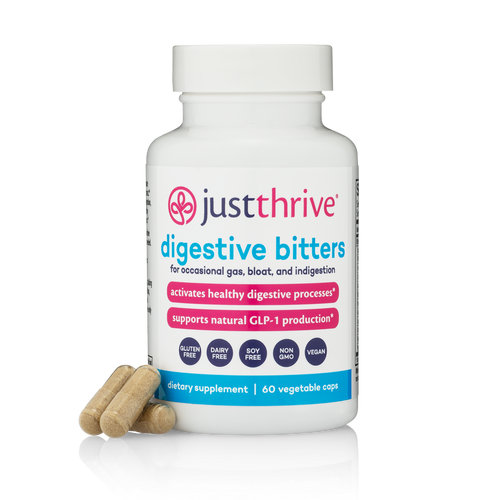
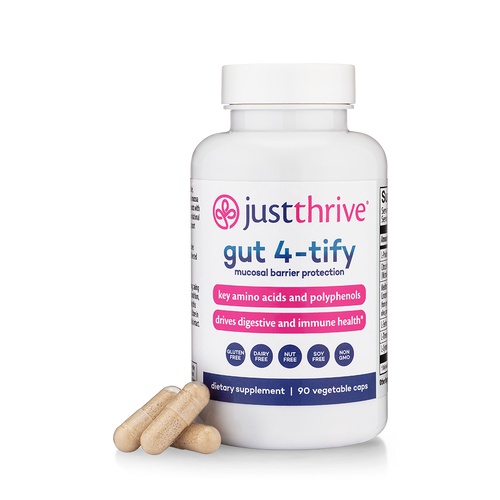

How Can You Support Your Child's Gut During the School Year?
While good habits lay the foundation for a healthy gut, they're not the only way to support your child's digestive health. Probiotics and prebiotics can provide an extra layer of support, helping maintain healthy digestion as your child navigates the changes that come with a new school year.
Just Thrive Probiotic is specially formulated with four clinically studied spore-based probiotics chosen for their ability to support a balanced, healthy gut microbiome:
- Bacillus indicus HU36™
- Bacillus subtilis HU58™
- Bacillus clausii
- Bacillus coagulans
Even better, they are available in delicious gummies, making them an easy, familiar option for kids.
Just Thrive PREbiotic is formulated with three “smart” fibers designed to selectively nourish the beneficial bacteria in your child’s microbiome.
- Organic kiwifruit powder (Actazin®)
- Xylooligosaccharides (XOS)
- Galactooligosaccharides (GOS)
And when taken with Just Thrive Probiotic, the PREbiotic can more than double the colonies of beneficial bacteria!
>> Support your child’s digestive health during the school year and beyond with Just Thrive Probiotic and PREbiotic. (Bundle & save!)
Not sure whether Just Thrive Probiotic and PREbiotic are right for your child? We can help with that.
We cover every Just Thrive product with our Bottom of the Bottle, 100% money-back guarantee. So you can try Just Thrive Probiotic and PREbiotic to see if they work for your child. And we’re confident they will.
But if for any reason you don’t feel a difference in your digestive health, simply ask for a full product refund at any time. Even if it’s been 3 weeks, 3 months, or 3 years… Even if the bottle is empty!
>> Try Just Thrive Probiotic and PREbiotic 100% RISK FREE today, and save 30% on your first month’s subscription with code SUB30.

Sources
- Phoenix Hospital. Circadian Rhythm: What It Is and Why It Matters. Phoenix Hospital. Accessed July 27, 2026. https://phoenixhospital.ae/circadian-rhythm/
- Arnaud MJ. Mild dehydration: a risk factor of constipation?. Eur J Clin Nutr. 2003;57 Suppl 2:S88-S95. doi:10.1038/sj.ejcn.1601907
- Sato K, Hara-Chikuma M, Yasui M, Inoue J, Kim YG. Sufficient water intake maintains the gut microbiota and immune homeostasis and promotes pathogen elimination. iScience. 2024;27(6):109903. Published 2024 May 3. doi:10.1016/j.isci.2024.109903
- Harvard Health Publishing. Common Causes of Constipation. Harvard Health. Published July 18, 2023. Accessed July 27, 2026. https://www.health.harvard.edu/diseases-and-conditions/common-causes-of-constipation
- Mulhem E, Khondoker F, Kandiah S. Constipation in children and adolescents: evaluation and treatment. Am Fam Physician. 2022;105(5):469-478.
- Harvard Health Publishing. Feed Your Gut. Harvard Health. Published April 6, 2023. Accessed July 27, 2026. https://www.health.harvard.edu/healthy-aging-and-longevity/feed-your-gut
- Carabotti M, Scirocco A, Maselli MA, Severi C. The gut-brain axis: interactions between enteric microbiota, central and enteric nervous systems. Ann Gastroenterol. 2015;28(2):203-209.
- Lee C. How Exercise Can Lead to a Healthy Gut. Cleveland Clinic. Published January 26, 2024. Accessed July 27, 2026. https://health.clevelandclinic.org/gut-health-workout
- Orr WC, Fass R, Sundaram SS, Scheimann AO. The effect of sleep on gastrointestinal functioning in common digestive diseases. Lancet Gastroenterol Hepatol. 2020;5(6):616-624. doi:10.1016/S2468-1253(19)30412-1
- University of Chicago Medicine. Sleep Loss Boosts Hunger and Unhealthy Food Choices. UChicago Medicine. Published February 29, 2016. Accessed July 27, 2026. https://www.uchicagomedicine.org/forefront/prevention-and-screening-articles/sleep-loss-boosts-hunger-and-unhealthy-food-choices
- Lee C. How Much Sleep Kids Need: Recommended Hours by Age. Cleveland Clinic. Published June 4, 2024. Accessed July 27, 2026. https://health.clevelandclinic.org/recommended-amount-of-sleep-for-children
- Sy, C., Dangles, O., Borel, P., & Caris-Veyrat, C. (2015). Interactions between Carotenoids from Marine Bacteria and Other Micronutrients: Impact on Stability and Antioxidant Activity. Marine Drugs, 13(11), 7020-7039. https://doi.org/10.3390/md13117020
- Sorensen K, Khanna S, Porwal A, Dharmendra BL, Soni P, Siddavaram D, Holz C, Jadhav S. Effects of a Bacillus subtilis HU58 and Heyndrickxia faecalis SC208 spore-forming probiotic formula on gastrointestinal health: results of a randomised, double-blind, placebo-controlled pilot study. Benef Microbes. Published online February 17, 2026. doi:10.1163/18762891-bja00113
- Cao J, Yu Z, Liu W, Zhao J, Zhang H, Zhai Q, Chen W. Probiotic characteristics of Bacillus coagulans and associated implications for human health and diseases. J Funct Foods. 2020;64:103643. doi:10.1016/j.jff.2019.103643
- Ghelardi E, Abreu Y Abreu AT, Marzet CB, Álvarez Calatayud G, Perez M 3rd, Moschione Castro AP. Current Progress and Future Perspectives on the Use of Bacillus clausii. Microorganisms. 2022;10(6):1246. Published 2022 Jun 17. doi:10.3390/microorganisms10061246
- Davani-Davari D, Negahdaripour M, Karimzadeh I, et al. Prebiotics: Definition, Types, Sources, Mechanisms, and Clinical Applications. Foods. 2019;8(3):92. Published 2019 Mar 9. doi:10.3390/foods8030092
- Graham E, McKeen S, Lewis ED, et al. Actazin® green kiwifruit powder consumption at 600 mg per day for 28 days improves stool form and relieves occasional constipation in healthy individuals: a randomized controlled trial. Bioact Carbohydr Diet Fibre. 2024;32:100436. doi:10.1016/j.bcdf.2024.100436.
- Ignatova I, Arsov A, Petrova P, Petrov K. Prebiotic Effects of α- and β-Galactooligosaccharides: The Structure-Function Relation. Molecules. 2025;30(4):803. Published 2025 Feb 9. doi:10.3390/molecules30040803
- Valladares-Diestra KK, de Souza Vandenberghe LP, Vieira S, et al. The Potential of Xylooligosaccharides as Prebiotics and Their Sustainable Production from Agro-Industrial by-Products. Foods. 2023;12(14):2681. Published 2023 Jul 12. doi:10.3390/foods12142681


