



There’s a reason kids are called germ magnets: They catch everything. All the time.
Most kids end up taking many courses of antibiotics, for everything from ear infections to strep to urinary tract infections.
As anyone who has ever taken antibiotics knows, they wreak havoc on your gut, and it turns out that can have much broader effects than we realized.
Researchers are continuing to explore how gut health relates to long-term metabolic wellness, and at the center of this emerging research is a common thread: when the gut microbiome becomes imbalanced, it can influence key systems involved in metabolic health.
Quick Answer: A child’s gut microbiome helps shape how their body manages energy, blood sugar, and weight over the long term. Early in life the gut sends signals that help calibrate these systems, so keeping the microbiome in healthy balance may support metabolic wellness for years to come. Repeated antibiotics, a sugary or processed diet, and other disruptions can throw the microbiome out of balance, a state called dysbiosis. Supportive steps include a varied whole-food diet, spore-based probiotics that survive digestion to reach the gut alive, and targeted prebiotics such as FOS, GOS, and XOS that nourish beneficial bacteria. Building a balanced gut early helps create a foundation for lifelong metabolic balance.
How Are Gut Imbalance and Metabolic Health Connected?
When the gut microbiome falls out of balance, harmful pathogens can take over and disrupt the body’s natural ability to manage blood sugar, fuel energy, and maintain a strong gut barrier. Keeping bacterial balance is a key factor in supporting healthy inflammatory responses and long-term metabolic stability.
From day one everybody has a gut microbiome, the trillions of bacteria that live in the intestines. A healthy, well-balanced gut contains primarily beneficial probiotic bacteria that contribute to overall wellness. Probiotic bacteria produce helpful compounds like B vitamins, antioxidants, digestive hormones like GLP-1, and short chain fatty acids (SCFAs) that kids and adults need to stay healthy and strong.
But when the microbiome falls out of balance, a state called dysbiosis, harmful pathogens dominate. These pathogens and the damaging toxins they produce trigger the immune system. They attack the protective mucosal gut barrier, which can lead to leaky gut, allowing pathogens and toxins escape from the gut into the bloodstream.
This is why maintaining bacterial balance is a key factor in supporting healthy inflammatory responses and long-term metabolic stability. Research into the gut-metabolic axis suggests that a balanced microbiome supports the body’s natural ability to:
 Want to listen instead of read? CLICK HERE
- Maintain healthy blood sugar: A diverse microbiome supports the production of signaling molecules that help the body manage blood sugar levels.
- Strengthen the gut barrier: Probiotic support helps maintain "tight junctions" in the intestinal lining, supporting overall immune system calm.
- Fuel energy metabolism: Beneficial bacteria produce SCFAs, which are primary fuel sources for the cells in the gut and play a role in how the body processes energy.
By proactively nourishing the gut with the right probiotics from an early age, you are supporting the internal environment that helps keep a child’s metabolic systems in a state of healthy equilibrium. Unfortunately, a lot of things can cause dysbiosis. And one of the biggest culprits is antibiotic use.
How Can Childhood Antibiotic Use Affect Metabolic Health Later in Life?
Antibiotics kill beneficial bacteria along with harmful pathogens, which can knock a child’s gut microbiome out of balance, especially during early developmental windows. Emerging research suggests that repeated early-life disruption may influence how the body’s energy and blood-sugar systems are calibrated for the future.
Antibiotics are designed to kill bacteria. These often life-saving drugs can wipe out dangerous pathogens that the immune system can’t handle alone.
The problem is that they also kill off beneficial probiotic bacteria, knocking the gut microbiome out of balance and into dysbiosis.[1] That’s why some of the most immediate antibiotic side effects include diarrhea, nausea, abdominal pain, and bloating.
Multiple courses or long-term use of antibiotics can keep the microbiome in a state of dysbiosis. Unfortunately, studies suggest that about 9 in 10 children receive at least one course of antibiotics by age five, with many receiving multiple courses.[2] And research shows that that can set them up for metabolic issues down the road:
- Emerging research in the journal Science suggests that the first year of life represents a 'critical window' for a child's metabolic development.[3] During this time, the gut microbiome sends essential signals that help calibrate the body’s natural energy and sugar-balance systems. Disruptions to the microbiome during this phase can impact how these internal systems are set up for the future.
- A comprehensive meta-analysis involving 1.5 million children highlights the importance of microbial diversity from the very beginning. It suggests that maintaining a rich 'inner garden' of bacteria, even before birth, is a key factor in supporting a child’s healthy growth and development.[4]
- A massive study of over 480,000 children suggests that frequent antibiotic use early in life can influence a child’s long-term energy balance and healthy weight trajectory.[5]
Taken together, these findings highlight why nurturing a balanced gut microbiome early on may be foundational for supporting lifelong metabolic health.

What Is Metabolic Health, and How Does the Gut Influence It?
Metabolic health covers the chemical processes that turn food into energy and help maintain healthy weight, cholesterol, blood sugar, and blood pressure. A balanced gut microbiome supports these processes, in part through the short chain fatty acids and other compounds beneficial bacteria produce.
So what exactly does metabolic health mean, and how does your gut influence it
Metabolic health includes all of the chemical processes in your body such as:
- Transforming food into energy
- Supporting healthy cholesterol levels
- Promoting healthy fat burning and storage
- Maintaining a healthy weight
- Supporting healthy blood pressure
Good metabolic health is all about balance and stability, and a balanced gut microbiome supports balanced metabolic health.[6]
When your gut microbiome is in healthy balance, the SCFAs it produces help level out blood pressure and blood sugar.[7,8] It creates bile acids to keep cholesterol levels in a healthy range.[9] And it helps you maintain a healthy weight.[10,11]
The connection between your microbiome and your metabolic health affects you every day.[12] That’s an important reason to make sure you keep your gut microbiome in healthy balance all the time.
How Do You Maintain a Balanced Gut Microbiome?
You cannot always avoid the things that disrupt the gut, but you can take proactive steps to keep it in healthy balance. A great approach combines a varied whole-food diet with spore-based probiotics and targeted prebiotics that nourish beneficial bacteria.
It doesn’t take much to knock your gut microbiome out of balance. A single dose of antibiotics, let alone long-term or multiple courses, can do it.[13] So can exposure to pesticides like glyphosate[14]… stress[15]… and processed foods.[16]
You can’t always avoid the things that negatively impact your gut microbiome. But you can take proactive steps to keep it in healthy balance, full of a diverse population of beneficial bacteria. A great way to do that is to combine a healthy diet with specific types of probiotics and prebiotics.
1. Spore Probiotics
Clinical research identifies spore probiotics as uniquely resilient tools for supporting the pediatric microbiome, particularly during periods of digestive and metabolic development:
- In clinical research, children taking B. subtilis HU58 saw a significantly faster return to digestive balance. By the third day, the vast majority of the probiotic group experienced normalized digestive function compared to those not taking the spore.[17]
- A landmark study showed that 30 days of spore-based supplementation led to a 42% reduction in post-prandial endotoxin (LPS) and a 24% reduction in triglycerides.[18]
- In a randomized, double-blind clinical trial, a high-dose, multi-strain Bacillus probiotic was shown to support a rapid return to digestive balance in children, while promoting healthy immune markers and microbiome diversity.[19]
Spore probiotics, such as Bacillus subtilis HU58™ and Bacillus clausii, are naturally equipped with a protective endospore shell that gives them the unique ability to survive digestion. Unlike other probiotics, spore probiotics arrive 100% alive and ready to get to work every time. Once they reach your gut, they begin to claim space, crowding out pathogens, and nourishing your existing good bacteria.
| Feature | Standard probiotics | Spore-based (Bacillus) probiotics |
|---|---|---|
| Surviving stomach acid and digestion | Many do not survive intact | Yes, protected by an endospore shell |
| Reaching the gut alive | A portion may be lost in transit | Arrive alive and ready to work |
| Action in the gut | Add beneficial bacteria temporarily | Help crowd out pathogens and nourish existing good bacteria |
2. Targeted Prebiotics
To stay on top, the probiotic bacteria in your gut need nourishment. They get that from prebiotics, their favorite food. The best option is to supply them with prebiotics they love and unwanted bacteria don’t want. Prebiotics that fit that bill include:
- Fructooligosaccharides (FOS)
- Galactooligosaccharides (GOS)
- Xylooligosaccharides (XOS)
In a randomized, placebo-controlled study involving children with type 1 diabetes, supplementation with a prebiotic (an FOS blend) was associated with beneficial changes in gut microbiota composition, improved intestinal barrier markers, and support of normal insulin secretion indicators compared with placebo.[20]
Additionally, in a clinical study of healthy infants, formula supplemented with galactooligosaccharides (GOS) was associated with beneficial shifts in gut microbiota, including increased levels of beneficial bacteria and fermentation patterns linked to a healthy digestive environment.[21]
Clinical studies in children evaluating synbiotics (combinations of prebiotics and probiotics) have also shown that supplementation can support beneficial changes in gut microbiota composition and markers related to digestive and immune function, with effects varying by formulation and study population.[22]
When you combine resilient spore probiotics with targeted prebiotics, you create an environment that supports microbial and metabolic balance from multiple angles.
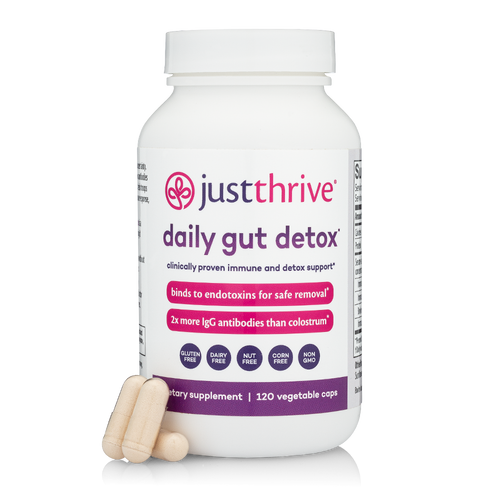
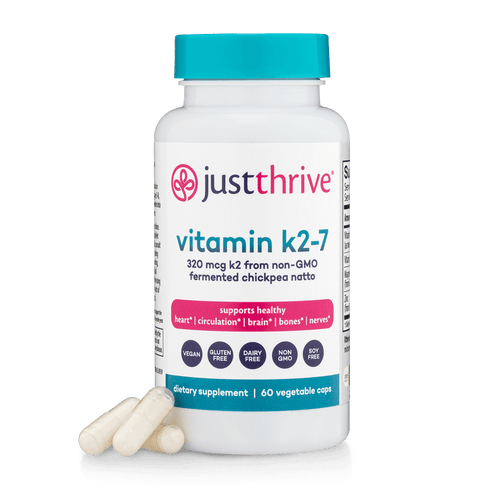
Just Thrive Core Health Products


Frequently Asked Questions About Childhood Gut Health and Metabolic Wellness
How is a child’s gut health connected to metabolic wellness?
The gut microbiome produces compounds, such as short chain fatty acids and digestive hormones, that help the body manage blood sugar, energy, and weight. Keeping the microbiome in healthy balance early in life is thought to support these metabolic systems over the long term.
Can antibiotics affect a child’s gut microbiome?
Antibiotics target bacteria, and along with harmful pathogens they can reduce beneficial probiotic bacteria, knocking the microbiome out of balance. Multiple or repeated courses can keep the gut in a state of imbalance called dysbiosis.
What can throw a child’s gut microbiome out of balance?
A range of factors can contribute, including antibiotic use, exposure to pesticides such as glyphosate, stress, and a diet high in processed foods. You cannot avoid every disruption, but supportive habits can help maintain balance.
How can I support a balanced gut microbiome in my family?
Combining a varied whole-food diet with spore-based probiotics and targeted prebiotics such as FOS, GOS, and XOS supports a diverse population of beneficial bacteria. This approach helps nourish good bacteria from multiple angles.
What are spore probiotics and why do they survive digestion?
Spore probiotics, such as Bacillus subtilis HU58 and Bacillus clausii, are protected by a natural endospore shell that lets them survive stomach acid and reach the gut alive. Once there they help claim space, crowd out pathogens, and nourish existing beneficial bacteria.
Maintain Microbiome and Metabolic Balance with Just Thrive
A well-balanced gut requires proactive support to keep it that way. And healthy metabolic function, as well as overall wellness, are also supported by a balanced gut microbiome in both kids and adults.
Just Thrive Probiotic & Antioxidant and PREbiotic supply just what your gut needs for a balanced microbiome.
Just Thrive Probiotic & Antioxidant contains four clinically-studied spore probiotics. This team is proven to work synergistically to foster a diverse population of beneficial gut bacteria. The strains in this supplement include:
- Bacillus subtilis HU58™
- Bacillus indicus HU36™
- Bacillus coagulans
- Bacillus clausii
Just Thrive PREbiotic contains FOS, GOS, and XOS, three types of prebiotic fiber known to preferentially nourish only beneficial gut bacteria.
>> Keep your family’s gut microbiomes in healthy balance with Just Thrive Probiotic and PREbiotic. (Bundle & save!)
And if you’re on the fence about trying the Just Thrive Probiotic and PREbiotic… We've got you covered!
We’re confident that when you use each as directed, you’ll love the way you feel.
But if you aren’t completely happy, let us know.
Every Just Thrive purchase comes with our Bottom of the Bottle, 100% money back guarantee. If you’re not satisfied with your purchase for any reason, you can request a full product refund at any time.
Even if it’s been 3 days… 3 weeks… or 3 months since your purchase. Even if the bottle is empty!

Sources
- Dahiya D, Nigam PS. Antibiotic-Therapy-Induced Gut Dysbiosis Affecting Gut Microbiota-Brain Axis and Cognition: Restoration by Intake of Probiotics and Synbiotics. Int J Mol Sci. 2023 Feb 4;24(4):3074.
- Kissler SM, Wang B, Mehrotra A, Barnett M, Grad YH. Impact of Respiratory Infection and Chronic Comorbidities on Early Pediatric Antibiotic Dispensing in the United States. Clin Infect Dis. 2023;76(3):382-388. doi:10.1093/cid/ciac811
- Hill JH, Bell R, Barrios L, et al. Neonatal fungi promote lifelong metabolic health through macrophage-dependent β cell development. Science. 2025;387(6738):eadn0953. doi:10.1126/science.adn0953
- Chagas AP, da Silva NG, Ribeiro CM, Amato AA. Early-life exposure to antibiotics and excess body weight in childhood and adolescence: A systematic review and meta-analysis. Obes Res Clin Pract. 2023;17(4):318-334. doi:10.1016/j.orcp.2023.07.001
- Bartelt K, Keane G, Barkley E, Carrico N, Higgs E. Frequent early-life antibiotic use associated with increased likelihood of childhood obesity. Epic Research. Accessed February 4, 2026. https://epicresearch.org/articles/frequent-early-life-antibiotic-use-associated-with-increased-likelihood-of-childhood-obesity
- Fujisaka S, Watanabe Y, Tobe K. The gut microbiome: a core regulator of metabolism. J Endocrinol. 2023 Jan 19;256(3):e220111.
- Xu J, Moore BN, Pluznick JL. Short-Chain Fatty Acid Receptors and Blood Pressure Regulation: Council on Hypertension Mid-Career Award for Research Excellence 2021. Hypertension. 2022 Oct;79(10):2127-2137.
- Kim CH. Microbiota or short-chain fatty acids: which regulates diabetes? Cell Mol Immunol. 2018 Feb;15(2):88-91.
- Vourakis M, Mayer G, Rousseau G. The Role of Gut Microbiota on Cholesterol Metabolism in Atherosclerosis. Int J Mol Sci. 2021 Jul 28;22(15):8074. doi: 10.3390/ijms22158074. PMID: 34360839; PMCID: PMC8347163.
- Noor J, Chaudhry A, Batool S, Noor R, Fatima G. Exploring the Impact of the Gut Microbiome on Obesity and Weight Loss: A Review Article. Cureus. 2023 Jun 25;15(6):e40948.
- Carmody, R.N., Bisanz, J.E. Roles of the gut microbiome in weight management. Nat Rev Microbiol 21, 535–550 (2023).
- Fan, Y., Pedersen, O. Gut microbiota in human metabolic health and disease. Nat Rev Microbiol 19, 55–71 (2021).
- Lathakumari, R., et al. Antibiotics and the gut microbiome: Understanding the impact on human health. Medicine in Microecology. Volume 20, June 2024, 100106
- Lehman PC, Cady N, Ghimire S, Shahi SK, Shrode RL, Lehmler HJ, Mangalam AK. Low-dose glyphosate exposure alters gut microbiota composition and modulates gut homeostasis. Environ Toxicol Pharmacol. 2023 Jun;100:104149.
- Gao F, et al. Stressful events induce long-term gut microbiota dysbiosis and associated post-traumatic stress symptoms in healthcare workers fighting against COVID-19. J Affect Disord. 2022 Apr 15;303:187-195.
- Rondinella D, et al. The Detrimental Impact of Ultra-Processed Foods on the Human Gut Microbiome and Gut Barrier. Nutrients. 2025 Feb 28;17(5):859.
- Sørensen K, Jog P, Mankar S, Holz C, Jadhav S. Effects of spore-forming probiotic Bacillus subtilis HU58™ in children with antibiotic-associated diarrhoea: a randomized, double-blind, placebo-controlled trial. Benef Microbes. 2025;17(1):1-10. doi:10.1163/18762891-bja00086
- Faramarzi S, Krishnan K. The Spectacular Role of the Human Microbiome in Preventing Post-prandial or Metabolic Endotoxemia (OR23-02-19). Curr Dev Nutr. 2019;3(Suppl 1):nzz040.OR23-02-19. Published 2019 Jun 13. doi:10.1093/cdn/nzz040.OR23-02-19
- Dang HT, Phung TTB, Tran DM, et al. High-dose multi-strain Bacillus probiotics enhance treatment and reduce antibiotic usage in children with persistent diarrhea through immune and microbiota modulation. Sci Rep. 2025;15:30231. doi:10.1038/s41598-025-15199-y
- Ho J, Nicolucci AC, Virtanen H, et al. Effect of Prebiotic on Microbiota, Intestinal Permeability, and Glycemic Control in Children With Type 1 Diabetes. J Clin Endocrinol Metab. 2019;104(10):4427-4440. doi:10.1210/jc.2019-00481
- Sierra C, Bernal MJ, Blasco J, et al. Prebiotic effect during the first year of life in healthy infants fed formula containing GOS as the only prebiotic: a multicentre, randomised, double-blind and placebo-controlled trial. Eur J Nutr. 2015;54(1):89-99. doi:10.1007/s00394-014-0689-9
- Dang HT, Phung TTB, Tran DM, et al. High-dose multi-strain Bacillus probiotics enhance treatment and reduce antibiotic usage in children with persistent diarrhea through immune and microbiota modulation. Sci Rep. 2025;15:30231. doi:10.1038/s41598-025-15199-y


