



Have you been feeling off? Tired all the time no matter how much you sleep. Your brain feels like it’s in slow mode. Mood all over the place. Achy joints.
You’ve been dealing with issues that have no obvious source. Your doctor can’t find anything wrong, maybe even suggests it’s all in your head.
But it might actually be in your gut.
You could have silent celiac disease. And if you don’t take steps to manage it, things could get a lot worse.
Quick Answer: Silent (or asymptomatic) celiac disease is celiac disease without the obvious digestive symptoms most people associate with it. Instead of diarrhea or bloating after gluten, signs can show up as fatigue, brain fog, joint pain, mood changes, or nutrient deficiencies, which are easy to miss. The Celiac Disease Foundation estimates about 80% of people with celiac remain undiagnosed. Even when symptoms are hidden, eating gluten still triggers an immune response that can damage the small intestine over time. A gluten-free diet is the recognized way to manage celiac disease, and gut-supporting enzymes and probiotics may help with the everyday challenge of accidental gluten exposure.
What Is Silent Celiac Disease?
Silent celiac disease is celiac disease that shows up without the classic digestive symptoms. Rather than diarrhea or bloating, it can appear as fatigue or joint pain, which are easy to overlook, so most cases go undiagnosed.
The clearest signs of celiac disease involve digestive problems like diarrhea, constipation, gas, and bloating whenever you eat gluten. But not everyone gets those either.[1]
Some people have hidden issues, like fatigue or joint pain, that they’d never connect to eating gluten. Those cases are called silent or asymptomatic celiac.[2] And they’re even more common. According to the Celiac Disease Foundation, an estimated 80% of people with celiac remain undiagnosed.
And even though the symptoms are hidden, that doesn’t mean the disease isn’t damaging your body.
 Want to listen instead of read? CLICK HERE
Can Gluten Damage Your Gut Even Without Digestive Symptoms?
Yes. With celiac disease, eating gluten triggers an immune response that can harm the small intestine whether or not you notice symptoms. That damage builds up over time and can affect how well you absorb nutrients.
Whether or not you notice it, celiac disease harms your gut.
When you have celiac disease, any gluten you eat triggers an immune inflammatory response. Your body attacks your small intestine, harming the villi (small thread-like projections) that line it.[3] That damage to the villi can prevent you from absorbing nutrients from your food.
Gluten is a naturally destructive protein.[4] It has many more negative effects on the body on top of triggering inflammation. Research shows that gluten can:[5]
- unbalance the gut microbiome
- cause leaky gut
- increase oxidative stress
- interfere with normal cell function
All of that adds up, and the direct harm to the small intestine is cumulative. While gluten remains in your diet, the damage just keeps building up. Even if you remove gluten from your diet, the existing damage can take years to repair.[6]
What Are the Hidden Signs of Silent Celiac?
Hidden signs of celiac can include anemia, extreme fatigue, nerve issues, brain fog, dental enamel problems, mood changes, skin rashes, and joint or muscle pain. Many trace back to immune activity, gut imbalance, and poor nutrient absorption.
Because of all the damage it does, especially to your immune system, gluten can cause a wide variety of health problems that seem completely unrelated. Many of these are due to improper immune system responses, others from gut microbiome imbalances and leaky gut, and others due to malabsorption and malnutrition.
Research shows that nearly 90% of people with celiac disease, whether they know they have it or not, are severely deficient in several nutrients including B vitamins, vitamins A and D, zinc, iron, and calcium.[7]
Some of those hidden effects of gluten include:
- anemia[8]
- extreme fatigue[9]
- neuropathy (nerve damage)[10]
- brain fog[11]
- dental problems (including weakened or discolored enamel)[12]
- infertility[13]
- depression and anxiety[14]
- elevated liver enzymes[15]
- painful skin rashes[16]
- muscle and joint pain[17,18]
- osteoporosis[19]
If you’re dealing with any of these issues, you may have celiac disease. Even if you don’t think you have celiac, it makes sense to get tested. And, more important, go gluten-free for at least one month.
If you start to feel better… gluten is the problem.

How Do You Handle Accidental Gluten Exposure?
Following a gluten-free diet is the recognized way to manage celiac disease, but hidden gluten and cross-contamination make complete avoidance hard. Gut-supporting enzymes and probiotics may help your body deal with gluten you encounter by accident.
Going gluten-free is the only way to manage celiac disease long-term. It stops the constant damage gluten causes, and it gives your body a chance to repair your intestines, and that can take years to happen.
But eating any gluten at all can reactivate the immune system attacks, create new damage, and thwart your progress.
Unfortunately, many foods with gluten-free labels do contain gluten. Studies show that up to 40% of gluten-free foods sampled had gluten in them.[20] Plus, many foods you wouldn’t expect to contain gluten, like pickles, licorice, and salad dressing, actually do.
Then there’s cross-contamination. If any flour or other gluten-containing foods are in a kitchen, either at your home or in a restaurant, you can be exposed to that gluten accidentally.
All of that makes it very hard to avoid gluten completely, even when you’re doing your best to stick to a gluten-free diet. But there is a way to safeguard yourself against accidental gluten ingestion.
The human body can’t break down gluten fully. It needs assistance from a special enzyme called Tolerase G that converts unmanageable gluten proteins into much smaller pieces that your body can handle more easily.
And if you’re going through the trouble of eating gluten-free, you’ll want to give your gut as much support as you can. You can support that process with special probiotics that produce compounds called short chain fatty acids (SCFAs), which help maintain gut barrier integrity and balanced immune responses.[21] Each of these specialized probiotics bring added benefits to promote a healthy gut:
- Saccharomyces boulardii is a clinically studied probiotic yeast known to help dissolve gluten proteins and support complete nutrient absorption and gastrointestinal (GI) comfort.[22,23].
- Bacillus coagulans is a spore probiotic that quickly comforts and nurtures a gut irritated by gluten[24] and can help your gut barrier prevent toxins from leaking into your bloodstream.
- Bacillus subtilis, another spore probiotic, offers balanced immune system support and promotes SCFA production to nourish the gut barrier.[25,26]
Bottom line: In combination with going gluten-free, these enzymes and probiotics help to nourish your intestinal lining and break down gluten you are accidentally exposed to before it causes trouble.
Frequently Asked Questions About Silent Celiac Disease
What is silent celiac disease?
Silent celiac disease, also called asymptomatic celiac, is celiac disease without the obvious digestive symptoms. Instead of diarrhea or bloating, it may show up as fatigue, joint pain, or other issues that seem unrelated to gluten. Because the signs are subtle, most cases go undiagnosed.
Can you have celiac disease without stomach problems?
Yes. Not everyone with celiac disease gets digestive symptoms. Many people have hidden signs such as fatigue, brain fog, or nutrient deficiencies. The Celiac Disease Foundation estimates about 80% of people with celiac remain undiagnosed.
What are the hidden signs of celiac disease?
Hidden or extraintestinal signs can include anemia, extreme fatigue, nerve issues, brain fog, dental enamel problems, mood changes, skin rashes, and joint or muscle pain. These are often linked to immune activity, gut imbalance, and poor nutrient absorption.
How is silent celiac disease managed?
A strict gluten-free diet is the recognized way to manage celiac disease, since it stops the ongoing immune response to gluten and gives the gut a chance to repair. Anyone who suspects celiac should talk with a healthcare provider about testing before changing their diet.
How can you deal with accidental gluten?
Hidden gluten and cross-contamination make full avoidance difficult. Gut-supporting enzymes such as Tolerase G, along with probiotics like Saccharomyces boulardii, Bacillus coagulans, and Bacillus subtilis, may help your body handle gluten you are exposed to by accident.
Just Thrive Gut Health Products

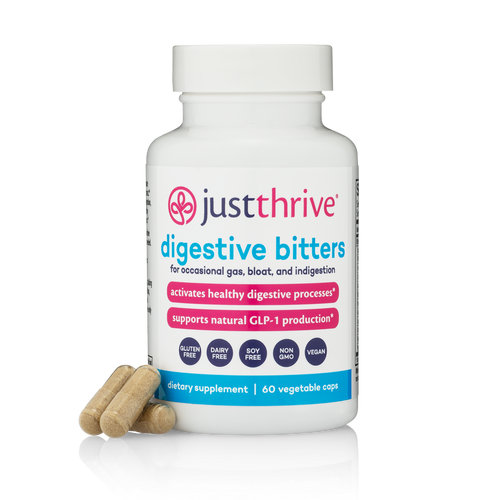
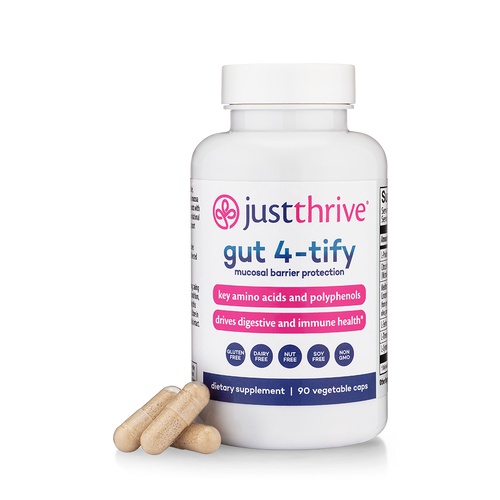

Calm Your Gluten Fears with Gluten Away
Avoiding gluten is a critical step for protecting your health. And you can safeguard yourself against hidden gluten and cross contamination by giving your body the defenses it needs against accidental gluten exposure.
Gluten Away contains:
- Gluten-crushing enzyme, Tolerase G
- Gut-nourishing probiotics Bacillus subtilis HU58, Bacillus coagulans, and Saccharomyces boulardii
- Betaine HCl for healthy stomach acid levels
Afraid Gluten Away won’t do the trick? We can help you with that.
EVERY Just Thrive purchase is covered by our Bottom of the Bottle, 100% money back guarantee.
That means you can try Gluten Away to see just how well it works for you… and we’re betting you’ll love it. But if for any reason you don’t feel a difference, you can ask for a full product refund at any time.
Even if it’s 3 months or 3 years later. Even if the bottle is empty!

Sources
- Daley SF, Haseeb M. Celiac disease. In: StatPearls [Internet]. Treasure Island, FL: StatPearls Publishing; 2025–. Updated February 4, 2025. Accessed November 19, 2025. https://www.ncbi.nlm.nih.gov/books/NBK441900/
- Çaltepe G. The hidden danger: Silent celiac disease. Turk J Gastroenterol. 2018;29(5):530-531. doi:10.5152/tjg.2018.280818
- Schiepatti A, et al. Persistent villous atrophy predicts development of complications and mortality in adult patients with coeliac disease: a multicentre longitudinal cohort study and development of a score to identify high-risk patients. Gut. 2023 Nov;72(11):2095-2102.
- Kõiv V, Tenson T. Gluten-degrading bacteria: availability and applications. Appl Microbiol Biotechnol. 2021 Apr;105(8):3045-3059.
- Lerner A, Shoenfeld Y, Matthias T. Adverse effects of gluten ingestion and advantages of gluten withdrawal in nonceliac autoimmune disease. Nutr Rev. 2017 Dec 1;75(12):1046-1058.
- Welstead L. The Gluten-Free Diet in the 3rd Millennium: Rules, Risks and Opportunities. Diseases. 2015 Jul 13;3(3):136-149
- Wierdsma NJ, van Bokhorst-de van der Schueren MA, Berkenpas M, Mulder CJ, van Bodegraven AA. Vitamin and mineral deficiencies are highly prevalent in newly diagnosed celiac disease patients. Nutrients. 2013 Sep 30;5(10):3975-92.
- Valvano M, Giansante C, Vinci A, Maurici M, Fabiani S, Stefanelli G, Cesaro N, Viscido A, Caloisi C, Latella G. Persistence of anemia in patients with Celiac disease despite a gluten free diet: a retrospective study. BMC Gastroenterol. 2025 Mar 3;25(1):128.
- Skjellerudsveen BM, Omdal R, Grimstad T. Fatigue in celiac disease: A review of the literature. JGH Open. 2019 Jan 8;3(3):242-248.
- Mearns ES, Taylor A, Thomas Craig KJ, Puglielli S, Cichewicz AB, Leffler DA, Sanders DS, Lebwohl B, Hadjivassiliou M. Neurological Manifestations of Neuropathy and Ataxia in Celiac Disease: A Systematic Review. Nutrients. 2019; 11(2):380.
- Croall ID, Hoggard N, Aziz I, Hadjivassiliou M, Sanders DS. Brain fog and non-coeliac gluten sensitivity: Proof of concept brain MRI pilot study. PLoS One. 2020 Aug 28;15(8):e0238283.
- Inchingolo AD, et al. Celiac Disease-Related Enamel Defects: A Systematic Review. J Clin Med. 2024 Feb 28;13(5):1382.
- Freeman HJ. Reproductive changes associated with celiac disease. World J Gastroenterol. 2010 Dec 14;16(46):5810-4.
- Clappison E, Hadjivassiliou M, Zis P. Psychiatric Manifestations of Coeliac Disease, a Systematic Review and Meta-Analysis. Nutrients. 2020 Jan 4;12(1):142.
- Villavicencio Kim J, Wu GY. Celiac Disease and Elevated Liver Enzymes: A Review. J Clin Transl Hepatol. 2021 Feb 28;9(1):116-124. doi: 10.14218/JCTH.2020.00089. Epub 2020 Dec 7. PMID: 33604262; PMCID: PMC7868701.
- Pasternack C, Hervonen K, Mansikka E, Reunala T, Collin P, Kaukinen K, Salmi T. Persistent Skin Symptoms after Diagnosis and on a Long-term Gluten-free Diet in Dermatitis Herpetiformis. Acta Derm Venereol. 2021 Sep 22;101(9):adv00555.
- Jericho H, Sansotta N, Guandalini S. Extraintestinal Manifestations of Celiac Disease: Effectiveness of the Gluten-Free Diet. J Pediatr Gastroenterol Nutr. 2017 Jul;65(1):75-79.
- Priyadarshini S, Asghar A, Shabih S, Kasireddy V. Celiac Disease Masquerading as Arthralgia. Cureus. 2022 Jun 28;14(6):e26387.
- Bommu VJL, Mirza L. Osteoporosis Can Be the Sole Presentation in Celiac Disease. Cureus. 2021 Dec 22;13(12):e20602.
- Lee HJ, Anderson Z, Ryu D. Gluten contamination in foods labeled as "gluten free" in the United States. J Food Prot. 2014 Oct;77(10):1830-3.
- Parada Venegas D, De la Fuente MK, Landskron G, González MJ, Quera R, Dijkstra G, Harmsen HJM, Faber KN, Hermoso MA. Short Chain Fatty Acids (SCFAs)-Mediated Gut Epithelial and Immune Regulation and Its Relevance for Inflammatory Bowel Diseases. Front Immunol. 2019 Mar 11;10:277.
- Moré MI. Saccharomyces boulardii CNCM I-745, die medizinische Hefe verbessert die Funktion intestinaler Enzyme [Saccharomyces boulardii CNCM I-745 - the medicinal yeast improves intestinal enzyme function]. MMW Fortschr Med. 2019 Mar;161(Suppl 4):20-24. German.
- Bustos Fernández LM, Man F, Lasa JS. "Impact of Saccharomyces boulardii CNCM I-745 on bacterial overgrowth and composition of intestinal microbiota in IBS-D patients: results of a randomized pilot study". Dig Dis. 2023 Jan 11.
- Shinde T, Perera AP, Vemuri R, Gondalia SV, Karpe AV, Beale DJ, Shastri S, Southam B, Eri R, Stanley R. Synbiotic Supplementation Containing Whole Plant Sugar Cane Fibre and Probiotic Spores Potentiates Protective Synergistic Effects in Mouse Model of IBD. Nutrients. 2019 Apr 11;11(4):818.
- Ilinskaya ON, Ulyanova VV, Yarullina DR, Gataullin IG. Secretome of Intestinal Bacilli: A Natural Guard against Pathologies. Front Microbiol. 2017 Sep 1;8:1666.
- Rhayat L, Maresca M, Nicoletti C, Perrier J, Brinch KS, Christian S, Devillard E, Eckhardt E. Effect of Bacillus subtilis Strains on Intestinal Barrier Function and Inflammatory Response. Front Immunol. 2019 Mar 29;10:564.


