



Living with IBS (irritable bowel syndrome) can be challenging.
IBS interferes with work, school, social outings, meals, sleep…[1] virtually every aspect of your life.
It can be embarrassing, uncomfortable, and unpredictable.
Flare-ups strike without warning… even if you watch what you eat, manage your stress, and do everything else right. Symptoms can last a few days or even for months before they settle down.
That can lead to feelings of helplessness and hopelessness…
But it doesn't mean you’re stuck letting IBS control your life forever. In fact, there may be a simple way to help get your digestive issues under control.
Quick Answer: IBS (irritable bowel syndrome) is a common functional gut disorder, meaning the GI tract does not work properly even though nothing is structurally broken, which makes it hard to diagnose and to manage long term. Up to 15% of people worldwide have IBS, and there is no recognized cure, so doctors usually start with diet and stress-management changes. A growing body of research links IBS symptoms to gut dysbiosis, an imbalance where bad bacteria outnumber good. That is why many people look to probiotics, but the type matters. In one clinical trial, a spore probiotic blend was associated with the largest improvements in quality-of-life measures among the groups studied.
Why Is IBS So Hard to Diagnose and Treat?
IBS is hard to diagnose and manage because it is a functional disorder: the GI tract does not work properly even though there is no structural damage or biochemical imbalance to point to. There is no single test for it and no recognized cure, so it becomes a diagnosis of exclusion.
Despite being the most common functional gastrointestinal (GI) condition worldwide, IBS remains difficult to diagnose correctly and to treat long-term. Up to 15% of people across the globe have IBS, with 60% having moderate to severe symptoms.
IBS is a functional disorder, meaning that there’s nothing broken in the GI structure and no biochemical imbalance. Instead, the GI tract doesn’t function properly for “unknown” reasons. That makes IBS harder to diagnose.
 Want to listen instead of read? CLICK HERE
In fact, IBS prompts among the most doctor visits, about 3.5 million every year in the U.S., and costs more than $21 billion annually in healthcare expenses and lost work time.[2]
Unfortunately, no specific test exists for IBS, making it a “what’s left” type of diagnosis. And that’s for only about 25% of the people with the condition who actually go to the doctor about their GI symptoms.[3]
Once IBS gets properly diagnosed, doctors commonly recommend lifestyle changes as the first line of action.[4] That advice usually includes some big changes to diet, like going gluten free or avoiding a group of foods called FODMAPs, along with stress management techniques. That’s because there’s no recognized cure for IBS right now, though there are some treatments doctors can prescribe such as:
- Rifaximin, an antibiotic
- Loperamide, an anti-diarrhea medication
- Laxatives, for constipation
- Antidepressants, for abdominal pain
All of those medications come with potential side effects though, and none would work as long-term solutions or address the root cause of your issues. That’s why some doctors recommend probiotics…but which probiotic matters.

How Are Gut Bacteria Connected to IBS?
The gut microbiome influences digestion, immunity, and more, and research links IBS symptoms to dysbiosis, an imbalance where bad bacteria outnumber beneficial ones. A balanced, healthy gut microbiome may be key to keeping IBS symptoms in check.
Your gut microbiome contains trillions of bacteria, beneficial (probiotic) and bad (pathogenic). Those bacteria influence virtually everything in your body, from digestion to immune function to mental health.
When your gut microbiome is in healthy balance, beneficial bacteria vastly outnumber pathogens. Then, they’re able to keep you and your GI tract in great shape by producing life-sustaining compounds, including:
A healthy gut microbiome also keeps your immune system on the right path, so it doesn't over or under react to threats. It helps your body maintain a healthy inflammatory response. And, most important, a healthy gut microbiome helps keep the critical gut barrier intact and strong, so toxins can’t escape into the bloodstream (as in the case of leaky gut).
But when bad bacteria outnumber good bacteria, a condition called dysbiosis, everything goes haywire. Bad bacteria steal essential nutrients… cause inflammation… breach the gut barrier…
And these factors can contribute to IBS symptoms.[5] In fact, many studies have found direct links between gut dysbiosis and IBS, leading researchers to believe a balanced and healthy gut microbiome could be the key to avoiding IBS.
What Did the Spore Probiotic Study Find?
In a clinical trial of 90 people with diarrhea-predominant IBS (IBS-D), the group given a blend of spore probiotics reported the highest improvements in quality-of-life measures such as mood, vitality, and social functioning among the three groups studied.
A new groundbreaking clinical trial found that a special blend of spore probiotics offered participants the profound ability to sidestep IBS.[6]
The study included 90 patients with IBS-D (where diarrhea is the primary symptom), who were divided into three treatment groups:
- Group 1 received 10 days of rifaximin followed by nutritional supplement containing probiotics, prebiotics, and vitamins for 24 days.
- Group 2 received 10 days of rifaximin followed by a special diet for 24 days.
- Group 3 received a mixture of spore probiotics, including Bacillus subtilis HU58, Bacillus indicus HU36, Bacillus coagulans, and Bacillus clausii, for 34 days.
All three groups reported a significant difference by the end of the trial period, including substantial improvements in quality of life measures, such as mood, vitality, and social functioning.
Interestingly, of the three groups studied, the subset with the highest ranking scores was group 3 (the spore probiotic group).
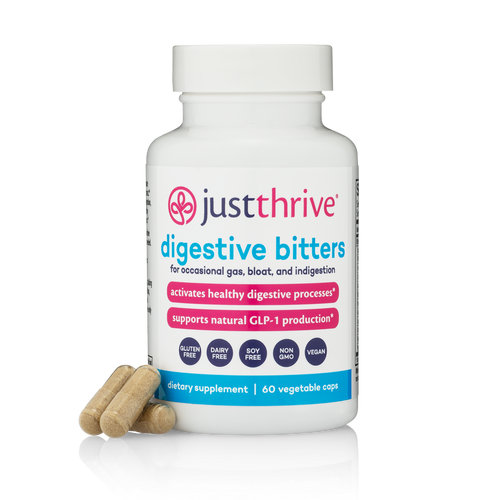
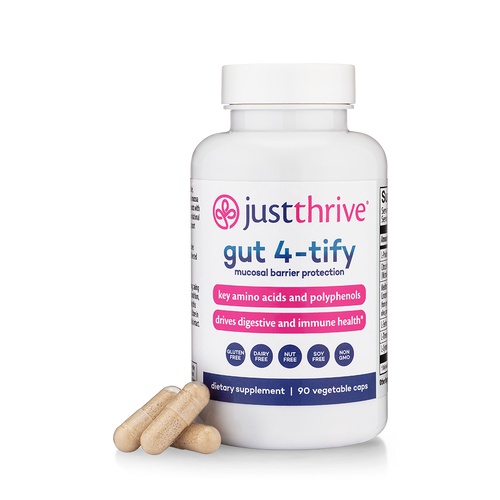
Just Thrive Gut Health Products


Frequently Asked Questions About IBS
What is IBS?
IBS, or irritable bowel syndrome, is the most common functional gastrointestinal condition worldwide. It is "functional," meaning the GI tract does not work properly even though nothing is structurally broken, which is part of why it is hard to diagnose.
Why is IBS so hard to diagnose?
There is no specific test for IBS, so it tends to be a diagnosis of exclusion after other conditions are ruled out. Only about 25% of people with IBS symptoms actually see a doctor about them, which adds to the challenge.
Is there a cure for IBS?
There is no recognized cure for IBS at this time. Doctors commonly start with lifestyle changes such as diet adjustments (like going gluten free or limiting FODMAPs) and stress-management techniques.
How is the gut microbiome connected to IBS?
Many studies have found direct links between gut dysbiosis (an imbalance where bad bacteria outnumber good) and IBS symptoms. This has led researchers to view a balanced, healthy gut microbiome as potentially key to keeping IBS at bay.
Can probiotics help with IBS?
Some doctors recommend probiotics, but the type matters. In one clinical trial, the group given a spore probiotic blend reported the largest improvements in quality-of-life measures among the groups studied.
Balance Your Gut Microbiome With Just Thrive
Just Thrive Probiotic is powered by four proven spore probiotics that quickly balance the gut microbiome and work together to support the growth of beneficial bacteria, and that means a happier GI tract for you.
Just Thrive Probiotic contains four clinically studied strains of spore probiotics including:
- Bacillus subtilis HU58™
- Bacillus indicus HU36™
- Bacillus clausii
- Bacillus coagulans
>> Get Just Thrive Probiotic today, and break free of IBS.
And if you’re unsure about trying Just Thrive Probiotic, we can help with that.
EVERY Just Thrive purchase is covered by our Bottom of the Bottle, 100% money back guarantee.
That means you can try Just Thrive Probiotic to see how well it works for you… and we’re betting that you’ll notice a positive difference.
But if for any reason you’re not satisfied, you can ask for a full product refund at any time. Even if it’s 3 months or 3 years later. Even if the bottle is empty! You’ll get your money back any time, no matter what.

Sources
- Ballou S, et al. Effects of irritable bowel syndrome on daily activities vary among subtypes based on results from the IBS in America survey. Clin Gastroenterol Hepatol. 2019;17(12):2471-2478.e3. doi:10.1016/j.cgh.2019.08.016
- International Foundation for Gastrointestinal Disorders (IFFGD). IBS facts and statistics. Accessed March 26, 2025. https://aboutibs.org/what-is-ibs/facts-about-ibs/
- American College of Gastroenterology. Irritable bowel syndrome (IBS). Accessed March 26, 2025. https://gi.org/topics/irritable-bowel-syndrome/
- National Institute of Diabetes and Digestive and Kidney Diseases. Treatment for irritable bowel syndrome. Last reviewed November 2017. Accessed March 26, 2025. https://www.niddk.nih.gov/health-information/digestive-diseases/irritable-bowel-syndrome/treatment
- Menees S, Chey W. The gut microbiome and irritable bowel syndrome. F1000Res. 2018;7:F1000 Faculty Rev-1029. Published 2018 Jul 9. doi:10.12688/f1000research.14592.1
- Catinean A, Neag AM, Nita A, Buzea M, Buzoianu AD. Bacillus spp. Spores-A Promising Treatment Option for Patients with Irritable Bowel Syndrome. Nutrients. 2019;11(9):1968. Published 2019 Aug 21. doi:10.3390/nu11091968


