



As prebiotics continue to gain attention in the wellness world, there’s one common misconception. Most people think prebiotics simply feed “good” gut bacteria.
But that’s only part of the story. One of their biggest benefits is actually what happens next, after those beneficial microbes ferment prebiotic fibers. Gut bacteria use prebiotics as fuel, which helps them create essential compounds that support digestion, gut barrier strength, immunity, and more.
In this blog, you’ll discover what prebiotics are, the three most important things your gut bacteria make, and why feeding them the right prebiotics matters.
Quick Answer: Prebiotics do more than simply feed beneficial gut bacteria; they help those microbes produce important compounds that support digestive and overall health. When gut bacteria ferment the right prebiotic fibers, they create short-chain fatty acids (especially butyrate), certain vitamins, and other beneficial microbial metabolites that help nourish the gut lining, support immune function, strengthen the gut barrier, and promote a balanced microbiome. Because different prebiotics feed different bacteria, the type of prebiotic you consume matters. Choosing clinically studied prebiotics that selectively nourish beneficial microbes can help your gut produce more of these health-supporting compounds.
What Are Prebiotics, and Why Do Good Bacteria Need Them?
Prebiotics are fibers that your body can’t digest on its own. Instead, they travel to the large intestine mostly intact, where they become food for the trillions of bacteria living in your gut microbiome.1
Because they serve as an important fuel source, beneficial bacteria need prebiotics to thrive. Just like your body needs nutrients to function properly, these microbes need prebiotics to grow, carry out their natural processes, and support your health.
However, not all prebiotics work the same way. Some can be used as fuel by all gut bacteria, while others preferentially nourish only the beneficial microbes, helping them thrive without equally feeding less desirable ones. This important distinction is why some prebiotics may provide more targeted microbiome support than others. (We’ll cover which ones to look for at the end of this blog.)
Once they reach the colon, “smart” prebiotics (those that feed beneficial bacteria) are broken down into compounds called microbial metabolites. These metabolites contribute to many of the health benefits associated with a balanced gut microbiome.2
Different prebiotic fibers feed different types of beneficial bacteria. As a result, they don’t all produce the same metabolites. One type of fiber may encourage bacteria to produce short-chain fatty acids, while others might support the production of vitamins or other helpful compounds.
 Want to listen instead of read? CLICK HERE
Some of the best prebiotic sources are plant-based foods, including:3
- Apples
- Asparagus
- Bananas
- Chicory root
- Garlic
- Jerusalem artichokes
- Legumes
- Oats
- Onions
- Soybeans
- Whole wheat, wheat bran, and whole-grain products
These foods contain different types of prebiotic fibers, which is one reason eating a varied, fiber-rich diet may help beneficial bacteria produce a wider range of helpful compounds.
So, what exactly do well-fed gut bacteria produce? Here are three of the most important compounds they make and why they matter for your gut and overall health.

1. Short-Chain Fatty Acids
Short-chain fatty acids (SCFAs) are the main compounds produced when beneficial gut bacteria ferment prebiotic fibers. They perform essential functions in your microbiome, helping support digestive health, gut barrier strength, immune function, and healthy metabolism.4
The three primary SCFAs are acetate, propionate, and butyrate, which make up roughly 95% of the SCFAs in your body. And while some of their benefits may overlap, each plays a unique role in your body.
- Acetate is the most abundant SCFA. When it enters the bloodstream, it travels throughout the body, where it is used as an energy source by different organs. It also helps support appetite regulation and metabolic health.5
- Propionate is especially helpful in the liver, where it supports healthy glucose metabolism and contributes to satiety after meals. It also nourishes intestinal cells, promoting a strong gut barrier.6
- Butyrate is the primary energy source for the cells lining the colon and plays a critical role in supporting a healthy intestinal barrier. It also helps regulate metabolism and a balanced immune response.7
These SCFAs and others work together to help create an environment where beneficial bacteria flourish, while contributing to many of the gut’s most important functions.
Among the SCFAs, butyrate stands out for its unique role in protecting and nourishing the gut lining.
Why Is Butyrate So Important?
Butyrate performs so many crucial tasks that it is often called the “star” SCFA.
First, this vital SCFA plays a large role in maintaining a healthy gut barrier.8 This is the protective barrier lining your gut, which allows water and nutrients to pass through into your bloodstream while keeping out unwanted (and potentially harmful) substances. Butyrate nourishes colon cells and supports tight junctions, which help seal the gaps between cells and strengthen gut barrier integrity.9,10
Butyrate also contributes to a healthy inflammatory response in the gut, which supports digestion and gastrointestinal health. Additionally, it plays a role in communication between the gut microbiome and the immune system, helping support healthy immune signaling.11
Butyrate may be the microbiome's best-known metabolite, but it's far from the only beneficial substance gut bacteria produce.

2. Vitamins
Certain beneficial gut bacteria can produce specific vitamins, contributing to your body's overall “vitamin pool.”12,13 However, this should be seen as a complement, not a substitution, to the nutrients your body gets from food or supplements.
Some of the vitamins these microbes produce include:
- Vitamin K2, which is essential for blood clotting and maintaining bone and heart strength. It also contributes to a healthy immune system.14
- B vitamins, including B9 (folate), biotin (B7), and riboflavin (B2), which support energy production, nervous system function, and cell growth.15
Exactly how much vitamins are produced and how much they contribute to your overall vitamin reserves can vary from person to person, based on gut balance and microbial diversity, which is one more reason why maintaining a healthy, well-nourished microbial community is so important.
And vitamins aren’t the end of the story. Gut bacteria also contribute to the production of other helpful compounds.

3. Microbial Metabolites
Along with short-chain fatty acids and certain vitamins, beneficial bacteria contribute to the creation of compounds called microbial metabolites that support gut health, the immune system, and overall well-being.
One of these is indoles, which are produced when specific bacteria break down the amino acid, tryptophan. Indoles often act as messengers between the gut and the immune system, helping support a healthy inflammatory response and a balanced immune response. They also may help strengthen the gut barrier and support healthy brain function.16,17
Beneficial gut bacteria also produce other metabolites, such as lactate and succinate.
- Lactate acts as a signaling molecule, helping regulate immune cell activity and supporting a balanced immune response. It also helps support a gut environment that favors beneficial bacteria and helps maintain microbial balance within the gut.18
- Succinate plays a role in communication between the gut microbiome, the gut barrier, and the immune system. Research suggests it may help support gut barrier function and healthy immune signaling.19
But perhaps even more interesting, both lactate and succinate act as food sources themselves in a process called “microbial cross-feeding.” In other words, one type of beneficial bacteria produces them, and another type of beneficial bacteria consumes them, turning them into helpful, health-supporting SCFAs like butyrate, acetate, and propionate.20
One of the most important takeaways here? What gut bacteria ultimately produce depends on what you feed them. And not all prebiotic fibers are made the same.
Why Do Different Prebiotics Create Different Outputs?
Different prebiotics create unique outputs because each one feeds specific types of beneficial gut bacteria. The health benefits you might experience depend on which bacteria the prebiotic nourishes. Some bacteria might be especially good at producing butyrate, while others might make vitamins or helpful metabolites.
That’s why the type of prebiotic you consume matters.
If you're looking to support a healthy gut microbiome, consider these prebiotics that have been studied for their ability to selectively nourish beneficial gut bacteria:[21-23]
- Actazin® kiwifruit powder provides naturally occurring prebiotic fibers that help nourish beneficial bacteria and support healthy digestion. It also promotes regularity and may help relieve occasional bloating.
- Galactooligosaccharides (GOS) encourage the growth of good bacteria and contribute to a balanced, diverse gut microbiome. GOS also supports healthy digestion, gut barrier integrity, and nutrient absorption.
- Xylooligosaccharides (XOS) help support a balanced gut, smooth digestion, and healthy immune response while easing occasional digestive discomfort.
The bottom line? Your gut bacteria can only produce beneficial compounds if they're given the right fuel. These clinically studied prebiotics help nourish beneficial bacteria, supporting their production of beneficial compounds such as SCFAs, vitamins, and other metabolites.
Frequently Asked Questions
Just Thrive Gut Health Products

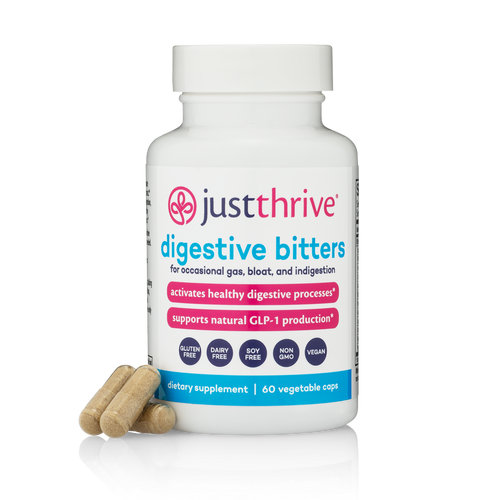
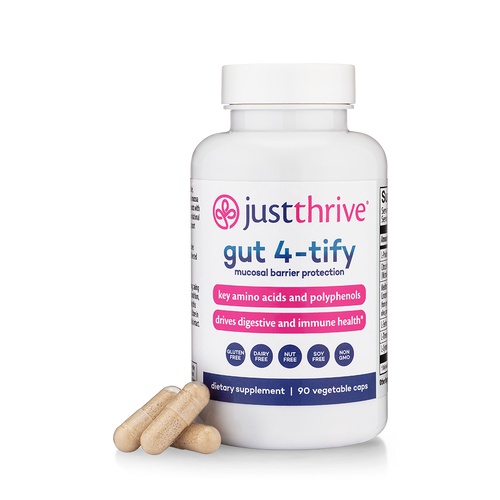

How Can You Support the Production of Beneficial Gut Compounds?
A diet rich in a variety of plant foods can help nourish your gut microbiome. But even when you feel you are doing everything right, sometimes it can be hard to get enough of the right types of prebiotics to make a meaningful difference in your microbiome. A clinically studied prebiotic supplement can help fill the gap.
Just Thrive PREbiotic provides not one, not two, but three “smart” fibers:
- Organic kiwifruit powder (Actazin®)
- Galactooligosaccharides
- Xylooligosaccharides
These widely studied ingredients have been carefully selected for their ability to preferentially feed beneficial bacteria and support a healthy gut environment. Even better, when taken with a quality spore probiotic, Just Thrive PREbiotic can more than double the colonies of helpful gut microbes.
>> Support a diverse, healthy gut microbiome with Just Thrive PREbiotic.
Not sure whether the PREbiotic will work for you? We can help.
Every Just Thrive product comes with our Bottom of the Bottle, 100% money-back guarantee. So you can try Just Thrive PREbiotic to see how you feel.
But if for any reason you don’t notice a difference, simply ask for a full product refund at any time. Even if it’s been 3 weeks, 3 months, or 3 years… Even if the bottle is empty!

Sources
- Davani-Davari D, Negahdaripour M, Karimzadeh I, et al. Prebiotics: Definition, Types, Sources, Mechanisms, and Clinical Applications. Foods. 2019;8(3):92. Published 2019 Mar 9. doi:10.3390/foods8030092
- Rahman S, O'Connor AL, Becker SL, Patel RK, Martindale RG, Tsikitis VL. Gut microbial metabolites and its impact on human health. Ann Gastroenterol. 2023;36(4):360-368. doi:10.20524/aog.2023.0809
- Catanese L. Prebiotics: Understanding their role in gut health. Harvard Health Publishing. Published May 15, 2024. https://www.health.harvard.edu/diet-and-nutrition/prebiotics-understanding-their-role-in-gut-health
- Xiong RG, Zhou DD, Wu SX, et al. Health Benefits and Side Effects of Short-Chain Fatty Acids. Foods. 2022;11(18):2863. Published 2022 Sep 15. doi:10.3390/foods11182863
- Nogal A, Louca P, Zhang X, et al. Circulating Levels of the Short-Chain Fatty Acid Acetate Mediate the Effect of the Gut Microbiome on Visceral Fat. Front Microbiol. 2021;12:711359. Published 2021 Jul 15. doi:10.3389/fmicb.2021.711359
- Hosseini E, Grootaert C, Verstraete W, Van de Wiele T. Propionate as a health-promoting microbial metabolite in the human gut. Nutr Rev. 2011;69(5):245-258. doi:10.1111/j.1753-4887.2011.00388.x
- Hodgkinson K, El Abbar F, Dobranowski P, et al. Butyrate's role in human health and the current progress toward its clinical application to treat gastrointestinal disease. Clin Nutr. 2023;42(2):61-75. doi:10.1016/j.clnu.2022.10.024
- Mohamed Elfadil O, Mundi MS, Abdelmagid MG, Patel A, Patel N, Martindale R. Butyrate: More Than a Short Chain Fatty Acid. Curr Nutr Rep. 2023;12(2):255-262. doi:10.1007/s13668-023-00461-4
- Singh B, Halestrap AP, Paraskeva C. Butyrate can act as a stimulator of growth or inducer of apoptosis in human colonic epithelial cell lines depending on the presence of alternative energy sources. Carcinogenesis. 1997;18(6):1265-1270. doi:10.1093/carcin/18.6.1265
- Karim A, Khan HA, Ahmad F, Qaisar R. Butyrate (short-chain fatty acid) alleviates lipopolysaccharide-binding proteins and improves physical function in knee osteoarthritis patients. Int J Biol Macromol. 2025;307(Pt 2):142017. doi:10.1016/j.ijbiomac.2025.142017.
- Siddiqui MT, Cresci GAM. The Immunomodulatory Functions of Butyrate. J Inflamm Res. 2021;14:6025-6041. Published 2021 Nov 18. doi:10.2147/JIR.S300989
- Morowitz MJ, Carlisle EM, Alverdy JC. Contributions of intestinal bacteria to nutrition and metabolism in the critically ill. Surg Clin North Am. 2011;91(4):771-viii. doi:10.1016/j.suc.2011.05.001
- Brauer-Nikonow A, Zimmermann M. How the gut microbiota helps keep us vitaminized. Cell Host Microbe. 2022;30(8):1063-1066. doi:10.1016/j.chom.2022.07.010.
- DiNicolantonio JJ, Bhutani J, O'Keefe JH. The health benefits of vitamin K. Open Heart. 2015;2(1):e000300. Published 2015 Oct 6. doi:10.1136/openhrt-2015-000300
- Hanna M, Jaqua E, Nguyen V, Clay J. B Vitamins: Functions and Uses in Medicine. Perm J. 2022;26(2):89-97. doi:10.7812/TPP/21.204
- Ye X, Li H, Anjum K, et al. Dual Role of Indoles Derived From Intestinal Microbiota on Human Health. Front Immunol. 2022;13:903526. Published 2022 Jun 17. doi:10.3389/fimmu.2022.903526
- Ren T, Li D, Sun F, et al. Indole Propionic Acid Regulates Gut Immunity: Mechanisms of Metabolite-Driven Immunomodulation and Barrier Integrity. J Microbiol Biotechnol. 2025;35:e2503045. Published 2025 Aug 18. doi:10.4014/jmb.2503.03045
- Louis P, Duncan SH, Sheridan PO, Walker AW, Flint HJ. Microbial lactate utilisation and the stability of the gut microbiome. Gut Microbiome (Camb). 2022;3:e3. Published 2022 May 4. doi:10.1017/gmb.2022.3
- Wei YH, Ma X, Zhao JC, Wang XQ, Gao CQ. Succinate metabolism and its regulation of host-microbe interactions. Gut Microbes. 2023;15(1):2190300. doi:10.1080/19490976.2023.2190300
- Culp EJ, Goodman AL. Cross-feeding in the gut microbiome: Ecology and mechanisms. Cell Host Microbe. 2023;31(4):485-499. doi:10.1016/j.chom.2023.03.016
- Graham E, McKeen S, Lewis ED, et al. Actazin® green kiwifruit powder consumption at 600 mg per day for 28 days improves stool form and relieves occasional constipation in healthy individuals: a randomized controlled trial. Bioact Carbohydr Diet Fibre. 2024;32:100436. doi:10.1016/j.bcdf.2024.100436.
- Valladares-Diestra KK, de Souza Vandenberghe LP, Vieira S, et al. The Potential of Xylooligosaccharides as Prebiotics and Their Sustainable Production from Agro-Industrial by-Products. Foods. 2023;12(14):2681. Published 2023 Jul 12. doi:10.3390/foods12142681
- Ignatova I, Arsov A, Petrova P, Petrov K. Prebiotic Effects of α- and β-Galactooligosaccharides: The Structure-Function Relation. Molecules. 2025;30(4):803. Published 2025 Feb 9. doi:10.3390/molecules30040803


