



First, it was probiotics. Now, prebiotics have become one of the biggest buzzwords for gut health. From yogurts to functional beverages, this ingredient is showing up in foods, drinks, and supplements in grocery and health food stores, all promising to support digestion, immunity, and overall well-being.
In an ideal world, it really would be as simple as picking any of these products and adding it to your routine. But the words “contains prebiotics” don’t necessarily mean you’ll be getting the benefits you’ve heard about.
One of the biggest, and often overlooked, factors in prebiotics is dose. For a prebiotic to be effective, how much you consume matters just as much as what you consume. In fact, research suggests that dose often makes the difference between prebiotic potential and measurable, real-world effects.
Let’s take a closer look at why prebiotic dose matters, how it impacts your microbiome, and what it means for gut health.
Quick Answer: The effectiveness of a prebiotic depends on more than the type of fiber it contains—it also depends on getting enough of it. While prebiotics help nourish good gut bacteria and support the production of beneficial compounds like short-chain fatty acids, research suggests that dose plays a key role in achieving measurable microbiome and digestive benefits. This article explains why prebiotic dosage matters, explores the differences between common prebiotic fibers, and outlines what to look for in a supplement to help support a balanced gut microbiome and overall digestive health.
What Is a Prebiotic?
Unlike probiotics, which are live microorganisms, prebiotics are specialized fibers that your body can’t digest on its own. Instead of being broken down and absorbed, they travel to the large intestine, where they become food for the trillions of bacteria living in your gut.1
As your gut microbes break down these fibers (through fermentation), they produce compounds known as short-chain fatty acids (SCFAs), including butyrate, acetate, and propionate.2 These SCFAs perform several beneficial functions within your body, like nourishing colon cells, contributing to intestinal barrier strength, promoting a healthy inflammatory response, and influencing things like immunity and metabolism.3
Prebiotics are found naturally in foods like garlic, onions, leeks, asparagus, bananas, oats, Jerusalem artichokes, legumes, and chicory root. They’re also added to many foods and dietary supplements to help promote gut health.
 Want to listen instead of read? CLICK HERE
Are There Different Types of Prebiotics?
Yes, and while they all work to nourish your gut bacteria, different prebiotic fibers feed different groups of bacteria, are fermented differently, and have varying levels of research behind them.
Some of the most common types of prebiotics found in food and drinks include:
- Oligosaccharides, including fructooligosaccharides (FOS), galactooligosaccharides (GOS), and xylooligosaccharides (XOS)
- Inulin
- Pectin
- Polyphenols
- Resistant starches
However, not all prebiotics work the same way. Many of them can be used by a broad range of microbes, including both the beneficial ones and the not-so-helpful ones. That’s why consuming “smart” prebiotics matters. These fibers preferentially nourish beneficial bacteria, helping them thrive without providing the same fuel to the less desirable ones.
To get the gut health support you want from prebiotics, look for these key fibers:4–6
- Kiwifruit powder: contains pectin and polyphenols, promote the growth of good bacteria, contribute to healthy digestion, help reduce bloating, and support regular bowel movements
- Xylooligosaccharides: supports a healthy gut, balanced immune response, smooth digestion, and contributes to gut barrier integrity
- Galactooligosaccharides: encourage the growth of good bacteria, promotes a balanced, diverse microbiome, and enhances calcium absorption
Together, these three fibers provide well-rounded support for your digestive health, immune response, and overall well-being. And when paired with a spore-based probiotic, studies show these prebiotics can more than double the population of good gut bacteria.
Regardless of the type of prebiotic, though, one factor remains critical. Your gut bacteria need enough of it to produce meaningful effects.
Does Prebiotic Dose Matter?
Absolutely! While the type of prebiotic you consume is important, the amount is just as important.
Research increasingly shows that people need to get a sufficient amount of these fibers to actually see many of their benefits. For example, research of certain prebiotics, such as galactooligosaccharides (GOS) and fructooligosaccharides (FOS), often uses doses ranging from 3 to 10 grams per day, which is high enough to see measurable microbiome shifts while remaining well-tolerated.7,8 While the exact effective dose might vary depending on the specific prebiotic, the amount used in studies is often significantly higher than what’s naturally found in most food, and even in some supplements.9
This helps explain the difference between “prebiotic potential” and actual results. A product may advertise that it contains prebiotics, but if the amount is much lower than the optimal dose, you may not experience the results you’re looking for.
Of course, this doesn’t mean that smaller amounts have no effect, and small habits do add up. Eating foods like bananas and oats instead of a highly processed or sugar-laden breakfast is still a positive choice for your overall diet and gut health, even if it doesn't provide the same prebiotic dose used in clinical studies.
To understand more about why dose matters so much, it helps to look at what happens inside your gut when there simply aren't enough prebiotics available.
What Happens If You Don’t Get Enough Prebiotics?
Regardless of dose, your gut bacteria will still ferment and break down prebiotic fibers for your gut bacteria to use as fuel. But in smaller amounts, it may not be enough. Just as a car can only go so far when the tank is low, your gut microbes can only do so much when their prebiotic “tank” is low.
Lower doses of prebiotics might not be enough to:10–13
- Shift the balance of gut bacteria. When beneficial microbes feed on prebiotics, those bacterial colonies can grow in size and strength, supporting a balanced microbiome. But if the prebiotics are in short supply, there may not be enough to make a meaningful difference in your gut’s population.
- Encourage the production of SCFAs. Certain short-chain fatty acids are produced during fermentation. When your gut isn’t breaking down enough prebiotic fibers, it may not produce the same SCFA levels observed with higher doses.
- Produce noticeable health effects. In your gut, prebiotics can contribute to healthy digestion and a balanced immune response. While smaller amounts of prebiotics may still offer some support, it may not be enough for you to feel a difference in things like bloating, gas, and other digestive discomforts.
This is why dosage matters. It’s the difference between feeding microbes and providing the nourishment they need to thrive. It’s also why two products that both contain prebiotics may not deliver the same results.
Choosing a product that contains clinically studied prebiotics, and in effective amounts, can help you experience the benefits they’re intended to provide.
Frequently Asked Questions
Just Thrive Gut Health Products

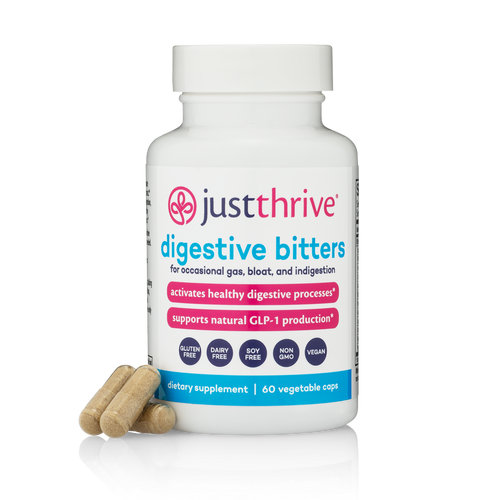
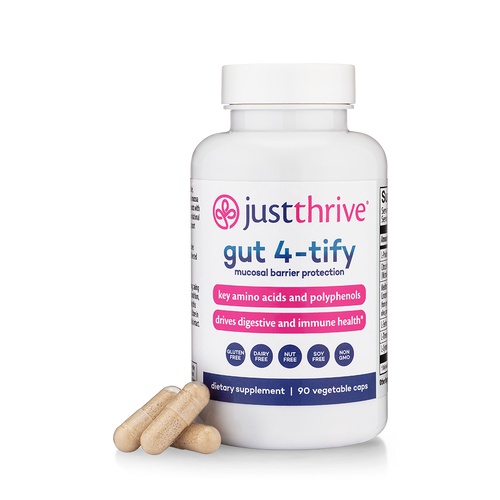

What Should You Look For in a Prebiotic Supplement?
By now, it’s clear that both the type of probiotic and the amount you consume matter. Rather than picking one off the shelf, look at labels carefully. Choose a prebiotic supplement that clearly discloses its ingredients, including the dosage (3–10 grams), so you can be sure you’re getting effective prebiotic support for a healthy gut microbiome.
Just Thrive PREbiotic is specially formulated with three “smart” fibers that are designed to preferentially nourish beneficial gut bacteria:
- Organic kiwifruit powder (Actazin®)
- Xylooligosaccharides
- Galactooligosaccharides
Available in both capsule and powder form, Just Thrive PREbiotic contains these clinically studied ingredients at the recommended dose, promoting a healthy, thriving gut microbiome.
>> Give your gut the prebiotic support it deserves with Just Thrive PREbiotic.
Not sure whether the PREbiotic will work for you? We’ve got your back.
Every Just Thrive product comes with our Bottom of the Bottle, 100% money-back guarantee. So you can try Just Thrive PREbiotic to see if you notice a difference.
But if for any reason you’re not satisfied, simply ask for a full product refund at any time. Even if it’s been 3 weeks, 3 months, or 3 years… Even if the bottle is empty!

Sources
- Davani-Davari D, Negahdaripour M, Karimzadeh I, et al. Prebiotics: Definition, Types, Sources, Mechanisms, and Clinical Applications. Foods. 2019;8(3):92. Published 2019 Mar 9. doi:10.3390/foods8030092
- Cummings JH, Macfarlane GT, Englyst HN. Prebiotic digestion and fermentation. Am J Clin Nutr. 2001;73(2 Suppl):415S-420S. doi:10.1093/ajcn/73.2.415S
- Xiong RG, Zhou DD, Wu SX, et al. Health Benefits and Side Effects of Short-Chain Fatty Acids. Foods. 2022;11(18):2863. Published 2022 Sep 15. doi:10.3390/foods11182863
- Graham E, McKeen S, Lewis ED, et al. Actazin® green kiwifruit powder consumption at 600 mg per day for 28 days improves stool form and relieves occasional constipation in healthy individuals: a randomized controlled trial. Bioact Carbohydr Diet Fibre. 2024;32:100436. doi:10.1016/j.bcdf.2024.100436.
- Valladares-Diestra KK, de Souza Vandenberghe LP, Vieira S, et al. The Potential of Xylooligosaccharides as Prebiotics and Their Sustainable Production from Agro-Industrial by-Products. Foods. 2023;12(14):2681. Published 2023 Jul 12. doi:10.3390/foods12142681
- Ignatova I, Arsov A, Petrova P, Petrov K. Prebiotic Effects of α- and β-Galactooligosaccharides: The Structure-Function Relation. Molecules. 2025;30(4):803. Published 2025 Feb 9. doi:10.3390/molecules30040803
- Arapović M, Puljić L, Kajić N, Kartalović B, Habschied K, Mastanjević K. New Insights in Prebiotic Utilization: A Systematic Review. Processes. 2024; 12(5):867.
- Martyniak A, Wójcicka M, Rogatko I, Piskorz T, Tomasik PJ. A Comprehensive Review of the Usefulness of Prebiotics, Probiotics, and Postbiotics in the Diagnosis and Treatment of Small Intestine Bacterial Overgrowth. Microorganisms. 2025;13(1):57. Published 2025 Jan 1. doi:10.3390/microorganisms13010057
- Natale A, Fiori F, Turati F, La Vecchia C, Parpinel M, Rossi M. Quantification of Naturally Occurring Prebiotics in Selected Foods. Nutrients. 2025;17(4):683. Published 2025 Feb 14. doi:10.3390/nu17040683
- Carlson JL, Erickson JM, Lloyd BB, Slavin JL. Health Effects and Sources of Prebiotic Dietary Fiber. Curr Dev Nutr. 2018;2(3):nzy005. Published 2018 Jan 29. doi:10.1093/cdn/nzy005
- Monteiro CRAV, Bogea EG, Campos CDL, et al. Prebiotics and Gut Health: Mechanisms, Clinical Evidence, and Future Directions. Nutrients. 2026;18(3):372. Published 2026 Jan 23. doi:10.3390/nu18030372
- McLoughlin RF, Berthon BS, Jensen ME, Baines KJ, Wood LG. Short-chain fatty acids, prebiotics, synbiotics, and systemic inflammation: a systematic review and meta-analysis. Am J Clin Nutr. 2017;106(3):930-945. doi:10.3945/ajcn.117.156265.
- Al-Habsi N, Al-Khalili M, Haque SA, Elias M, Olqi NA, Al Uraimi T. Health Benefits of Prebiotics, Probiotics, Synbiotics, and Postbiotics. Nutrients. 2024;16(22):3955. Published 2024 Nov 19. doi:10.3390/nu16223955


