




When you’re suffering from uncomfortable diarrhea… painful constipation… and embarrassing gas and bloating… everything in your life revolves around your gut…
Including your bank account?
Yes, it’s true – When you have any kind of gut condition, it changes what you can eat. It decides whether you can go to work or school today. And it sends you to the doctor more often than you’d like.
All of that takes a toll on your life and your health. But – it can also strain your savings and flood your credit cards, sometimes making a mess out of your finances.
And this mess rears its ugly head so frequently, that it now has a name…
Quick Answer: An unhealthy gut does not just hurt how you feel, it hits your wallet. The toll is so common it has a name: financial toxicity. Between special diets, over-the-counter and prescription medications, frequent doctor visits, expensive tests, and missed work, gut conditions like IBS and IBD can cost thousands of dollars a year, from around $5,000 for IBS to nearly $23,000 for IBD. The common thread behind most gut problems is an out-of-balance microbiome, and rebalancing it with a daily spore-based probiotic (plus prebiotic fiber) is a simple, low-cost way to support gut health and, in turn, your budget.
What Is Financial Toxicity From Gut Issues?
Financial toxicity is the heavy financial toll of living with a gut condition like IBS or IBD. Beyond doctor bills and medications, it includes lost income, special diets, canceled plans, and more, so gut problems can quietly drain savings and run up debt.
It happens to so many people with gut issues that they finally gave it an official moniker: financial toxicity. This refers to the horrible financial toll that living with IBD, IBS, or other gut-related illnesses can cause.
If you’ve been struggling with gut-related challenges, you know how much you spend on doctor visits and medications. But you may not always notice the other ways that your condition affects your finances.
Financial side effects may include:
- Spending down your savings
- Canceling vacations
- Working overtime or side gigs to be able to afford care
- Having to go without necessary but unaffordable treatments
Let’s take a look at some of the more common gut challenges and their financial impact:
Annual direct healthcare costs for:
Chronic diarrhea: $6,140
Chronic constipation: $7,522
Abdominal pain: $7,646
IBS (irritable bowel syndrome): $,5049
And for comparison, let’s dive a little deeper and take a look at some of the specific costs for another gut issue, IBD (inflammatory bowel disease):
Annual cost of care with IBD: $22,987 (compared to without IBD $6,956)
Out of pocket costs with IBD $2,213 (compared to without IBD $979)
Average first year medical costs with new IBD diagnosis $26,555
| Gut condition | Annual healthcare cost |
|---|---|
| Chronic diarrhea | $6,140 |
| Chronic constipation | $7,522 |
| Abdominal pain | $7,646 |
| IBS (irritable bowel syndrome) | $5,049 |
| IBD (inflammatory bowel disease) | $22,987 (vs $6,956 without IBD) |
Where does all that money go?

Here’s the top 5 financial hits you can expect from an unhealthy gut.
1. Special, Expensive Diet
Changing your diet is one of the first things everyone recommends for people with IBS, IBD, and other gut-related health issues. That usually means going gluten-free and dairy-free, eliminating a lot of foods, and following special restrictive diets. Not only does that limit your meal-time options and strip out your favorite comfort foods, it also makes your grocery bills skyrocket.
With a healthy gut, you can eat what you want without worrying about getting trapped in the bathroom or feeling so uncomfortable you can’t move or sleep.
And that healthy gut also means you won’t be forced into spending extra money on special foods you don’t even really like.
2. OTC meds
When you’re dealing with diarrhea, constipation, bloating, gas, heartburn, and more, you just want it to stop right away. So you head to the drugstore to stock up on antacids, anti-diarrhea pills, stool softeners… anything that will help ease your symptoms.
Those over-the-counter drug costs add up. And so do the prescription costs for GI-related problems.
A healthy gut means no need for all of those expensive medications. And it also means you won’t have to deal with any potential side effects or other health consequences for using those drugs around the clock.
3. More doctor visits
GI-related problems top the list of reasons people go to the doctor, resulting in more than 105 million doctor and 14 million hospital visits every year. And the price tag for all that care: $142 billion.
Even if you have great insurance, you still have deductibles and copays to deal with. So every time you go to the doctor, it hits you in the bank account.
Without constant gut issues, you won’t have to go to the doctor as often. That will save you huge amounts of time and money.
4. Expensive (and painful) medical tests
Endoscopy. Colonoscopy. Ultrasounds. CT scans. Bloodwork.
If you’ve been dealing with poor gut health for a long time, you’ve probably endured at least one of these tests. Maybe all of them… repeatedly. These tests aren’t cheap. And just like with doctor visits, you’re probably still responsible for sizable copays… if your insurance will even cover all of the tests.
Get your gut in healthy shape and you can say goodbye to all of the tests, along with the frustrating test prep. And say hello to more money in your bank account.
5. Missed or canceled days
When you – or your kids – suffer from constant gut issues, that’s a lot of missed school and work time. The cost of that shows up in paying extra for childcare, using up your precious PTO, and even potentially losing your job because of all necessary days off.
Plus because GI flare-ups can be unpredictable, you may also lose money on canceled vacations, missed appointments, and tickets for shows you never got to see.
With a healthy gut, you’re in control of your time… and your money. You can schedule vacations without worrying about whether you’ll actually be able to go. You can buy tickets for shows and games with no fear of being too far from a bathroom… and deciding to sit this one out.
Bottom line: Having a healthy gut isn’t just one of the best things you can do for your health – It can save you a ton of money.
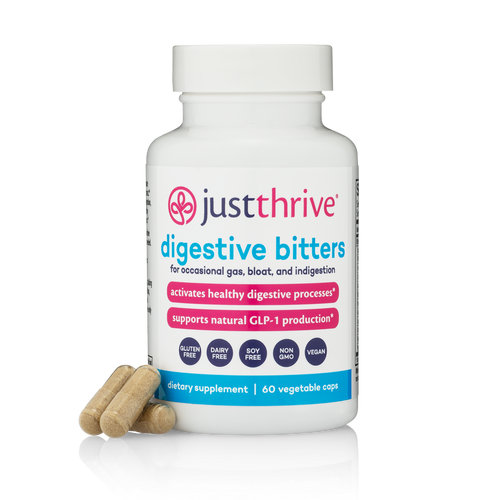
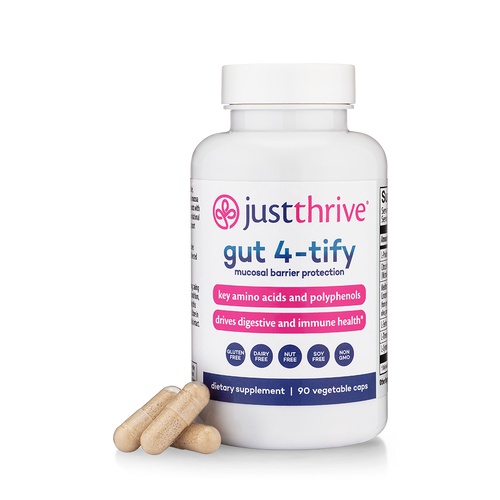
Just Thrive Gut Health Products


What Does Your Gut Need to Be Healthy?
A healthy gut needs a balanced microbiome where beneficial probiotic bacteria outnumber harmful pathogens. The simplest way to support that balance is a daily spore-based probiotic, ideally paired with prebiotic fiber that feeds the good bacteria.
Virtually every gut-related condition has one major issue in common: an unbalanced gut microbiome.
Your gut microbiome is made up of trillions of bacteria: beneficial probiotic bacteria along with harmful pathogens. In a healthy gut, probiotic bacteria vastly outnumber pathogens. And these beneficial bacteria contribute to health and wellness in countless ways.
But when the balance flips, pathogens outnumber probiotics. That creates a condition called dysbiosis that lies at the root of nearly every gut problem.
To keep your gut in healthy balance, you need to make sure that your gut microbiome contains more probiotics than pathogens. And the simplest way to give your gut the probiotics it needs to thrive? Add in a fresh supply of spore probiotics every day.
Taking a proven spore probiotic supplement will quickly help crowd out harmful pathogens, encouraging balance in your gut microbiome… and that will go a long way toward balancing your budget.
And to make sure those probiotics grow and flourish, you’ll want to support them targeted prebiotics – their preferred nourishment. Prebiotics are special forms of dietary fiber that preferentially feed probiotics but not pathogens. This gives beneficial probiotic bacteria a sustainable advantage, so they can continue to provide a wealth of health benefits.
Frequently Asked Questions About Gut Health and Cost
What is financial toxicity in gut health?
It is the heavy financial toll of living with a gut condition like IBS or IBD, not just doctor bills and medications, but special diets, lost income, canceled plans, and missed work.
How much does poor gut health cost per year?
Annual healthcare costs range from around $5,000 for IBS to roughly $23,000 for IBD. GI-related problems drive more than 105 million doctor visits a year and about $142 billion in care.
What are the biggest financial hits from an unhealthy gut?
The five most common are special restrictive diets, over-the-counter and prescription medications, frequent doctor visits, expensive medical tests, and missed or canceled work and school days.
How can supporting gut health help my budget?
A balanced gut microbiome means fewer flare-ups, which can mean less reliance on medications, tests, and missed days. Supporting that balance daily is far cheaper than managing ongoing gut problems.
Do I need a prebiotic as well as a probiotic?
Prebiotic fiber feeds beneficial probiotic bacteria so they can flourish. Pairing a spore-based probiotic with targeted prebiotics helps the good bacteria keep a lasting advantage.
Keep Your Gut and Your Budget in Healthy Balance with Just Thrive
Having a healthy gut is like getting a tax refund or a bonus every day!
You can keep your gut in healthy balance with Just Thrive Probiotic.
Just Thrive Probiotic contains four clinically studied strains of spore probiotic:
- Bacillus indicus HU36™
- Bacillus subtilis HU58™
- Bacillus coagulans
- Bacillus clausii
The spore probiotics in Just Thrive Probiotic help maintain a healthy, balanced gut microbiome.
And to supercharge your gut TLC, fuel the health of your new beneficial bacteria with Just Thrive Precision PREbiotic.
Just Thrive Precision PREbiotic contains a unique blend of clinically tested prebiotic fiber:
- FOS (fructooligosaccharides)
- GOS (galactooligosaccharides)
- XOS (xylooligosaccharides)
These special prebiotic fibers have been shown to selectively support ONLY your beneficial gut bacteria and encourage a healthy gut microbiome.
Support your healthy gut microbiome today with Just Thrive Probiotic and Just Thrive Precision PREbiotic.


