



You haven’t changed your routine, but your body seems to feel, and respond, differently. The same daily habits that once helped you feel comfortable don’t seem to have the same effect anymore. If you’re in perimenopause, shifting hormones may be one reason.
During this transition, changes in estrogen levels can influence how your body stores fat, maintains muscle, and regulates glucose. Sleep disruptions and other midlife changes can add to the challenge.
But hormones aren’t the only contributor.
Your gut microbiome may play a role in how your body processes hormones and supports metabolic health. Understanding these connections can help explain why your body feels different and what you can do to support it through this transition.
Why Do the Same Habits Stop Working the Same Way in Perimenopause?
Your usual habits might have different results because fluctuating hormones can influence how your body responds to food, stores fat, and regulates blood sugar.
This doesn’t mean that your healthy habits have stopped working completely. And it doesn’t mean that you should give them up. It simply means that your body is adjusting to a changing hormonal environment, which varies from woman to woman.
During perimenopause, the transitional period leading up to menopause, hormone production starts to change. Estrogen and progesterone levels may fluctuate considerably, then decline overall as menopause approaches.1 These changes can contribute to disrupted sleep, shifts in appetite, changes in mood and energy, and differences in how your body stores fat.
Some changes are easier to notice, like hot flashes, waking up in the middle of the night, or those tell-tale shifts in your mood or stress level.
One change that might not be as noticeable, at first? Insulin sensitivity. The more sensitive your cells are to insulin, the more effectively your body can use glucose for energy with less insulin. Insulin is a hormone. Insulin sensitivity can be influenced by several factors during midlife, including overall hormonal changes.
What Happens to Insulin Sensitivity as Estrogen Shifts?
As estrogen levels drop during perimenopause, insulin sensitivity can also decline, making it harder for your cells to take up glucose from the bloodstream and for your body to regulate blood sugar.
Insulin helps glucose move from your bloodstream into cells, where it can be used for energy. When cells respond less effectively to insulin, the pancreas may need to release more of it to help keep blood sugar within a healthy range.
Several factors can influence insulin sensitivity, including food choices, sedentary lifestyle, chronic stress, and certain medications.2 Estrogen can also impact how your cells respond to insulin.
Estrogen helps support insulin sensitivity by helping cells absorb glucose and use it efficiently.3 But as estrogen levels begin to decline during perimenopause, the body may experience changes in insulin response. One visual sign of insulin resistance can be the appearance of visceral fat, or fat stored around the abdomen, which is often linked to a decline in insulin sensitivity.
But while estrogen is certainly one important piece of the insulin puzzle, it’s not the only thing that can influence how your body handles blood sugar during perimenopause. The gut microbiome may also play a role in how the body processes estrogen, bringing the estrobolome into the conversation.
What Is the Estrobolome, and How Does It Affect Blood Sugar?
There are trillions of bacteria living in your gut microbiome. Different colonies perform different functions. The estrobolome is the specific group of gut bacteria involved in processing and recycling estrogen. Through its influence on estrogen levels, it can play a role in insulin sensitivity.
Your body doesn’t simply produce estrogen and leave it circulating indefinitely. Instead, the liver helps break it down into compounds that can be processed and eliminated from the body. But some of these estrogen-related compounds can take a different route, which is where the estrobolome can play a role.
Here’s how that process might look:
- Your body produces, releases, and circulates estrogen.
- The liver breaks down estrogen into compounds that can be processed for elimination, including through stool.
- Some of these compounds travel through bile into your digestive tract.
- Certain gut bacteria in the estrobolome produce the enzyme beta-glucuronidase, which can reactivate some estrogen-related compounds by removing the chemical groups attached to them.4
- Once reactivated, some of these compounds may be reabsorbed through the intestinal lining and returned to circulation, rather than being eliminated from the body.
This process is part of the normal circulation of estrogen, and it’s a good thing. It keeps estrogen levels consistent.
During perimenopause, however, shifts in the gut bacteria can affect the estrobolome, and through it, estrogen levels. The body might produce lower levels of beta-glucuronidase, meaning less estrogen is recycled.5,6
So the effect of perimenopause on estrogen levels comes from two perspectives: your body is already producing lower levels of estrogen, and the estrogen that is produced might not be recycled as effectively.
Eventually, this can lead to lower overall estrogen levels, and through that, decrease your body’s sensitivity to insulin.
And it’s not just the insulin response that might see a shift. Estrogen shifts can also affect body composition, even when your eating and exercise habits remain consistent.
How Can Body Composition Change Independent of Diet or Exercise?
During perimenopause, declining estrogen can contribute to a shift in body composition, the proportions of fat and muscle tissue, even if your weight and daily habits stay relatively stable.
Estrogen influences where your body stores fat. As levels fluctuate and decline during perimenopause, fat may increasingly accumulate around the abdomen rather than the hips and thighs. At the same time, muscle mass naturally tends to decrease with age. So despite the numbers on the scale staying the same, your body may look and feel different.7
And while hormonal changes may contribute to these shifts, they aren't the only factors. Physical activity, sleep, nutrition, and other aspects of aging also influence body composition.
For women who already have a tendency toward insulin resistance, these midlife changes may add another layer. This is particularly relevant for women with hormonal or metabolic imbalances which are closely associated with insulin resistance.
How Can You Support Metabolic Health Throughout Perimenopause?
Supporting metabolic health during perimenopause starts with consistent habits.
Here are a few good places to focus your efforts:8–10
- Build meals around fiber and whole foods. Vegetables, fruits, beans, whole grains, nuts, and seeds provide fiber that nourishes beneficial gut bacteria, including those in the estrobolome.
- Get enough protein and try strength training. Muscle helps your body use glucose effectively, so maintaining muscle becomes especially important as you age. Protein-rich foods and regular resistance exercise can help preserve muscle mass.
- Find ways to move regularly. Walking and other aerobic activities, along with strength training, support insulin sensitivity and overall metabolic health. Consistency matters more than having a perfect routine.
- Make room for better sleep. Night sweats and disrupted sleep can make rest harder during perimenopause. Since poor sleep can affect blood sugar regulation, talk with your healthcare provider if sleep problems are persistent.
- Care for your gut microbiome. Eating a variety of fiber-rich plant foods helps nourish gut bacteria, including those involved in estrogen metabolism. But what you don't put in is just as important as what you do. Avoid common gut offenders as much as possible. These include: sugar, artificial sweeteners, processed foods, gluten, dairy, refined vegetable oils, alcohol, OTC’s, unnecessary antibiotics, foods sprayed with pesticides and/or herbicides, and other environmental toxins.
Additional Estrobolome Support
You can also support your estrobolome, and the whole microbiome environment, with a targeted synbiotic. Synbiotics contain both probiotics (beneficial gut bacteria) and prebiotics (plant fibers that selectively nourish those bacteria) in one daily supplement.
In a recent, double-blind, placebo-controlled clinical study, researchers examined the effects of a synbiotic formulated with six probiotic species:
- Bifidobacterium bifidum
- Limosilactobacillus reuteri
-
Lactiplantibacillus plantarum
- Lacticaseibacillus rhamnosus
- Lacticaseibacillus casei
- Bacillus coagulans
This specific synbiotic also contained inulin (a prebiotic that helps nourish beneficial bacteria) and Lactobacillus delbrueckii, a postbiotic component.
Frequently Asked Questions
Just Thrive Gut Health Products

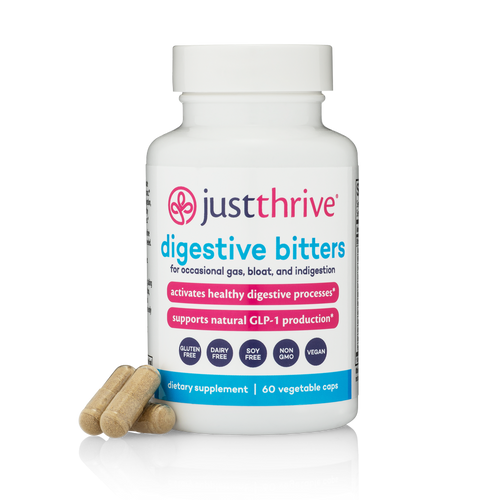
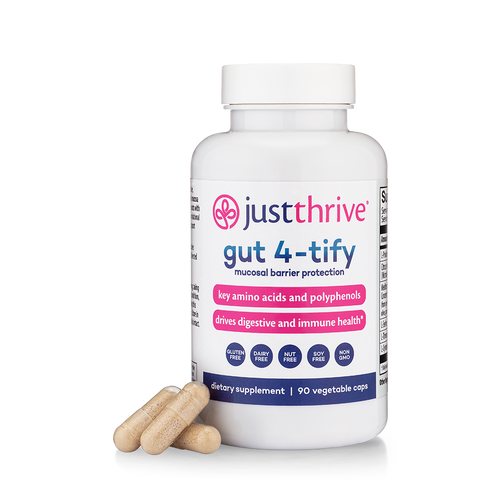

Support Healthy Blood Sugar During Perimenopause
During perimenopause, hormonal shifts can affect how your body responds to insulin and regulates blood sugar, even when your daily habits haven’t changed.
Understanding the role your gut microbiome may play in this process opens up another way to think about supporting metabolic health. That’s where targeted microbiome support comes in.
Just Thrive good glucose was formulated with six carefully selected bacterial strains, clinically studied for their potential role in supporting blood sugar regulation:
- Bifidobacterium bifidum BBi32
- Limosilactobacillus reuteri LR08
- Lactiplantibacillus plantarum LP05
- Lacticaseibacillus rhamnosus LRa05
- Lacticaseibacillus casei LC89
- Bacillus coagulans BC99
Good glucose also contains two prebiotics, inulin and fructooligosaccharide, which nourish beneficial gut microbes, plus a postbiotic derived from Lactobacillus delbrueckii LL-G41 lysate, an ingredient studied in connection with healthy blood sugar levels.
After six months, adults with prediabetes who took the synbiotic experienced greater improvements in average blood sugar levels than those who received a placebo. They also showed improvements in measures related to insulin response.11
While a synbiotic shouldn’t replace your good habits, it can offer additional gut support and contribute to blood sugar regulation during perimenopause.
Perimenopause can change how your body responds to familiar routines, but those healthy habits still matter. Give yourself grace and room to adjust to your changing body.
Enter to Win Good Glucose
We'll be releasing good glucose soon. But before we do, we are giving it away for FREE!
Five people will win:
- 3 bottles of our new product, good glucose (That’s a full 90-day supply.)
- A 90-day supply of Just Thrive Probiotic
- 3 bottles of Digestive Bitters
Altogether, that’s more than $450 in Just Thrive products!
Enter for your chance to win + get early access to good glucose before it's released to the general public.

Sources
- Patel P, Patil S, Kaur N. Estrogen and Metabolism: Navigating Hormonal Transitions from Perimenopause to Postmenopause. J Midlife Health. 2025;16(3):247-256. doi:10.4103/jmh.jmh_75_25
- Cleveland Clinic. Insulin resistance. Cleveland Clinic. Updated November 21, 2024. Accessed October 19, 2026. https://my.clevelandclinic.org/health/diseases/22206-insulin-resistance
- Yan H, Yang W, Zhou F, et al. Estrogen Improves Insulin Sensitivity and Suppresses Gluconeogenesis via the Transcription Factor Foxo1. Diabetes. 2019;68(2):291-304. doi:10.2337/db18-0638
- Beta-glucuronidase. ScienceDirect Topics. Elsevier. Accessed October 20, 2026. https://www.sciencedirect.com/topics/medicine-and-dentistry/beta-glucuronidase
- Camon C, Garratt M, Correa SM. Exploring the effects of estrogen deficiency and aging on organismal homeostasis during menopause. Nat Aging. 2024;4(12):1731-1744. doi:10.1038/s43587-024-00767-0
- Peters BA, Santoro N, Kaplan RC, Qi Q. Spotlight on the Gut Microbiome in Menopause: Current Insights. Int J Womens Health. 2022;14:1059-1072. Published 2022 Aug 10. doi:10.2147/IJWH.S340491
- Fenton A. Weight, Shape, and Body Composition Changes at Menopause. J Midlife Health. 2021;12(3):187-192. doi:10.4103/jmh.jmh_123_21
- Erdélyi A, Pálfi E, Tűű L, et al. The Importance of Nutrition in Menopause and Perimenopause-A Review. Nutrients. 2023;16(1):27. Published 2023 Dec 21. doi:10.3390/nu16010027
- Wang X, Yang D, Li J, Jin L, Xia S, Jin F. Association between menopause-related symptoms and muscle mass index among perimenopausal and postmenopausal women and the mediating role of estrogen levels. Front Endocrinol (Lausanne). 2025;16:1628612. Published 2025 Jul 23. doi:10.3389/fendo.2025.1628612
- Troìa L, Garassino M, Volpicelli AI, et al. Sleep Disturbance and Perimenopause: A Narrative Review. J Clin Med. 2025;14(5):1479. Published 2025 Feb 23. doi:10.3390/jcm14051479
- García G, Campos MdC, Soto J, Diaz A, Buchaca E, Martínez D, Bernal M, Escobar V, Rodríguez L, Valdés E, et al. Effects of the Synbiotic Formulation EDC-HHA01 on Glucose Regulation in Adults with Type 2 Diabetes and Prediabetes: A Randomized, Placebo-Controlled Study. Microorganisms. 2026; 14(4):749.


