



Plus, the specific type of fiber you want to prioritize for your gut.
Fiber is getting a lot of attention lately. And we couldn’t be happier.
After all, fiber is a cornerstone of every healthy diet and healthy body. And most of us don’t get nearly enough.
Adding more fiber to your diet can transform your wellness. It affects everything from blood sugar to appetite to cancer risk to weight management to gut health.
So it’s no wonder that there’s a fiber renaissance happening. Consuming fiber is one of the easiest ways to significantly support your health. That’s why you’re seeing fibermaxxing all over social media, encouraging you to intentionally max out your fiber intake (sometimes even further than the recommended levels).
The thought behind that: maximizing fiber consumption can deliver a wealth of digestive and metabolic health benefits.
And it’s even easier than you think to get plenty of the right kind of fiber to make that happen.
Quick Answer: Fiber is trending because it is one of the simplest ways to support overall health, and most people fall short. The recommended intake is about 25 to 40 grams a day, but the average American gets closer to 15 to 22 grams. Fiber helps regulate appetite and blood sugar, supports a healthy inflammatory response, and feeds the gut microbiome. It comes in two main forms, soluble and insoluble, and a separate category divides it into non-fermentable and prebiotic (fermentable) fiber. Prebiotic fiber matters most for gut health because it feeds beneficial bacteria. Since it is hard to get enough from diet alone, a targeted prebiotic supplement can help bridge the gap.
What Are the Benefits of Eating More Fiber?
Quick Answer: Fiber supports nearly every part of your health. Research links it with steadier appetite and blood sugar, a healthy inflammatory response, efficient detoxification, a strong gut barrier, and healthy weight, yet most people get far less than the recommended amount.
Nature stuffed every plant food full of fiber. It’s so plentiful because it’s critical for maintaining good health.1 And for generations, humans ate whole foods and got ample amounts of fiber daily.
But over the last few centuries, we started processing foods. And part of that process was removing fiber. So instead of getting recommended 25 to 40 grams of fiber daily, most Americans consume closer to 15 to 22 grams each day.2 That means missing out on the health benefits fiber delivers.3
 Want to listen instead of read? CLICK HERE
Research shows that eating fiber:
- Regulates appetite, reduces total food intake, increases ‘feeling full’ signaling, and encourages GLP-1 production4
- Supports a healthy inflammatory response, efficient detoxification, and healthy liver and kidney function5
- Maintains healthy blood sugar levels, reduces HbA1c levels (blood sugar), encourages insulin sensitivity, and levels out after-meal sugar spikes6
- Supports a healthy gut microbiome, increases production of short-chain fatty acids (SCFAs), and reinforces a strong mucosal gut barrier7,8
- Helps maintain a healthy weight, supports increased muscle mass, and promotes bioavailability of antioxidants and polyphenols 9,10,11
- Promotes healthy cell growth and immune system balance12,13,14,15
The science is clear: Consuming fiber is a critical part of being as healthy as you can be.
Related Blog

What Are the Different Types of Fiber?
Quick Answer: Fiber comes in two main forms, soluble and insoluble, plus a second category that splits it into non-fermentable and prebiotic (fermentable) fiber. Each plays a different role, from slowing digestion to feeding your gut bacteria.
Fiber is a kind of carbohydrate that our bodies can’t digest, so it passes through undigested. It comes in two basic forms: soluble and insoluble.16
Soluble fiber dissolves in water, forming a sort of gel. This type of fiber helps slow digestion for increased nutrient absorption. Along the way, it helps manage cholesterol and blood sugar levels. It can be found in foods like oatmeal, apples, and blueberries.
Insoluble fiber does not dissolve in water. It helps move food through your digestive system. Foods like whole grains, kale, and almonds contain insoluble fiber.
Then there’s a secondary category for fiber: non-fermentable or prebiotic (fermentable).17
Non-fermentable fiber travels through your digestive system the way it came in. It doesn’t get broken down by gut bacteria. In the colon, it makes stool bulkier and easier to eliminate.
Prebiotic fiber acts as food for the beneficial probiotic bacteria in your gut microbiome. This type of fiber is fermentable, meaning the probiotic bacteria can break it down and transform it into healthful compounds like B vitamins and SCFAs.18 Examples of prebiotic fiber include oligosaccharides, such as xylooligosaccharides (XOS) and galactooligosaccharides (GOS).
| Type of fiber | What it does | Example foods |
|---|---|---|
| Soluble fiber | Dissolves in water into a gel, slows digestion, and helps manage cholesterol and blood sugar | Oatmeal, apples, blueberries |
| Insoluble fiber | Does not dissolve in water, helps move food through the digestive system | Whole grains, kale, almonds |
| Non-fermentable fiber | Is not broken down by gut bacteria, adds bulk to stool for easier elimination | Many whole grains and vegetables |
| Prebiotic (fermentable) fiber | Feeds beneficial probiotic bacteria, which turn it into compounds like B vitamins and SCFAs | Oligosaccharides such as XOS and GOS |
Why Is Prebiotic Fiber So Important?
Quick Answer: All prebiotics are fiber, but not all fiber is prebiotic. Prebiotic fiber matters most for gut health because it specifically feeds the beneficial bacteria in your microbiome, helping them grow and crowd out pathogens.
All prebiotics are fiber… but not all fiber is prebiotic. And it’s important to prioritize prebiotics because they play a critical role in your overall wellness.19
Their most important job is nourishing the beneficial bacteria in your gut microbiome, home to trillions of bacteria including beneficial probiotics and harmful pathogens. When it’s in healthy balance, a diverse population of probiotic bacteria vastly outnumbers stray pathogens in your gut microbiome.
Prebiotics help keep it that way by giving probiotics what they need to grow and flourish. The key is to deliver prebiotics that probiotic bacteria love but that pathogenic bacteria won’t eat, such as:
- Kiwifruit powder (pectic polysaccharide and complex dietary fiber)
- Galactooligosaccharides (GOS)
- Xylooligosaccharides (XOS)
And while many healthy foods contain prebiotic fiber, it’s nearly impossible to get enough through diet alone. You’d need to eat pounds of vegetables, fruits, and whole grains every day to consume enough prebiotics to make a positive difference for your health. That’s just not practical for most people.
That’s where prebiotic supplements can bridge the gap. Especially when you choose prebiotics that selectively nourish only probiotic bacteria.
One thing to note: Increasing your fiber intake too rapidly may cause GI upset as your system needs time to adjust. When increasing fiber, be sure to follow the manufacturer's dosing guidance found on the prebiotic supplement label. And, as always, make sure to consult your healthcare provider before starting any new health regimen.
Frequently Asked Questions
Just Thrive Gut Health Products

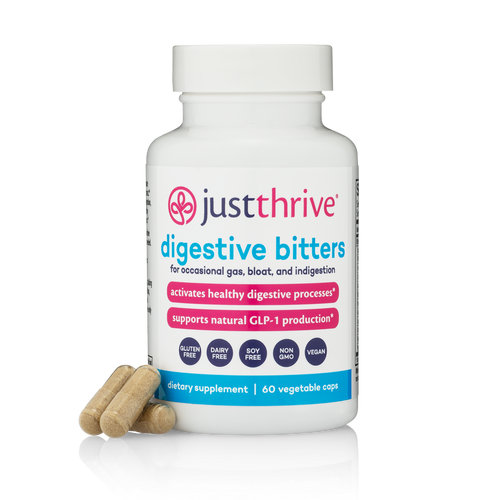
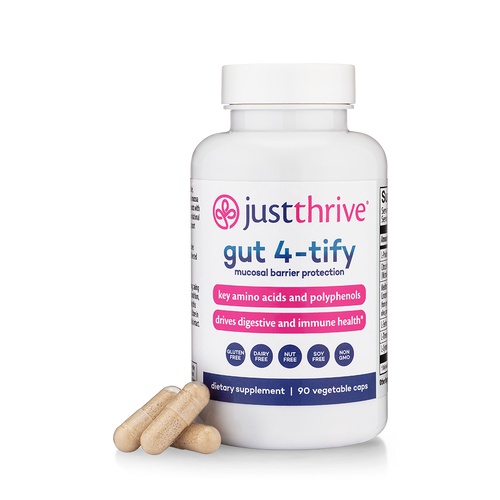

Catch the PREbiotic Fiber Wave with Just Thrive
You want to get plenty of prebiotic fiber every day. But you don’t have the time or the stomach to eat dozens of servings of fruits, veggies, and whole grains. Luckily you can get the prebiotic fiber your gut microbiome needs with Just Thrive PREbiotic.
Just Thrive PREbiotic supplies three clinically studied prebiotics known for selectively supporting only beneficial probiotic bacteria. It contains:
- Organic kiwifruit powder (Actazin®)
- Galactooligosaccharides (Bimuno®)
- Xylooligosaccharides (PretiX™)
You can keep up your prebiotic intake throughout the day by mixing Just Thrive PREbiotic into a glass of water or your favorite beverage in the morning and sipping it throughout the day. That way, your gut microbiome will receive a steady fresh supply of prebiotic fiber all day.
>> Get in on the fiber trend the right way with Just Thrive PREbiotic today.
Bonus: When paired with Just Thrive Probiotic, studies show this powerful duo can more than double your good gut bacteria population; bundle and save!
Not sure if Just Thrive PREbiotic is right for you? We've got you covered!
We’re confident that when you take Just Thrive PREbiotic as directed, you’ll notice positive benefits to your overall health.
But if you aren’t completely happy, let us know.
Every Just Thrive purchase comes with our Bottom of the Bottle, 100% money back guarantee.
If you’re not satisfied with your purchase for any reason, you can request a full product refund at any time. Even if it’s been 3 days… 3 weeks… or 3 months. Even if the bottle is empty!

Sources
- Guan ZW, Yu EZ, Feng Q. Soluble Dietary Fiber, One of the Most Important Nutrients for the Gut Microbiota. Molecules. 2021;26(22):6802. Published 2021 Nov 11. doi:10.3390/molecules26226802
- Howarth NC, Saltzman E, Roberts SB. Dietary fiber and weight regulation. Nutr Rev. 2001;59(5):129-139. doi:10.1111/j.1753-4887.2001.tb07001.x
- Fu J, Zheng Y, Gao Y, Xu W. Dietary Fiber Intake and Gut Microbiota in Human Health. Microorganisms. 2022;10(12):2507. Published 2022 Dec 18. doi:10.3390/microorganisms10122507
- Akhlaghi M. The role of dietary fibers in regulating appetite, an overview of mechanisms and weight consequences. Crit Rev Food Sci Nutr. 2024;64(10):3139-3150. doi:10.1080/10408398.2022.2130160
- Kieffer DA, Martin RJ, Adams SH. Impact of Dietary Fibers on Nutrient Management and Detoxification Organs: Gut, Liver, and Kidneys. Adv Nutr. 2016;7(6):1111-1121. Published 2016 Nov 15. doi:10.3945/an.116.013219
- Xie Y, Gou L, Peng M, Zheng J, Chen L. Effects of soluble fiber supplementation on glycemic control in adults with type 2 diabetes mellitus: A systematic review and meta-analysis of randomized controlled trials. Clin Nutr. 2021;40(4):1800-1810. doi:10.1016/j.clnu.2020.10.032
- Abreu Y Abreu AT, Milke-García MP, Argüello-Arévalo GA, et al. Dietary fiber and the microbiota: A narrative review by a group of experts from the Asociación Mexicana de Gastroenterología. Rev Gastroenterol Mex (Engl Ed). 2021;86(3):287-304. doi:10.1016/j.rgmxen.2021.02.002
- Desai MS, Seekatz AM, Koropatkin NM, et al. A Dietary Fiber-Deprived Gut Microbiota Degrades the Colonic Mucus Barrier and Enhances Pathogen Susceptibility. Cell. 2016;167(5):1339-1353.e21. doi:10.1016/j.cell.2016.10.043
- Dayib M, Larson J, Slavin J. Dietary fibers reduce obesity-related disorders: mechanisms of action. Curr Opin Clin Nutr Metab Care. 2020;23(6):445-450. doi:10.1097/MCO.0000000000000696
- Takahashi F, Hashimoto Y, Kaji A, et al. Dietary Fiber Intake Is Related to Skeletal Muscle Mass, Body Fat Mass, and Muscle-to-Fat Ratio Among People With Type 2 Diabetes: A Cross-Sectional Study. Front Nutr. 2022;9:881877. Published 2022 May 31. doi:10.3389/fnut.2022.881877
- Palafox-Carlos H, Ayala-Zavala JF, González-Aguilar GA. The role of dietary fiber in the bioaccessibility and bioavailability of fruit and vegetable antioxidants. J Food Sci. 2011;76(1):R6-R15. doi:10.1111/j.1750-3841.2010.01957.x
- Celiberto F, Aloisio A, Girardi B, et al. Fibres and Colorectal Cancer: Clinical and Molecular Evidence. Int J Mol Sci. 2023;24(17):13501. Published 2023 Aug 31. doi:10.3390/ijms241713501
- Chen S, Chen Y, Ma S, et al. Dietary fibre intake and risk of breast cancer: A systematic review and meta-analysis of epidemiological studies. Oncotarget. 2016;7(49):80980-80989. doi:10.18632/oncotarget.13140
- Collatuzzo G, Cortez Lainez J, Pelucchi C, et al. The association between dietary fiber intake and gastric cancer: a pooled analysis of 11 case-control studies. Eur J Nutr. 2024;63(5):1857-1865. doi:10.1007/s00394-024-03388-w
- Zheng B, Shen H, Han H, Han T, Qin Y. Dietary fiber intake and reduced risk of ovarian cancer: a meta-analysis. Nutr J. 2018;17(1):99. Published 2018 Oct 30. doi:10.1186/s12937-018-0407-1
- Guan ZW, Yu EZ, Feng Q. Soluble Dietary Fiber, One of the Most Important Nutrients for the Gut Microbiota. Molecules. 2021;26(22):6802. Published 2021 Nov 11. doi:10.3390/molecules26226802
- Slavin J. Fiber and prebiotics: mechanisms and health benefits. Nutrients. 2013;5(4):1417-1435. Published 2013 Apr 22. doi:10.3390/nu5041417
- Pujari R, Banerjee G. Impact of prebiotics on immune response: from the bench to the clinic. Immunol Cell Biol. 2021;99(3):255-273. doi:10.1111/imcb.12409
- Carlson JL, Erickson JM, Lloyd BB, Slavin JL. Health Effects and Sources of Prebiotic Dietary Fiber. Curr Dev Nutr. 2018;2(3):nzy005. Published 2018 Jan 29. doi:10.1093/cdn/nzy005


