




Strong bones need calcium. So you’d think taking plenty of calcium would do the trick. But here’s the truth:
It doesn’t.
See, just because you’re getting lots of calcium (by food or supplements), that doesn’t mean it’s getting into your bones. In fact, just taking more calcium can cause some serious health problems. That’s because calcium has a way of getting lost in your body, and winding up in places it doesn’t belong (like your soft tissue and arteries).
So if you’re looking to strengthen and fortify your bones, MORE calcium isn’t the answer. Instead, you need help from a different, natural nutrient that allows your body to utilize calcium the right way. Without it, calcium won’t make it into your bones, setting the stage for things like osteoporosis and fractures.
Quick Answer: Calcium alone is not enough for strong bones. Getting plenty of calcium does not guarantee it reaches your bones; it can end up in soft tissue and arteries instead. Two nutrients direct calcium where it belongs. Vitamin D helps your body absorb calcium and manage its balance, and vitamin K2 activates the proteins that move calcium into your bones and keep it out of your blood vessels. The two work best together. Vitamin K2 is hard to get from food, so a supplement often makes sense, ideally the most absorbable form, K2-7, in a stable formula.
How Does Vitamin D Help Calcium Build Bone?
Vitamin D lets your body manage calcium successfully. It promotes calcium absorption in your gut, helps maintain calcium balance and proper blood levels, and supports the cells that create new bone, though it works best paired with vitamin K2.
Vitamin D – also known as calciferol – works double duty as a fat-soluble vitamin and as a hormone. You can get some through diet, and more through sun exposure, and the most through supplements. And your body needs this essential nutrient to manage calcium successfully.
Vitamin D controls calcium by:
- Managing calcium balance (homeostasis)
- Promoting calcium absorption in your gut
- Maintaining proper calcium levels in your blood
- Stimulating production of osteoblasts, cells that create new bone cells
Studies show that supplementing with vitamin D, especially as you grow older, may reduce the risk of fractures.
But there’s a catch. Vitamin D doesn’t work alone in getting calcium where it needs to go. It only works to its fullest bone-building potential when it’s paired with another crucial nutrient: Vitamin K2.

How Does Vitamin K2 Get Calcium Into Your Bones?
Vitamin K2 activates the proteins that tell calcium where to go. It directs calcium into your bones and helps keep it out of your blood vessels, so the calcium vitamin D makes available actually ends up where it belongs.
Vitamin D makes sure calcium is available… Then Vitamin K2 makes sure that calcium actually gets into your bones.
Vitamin K2 has unique bone-supporting powers. It activates the proteins that tell calcium where to go. Those proteins include:
- Osteocalcin to direct calcium into your bones and lock it in place
- Matrix Gla to keep calcium out of your blood vessels so they don’t become as hard as bones
- Protein S to regulates the process that clears out old bone cells and replaces them with healthy new bone cells
As you can see, while vitamin K2 may not get the same spotlight as vitamin D, it’s equally as important (if not more so). When you don’t get enough vitamin K2, these proteins can’t do their jobs. Then calcium can end up hardening your arteries instead of strengthening your bones. That’s why you need vitamin K2 partnering with vitamin D to make sure calcium gets where it needs to go.
Research shows that getting plenty of vitamin K2 helps preserve bone density and ward off bone loss. And vitamins K2 and D working together significantly benefit bone health. One study found that patients who received vitamin K2, vitamin D, and calcium all together had significantly better outcomes than patients who got just calcium and vitamin D.
For keeping your bones strong and healthy, you definitely want vitamin K2 in the picture daily. And that’s very hard to do through diet alone.
How Do You Get Enough of the Right Vitamin K2?
Because few foods are rich in vitamin K2 and the best sources are uncommon in Western diets, most people need a supplement. For the best results, choose the most absorbable form, K2-7, in a formula that guarantees stability.
It’s tricky to get enough vitamin K2 through food alone. There aren’t many foods that contain vitamin K2. And the ones that do… Well, if you live in the western world, they’re almost certainly not a huge part of your regular diet.
The best dietary sources of vitamin K2 include:
- Goose liver
- Natto (fermented soybeans)
- Emu Oil
- Certain dairy products from grass-fed cows (the grass-fed part is important here)
- Beef mince
Just Thrive Bone Health Products

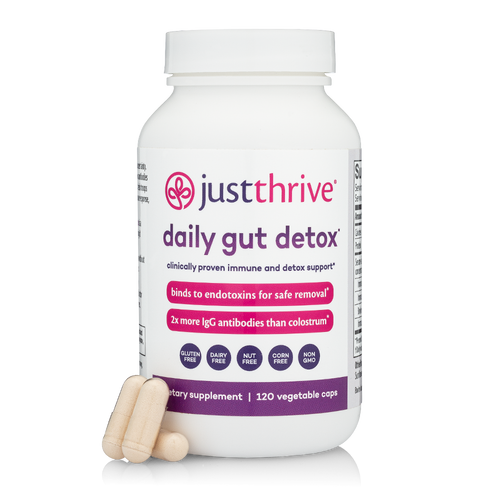
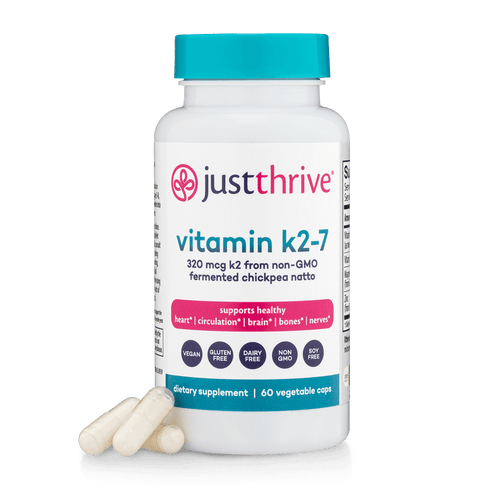
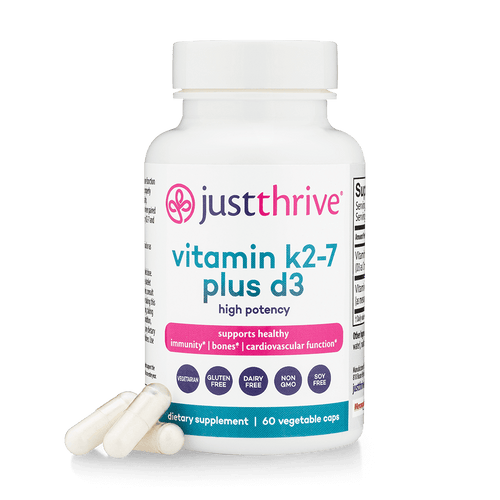
And even if you do eat some of these foods regularly, it’s hard to eat enough of them to get the amount of K2 you need for strong, healthy bones. So to get plenty of vitamin K2, you’ll probably need supplements. And finding the right one can be challenging…
For starters, K2 is notorious for losing potency after formulation. In fact, most products degrade by as much as 50% the minute they hit store shelves. So when choosing a supplement, make sure it can guarantee 100% stability, or you might just be throwing your money in the trash.
Studies have also shown that the optimal daily dose of K2-7 is 320 mcg, so you’ll want to check the label to confirm you’re getting the optimal does. And lastly, vitamin K2 comes in several different forms, ranging from K2-4 through K2-13. The most important and most absorbable of those forms is vitamin K2-7. So when choosing a supplement, make sure you’re getting the K2-7 version to keep your bones healthy and strong.
Frequently Asked Questions About Calcium, Vitamin D, and Vitamin K2
Is calcium enough to build strong bones?
No. Getting plenty of calcium does not mean it reaches your bones. Without the right partner nutrients, calcium can wind up in soft tissue and arteries instead of strengthening bone.
What does vitamin D do for bones?
Vitamin D helps your body absorb calcium, manages calcium balance, maintains proper calcium levels in your blood, and supports the cells that build new bone. It is essential for using calcium successfully, but it does not work alone.
Why is vitamin K2 important for bones?
Vitamin K2 activates the proteins that tell calcium where to go, directing it into your bones and helping keep it out of your blood vessels. Working alongside vitamin D, it helps calcium reach the places that need it.
Can you get enough vitamin K2 from food?
It is difficult. Few foods contain meaningful vitamin K2, and the richest sources, like natto and goose liver, are not common in most Western diets. For that reason many people use a supplement.
What form of vitamin K2 is best?
Vitamin K2 comes in several forms, and the most absorbable is K2-7. Because K2 can lose potency after formulation, it also helps to choose a product that guarantees stability so you actually get the dose on the label.
Strong, Healthy Bones Start with Vitamin K2-7
Just Thrive Vitamin K2-7 provides natural, pharmaceutical grade vitamin K2-7 in the optimal dose of 320 mcg per day. Plus, it’s formulated using the trademarked, MenaquinGold™, which is clinically proven to provide a guaranteed 100% stability and potency.
And to make sure get the most bone-health support, Just Thrive Vitamin K2-7 includes three crucial co-factors:
- Vitamin K1
- Magnesium
- Zinc
These supportive nutrients help vitamin K2-7 perform its crucial role directing calcium to where your bones need it most (and keeping it out of the places that can cause you hard). That makes Just Thrive Vitamin K2-7 the perfect addition to your bone-building squad.
Support your bones – so they can support you – every day with Just Thrive Vitamin K2-7.


