

Living with constipation isn’t the same as having an occasional backup.
While everyone gets constipated at times, suffering from ongoing constipation can really make life uncomfortable. You can’t just ignore it, drink some prune juice, or take laxatives to make it go away.
Not only is this type of constipation unpleasant, it can leave you feeling physically and emotionally drained. Your insides feel unhappy... The bloat can be near unbearable... And sometimes the intestinal pain makes it hard to do anything, including working or going to school.
But there is something you can do to resolve even the toughest constipation woes, and make it easier to go day in and day out.
Quick Answer: Ongoing constipation is usually more than an occasional backup. It affects up to 20% of people, most often women and older adults, and laxatives or stool softeners fail roughly half the time. A big part of the picture starts in the gut: when the gut microbiome is out of balance (dysbiosis), there are fewer beneficial bacteria producing short chain fatty acids, which the intestines need to regulate water in the stool and keep things moving. Because of this, the most lasting approach is to rebalance the gut microbiome. Studies suggest the right probiotics, including spore-based strains like Bacillus coagulans, can help soften hard stools, improve transit time, and support regularity.
How Does Constipation Affect Your Daily Life?
Ongoing constipation can take a real toll on daily life, from pain and bloating to missed work, a strained social life, and mood issues like anxiety. It is also far more common than most people realize, affecting up to 20% of people.
No one talks about this much, but constipation is actually more common than you think. More than 3 million Americans go to the doctor every year because of it, and millions more skip those visits and try to deal with it on their own. It affects up to 20% of us, most often women – especially pregnant women – and older adults.
Here’s an interesting constipation fact – According to data, it can really take a toll on your life and your finances. Every year in the U.S. people spend around $750 million hoping to unblock themselves. Unfortunately, most over-the-counter “solutions” don’t work. But that doesn’t stop desperate people from trying laxatives and stool softeners that fail at least half the time.
There’s also a personal cost. Your social life suffers due to pain, uncertainty, and fear of being away from your home bathroom. It’s nearly impossible to enjoy your sex life when you’re constipated and bloated. Missed work time can lead to job loss. And all of this can lead to mood issues, anxiety and even depression.

What Are the Signs of Constipation?
Common signs of constipation include dry, hard, lumpy stools, painful or difficult bowel movements, a feeling that the bowels are never empty, stomach cramps, bloating, and abdominal pain. Going fewer than three times a week is the technical marker, but everyone is different.
The longer you go between bowel movements, the harder it gets to poop. And while technically constipation means going fewer than 3 times per week, everyone is different. So while you might go more or less than that, you know you’re constipated if you’re dealing with:
- Dry, hard, lumpy poop
- Painful bowel movements
- Poop that’s difficult to get out
- Feeling like your bowels are never empty
- Stomach cramps
- Bloating
- Abdominal pain
So what causes these troublesome symptoms?
When you digest food, it moves through your digestive system. Your body pulls out the nutrients and other compounds like antioxidants, and sends the rest through as waste. That waste goes to your large intestine – your gut – where water is removed to form solid stool, which gets pushed out.
But when your gut absorbs too much water, your stool gets too dried out. That makes it hard in consistency and hard to push out of your body.
And that’s why the best solution for overcoming constipation starts in your gut.
Can an Unbalanced Gut Cause Constipation?
Yes. When the gut microbiome is out of balance (dysbiosis), there are fewer beneficial bacteria producing short chain fatty acids, which the intestines rely on to regulate water in the stool and keep things moving. Research shows people with chronic constipation tend to have a different gut microbiome than healthy people.
Trillions of bacteria live inside your gut, forming your gut microbiome. In a healthy gut, most of those bacteria will be beneficial probiotics with a small population of pathogens. Those probiotics contribute a lot to your digestive health – and that includes regulating the poop process.
But when your gut microbiome is out of balance, pathogens outnumber probiotics. That’s called dysbiosis, which causes health problems in your gut including chronic constipation that can feel impossible to clear up.
Research shows that the gut microbiomes of people with chronic constipation look different than those of healthy people. Unhealthy guts contain higher levels of pathogens and lower levels of probiotic bacteria that produce important compounds called short chain fatty acids (SCFAs). Your system, especially your intestines, needs SCFAs to combat inflammation and regulate the amount of water removed from stool. So low levels of SCFA can lead to painful constipation.
Dysbiosis can also directly affect motility and transit time (the way your body moves food through your intestines and how long it takes for that to happen.) Both of these processes play key roles in constipation.
The good news? Correcting imbalances in your gut microbiome can effectively address constipation.
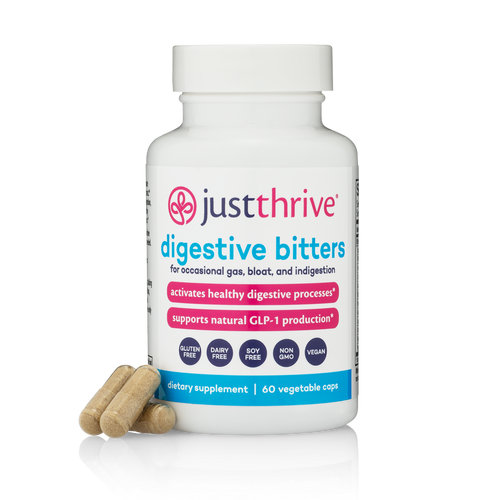
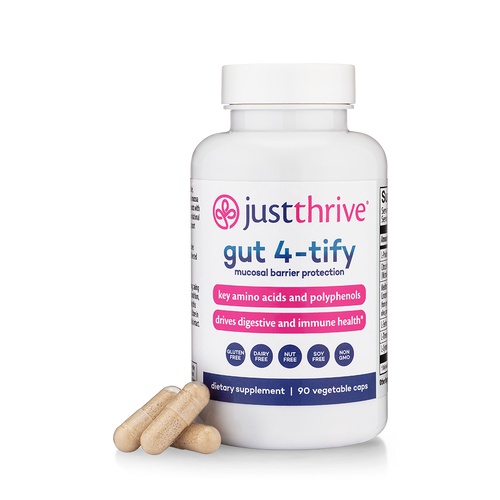
Just Thrive Gut Health Products


How Can Rebalancing Your Gut Help With Constipation?
Getting the gut microbiome back into healthy balance supports the beneficial bacteria that produce SCFAs and help keep bowel movements smooth and regular. Studies suggest the right probiotics, including spore strains like Bacillus coagulans, can soften hard stools and improve intestinal transit time.
Getting your gut microbiome back in healthy balance is a crucial step for conquering constipation. A healthy gut contains primarily beneficial probiotic bacteria – the same bacteria that produce SCFAs and help keep bowel movements smooth and regular.
And the best way to keep your gut microbiome in healthy balance is by taking high quality probiotics. In fact, studies show that taking the right kind of probiotics can offer incredible relief:
- A recent clinical trial found that certain strains of probiotics helped create ideal stool consistency, softening too-hard stools
- A 2021 clinical trial found that a particular type of spore probiotic – Bacillus coagulans – significantly helped intestinal transit time, relieved bowel discomfort, and increased production of SCFAs in adults with constipation
- A meta-analysis of 18 studies showed that probiotics can be useful for addressing constipation, even after other treatments haven’t worked
If you’ve tried everything else without much luck, and continue to suffer with uncomfortable and painful constipation - Have hope. The right probiotics can help rebalance your gut microbiome and deliver relief.
| For ongoing constipation | Laxatives & stool softeners | Gut-balancing probiotics |
|---|---|---|
| What they target | The symptom, by forcing a bowel movement | The gut microbiome balance behind it |
| Reliability | Fail at least half the time | Studied to help even after other approaches did not |
| Effect on SCFAs & transit time | No direct effect | Spore strains shown to raise SCFAs and improve transit |
| Fit as a long-term approach | Geared to short-term relief | Supports lasting regularity by rebalancing the gut |
Frequently Asked Questions About Constipation
What is considered constipation?
Technically, constipation means having fewer than three bowel movements a week, but everyone is different. The clearer signs are dry, hard, lumpy stools, painful or difficult bowel movements, a feeling of never being fully empty, cramps, and bloating.
Why are my laxatives not working?
Over-the-counter laxatives and stool softeners fail at least half the time because they target the symptom rather than the gut imbalance often behind ongoing constipation. People in the U.S. spend around $750 million a year on these products.
Can a gut imbalance cause constipation?
Yes. When the gut microbiome is out of balance, fewer beneficial bacteria produce short chain fatty acids, which the intestines need to regulate water in the stool and keep things moving. Research links this dysbiosis to chronic constipation.
Do probiotics help with constipation?
Studies suggest the right probiotics can help. A clinical trial found certain strains softened too-hard stools, a 2021 trial found the spore strain Bacillus coagulans improved transit time and SCFA production, and a meta-analysis of 18 studies found probiotics useful even after other approaches had not worked.
How long does it take for probiotics to help with constipation?
Timing varies from person to person because it depends on rebalancing the gut microbiome rather than forcing a single bowel movement. Consistent daily use is what supports lasting regularity.
Keep Things Moving Smoothly with Just Thrive Probiotic
A healthy, balanced gut microbiome helps keep your digestive system working smoothly. And Just Thrive Probiotic helps keep your gut in healthy balance.
Just Thrive Probiotic contains four clinically studied strains of spore probiotics including:
- Bacillus coagulans
- Bacillus clausii
- Bacillus subtilis
- Bacillus indicus
Make Just Thrive Probiotic part of your regular routine to keep your gut comfortable and healthy.