


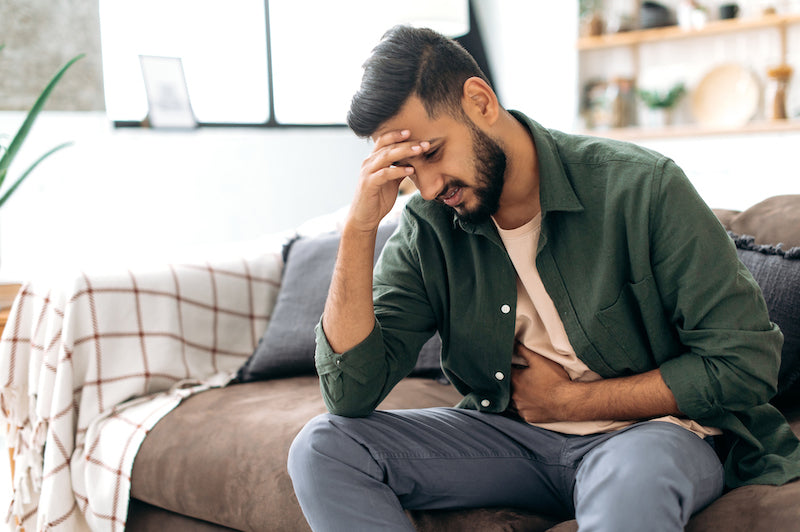
If you wake up with a flat stomach and go to bed feeling six months pregnant…you may have SIBO.
If you feel bloated and gassy more often than not…you probably have SIBO.
If you’re practically chained to the bathroom with either diarrhea or constipation… chances are you have SIBO.
SIBO, or small intestinal bacterial overgrowth, affects millions of people…but not all of them know it. That’s because SIBO is often left undiagnosed, or is misdiagnosed as something else. And when doctors don’t pinpoint what’s really going on, it’s much tougher to fix.
Luckily, learning how to properly identify and address SIBO will support your best gut health and much more.
Quick Answer: SIBO (small intestinal bacterial overgrowth) is an abnormal buildup of bacteria in the small intestine, often the wrong types, or types that belong further down in the large intestine. As they ferment carbs, they create hydrogen and methane gas that drive bloating, pain, gas, and either diarrhea or constipation. SIBO is frequently missed or misdiagnosed, and up to 78% of people with IBS also have it. Addressing SIBO usually means three steps: stop feeding the overgrowth by cutting sugar and fermentable carbs, clear out the excess bacteria, then rebalance the gut. The type of probiotic matters: common Lactobacillus and Bifidobacterium strains can worsen SIBO, while spore-based Bacillus probiotics reach the gut alive and help restore balance.
What Is SIBO?
SIBO is an abnormal buildup of bacteria in the small intestine, frequently the wrong types or ones that belong in the large intestine. As they ferment carbohydrates they release gas, which is what drives the bloating, pain, and changes in bowel habits.
Small intestinal bacterial overgrowth (SIBO) is just what it sounds like: An abnormal increase in the overall bacterial population in the small intestine, particularly with types of bacteria that aren't supposed to be in that part of your digestive tract.
Sometimes this happens because healthy, beneficial bacteria from the large intestine make their way to the small intestine and start colonizing there. Other times (less often), the bacteria that are supposed to be in the small intestine become imbalanced and overgrow.
Either way, that overgrowth sets your body on a problematic path. The extra bacteria feed on undigested food in your small intestine, especially sugary, starchy carbs. They transform those carbs into hydrogen gas. Some of that hydrogen gets ingested by other microbes in your gut, and they turn it into methane gas.
When this happens, your gut fills with extra hydrogen, methane, or both gases. And you can probably guess what happens next… gas attacks and painful bloating, usually followed by either diarrhea (if there’s more hydrogen) or constipation (if there’s more methane).
 Want to listen instead of read?CLICK HERE

What Are the 12 Signs of SIBO?
The most common signs of SIBO are gas, bloating, diarrhea or constipation, stomach pain and cramping, pale and foul-smelling stools, food intolerances, vitamin deficiencies, skin rashes, fatigue, and links to chronic conditions. Having several at once makes SIBO more likely.
SIBO gets missed or misdiagnosed so often because it can cause symptoms that may "look like" many other health concerns.[1] SIBO signs include:
- Gas
- Bloating
- Diarrhea
- Constipation
- Stomach pain
- Pale, extra-smelly poop
- Abdominal cramping
- Food intolerances (like lactose or gluten)
- Vitamin deficiencies
- Skin rashes
- Chronic disease (like fibromyalgia or diabetes)
- Fatigue and weakness
If you have any of these signs, and especially if you have more than one, you could be suffering with SIBO.
On top of that, if you’ve been diagnosed with either IBS (irritable bowel syndrome) or IBD (inflammatory bowel disease), you almost certainly have SIBO. In fact, up to 78% of people with IBS have SIBO.[2] And people with IBD are 9 times more likely to have SIBO than people without IBD.[3]
How Do You Get Rid of SIBO?
Getting rid of SIBO usually takes three steps: stop feeding the overgrowth by cutting sugar and fermentable carbs, clear out the excess bacteria, then rebalance the gut with the right probiotics for a lasting result.
If you know, or even think, you have SIBO, there are some important steps you can follow to get your digestive tract back on track.
The first thing to do is stop feeding the overgrown bacteria. They live on sugar and carbs, so cutting out those foods will starve the bacteria.[4]
Along with things like cookies, cake, and alcohol, you’ll also have to stop eating (at least for a while) complex carbohydrates like beans, fruit, and whole grains to really cut off the SIBO supply lines.
Step two involves getting rid of the bad bacteria in your small intestine. Some people try antibiotics, but antibiotics are designed to kill off ALL your bacteria, both good and bad. Often after a round of antibiotics, your beneficial bacteria is slower to grow than your pathogenic bacteria, which means that if you use antibiotics for SIBIO, you might have two problems to fix.
You can also try natural antibiotic herbs like berberine and grapefruit seed extract, which are gentler on the beneficial bacteria you want to keep, however when your gut is imbalanced (as it is with SIBO), you'll need a long term solution.
The third step (the long-term solution) calls for balancing out your gut with probiotics (and maintaining that balance)…but this can be trickier than it sounds, and here's why:
Using the wrong probiotic supplements can actually make SIBO symptoms much worse!
Can the Wrong Probiotics Make SIBO Worse?
Yes. Most store-shelf probiotics use Lactobacillus and Bifidobacterium strains, which can settle in the small intestine and add to the overgrowth, making SIBO symptoms worse. That is why the type of probiotic matters.
When you already have a bacterial overgrowth, the last thing you want to do is add more fuel to the fire. Unfortunately, that’s what happens when you have SIBO and decide to take most of the "common" probiotics. You see, the average probiotic product on store shelves can actually make your SIBO symptoms worse. This is the reason why many SIBO protocols involve stopping probiotics altogether.
That’s short-term thinking, though, because you can’t fully ease SIBO without proper gut support. And one of the best ways to support the health of your gut is to choose the right probiotics. Here's why...
With SIBO, a lot of the problematic overgrowth comes from probiotics in the Bifidobacterium and Lactobacillus genuses. Read most commercial probiotic labels and that’s exactly what you’ll see: Bifidobacterium and Lactobacillus probiotics.
With SIBO, when you take Bifidobacterium and Lactobacillus probiotics, they jump off the digestive tract train in your small intestine. They can add to the overgrowth that’s already happening, and that means more discomfort for you.
That’s why you need probiotics that have been shown to survive the harsh digestive environment, coast through the small intestine and arrive alive to the gut, where they balance and support your gut microbiome...so it can thrive!
How Do Spore Probiotics Help With SIBO?
Spore-based Bacillus probiotics survive stomach acid and pass through the small intestine to reach the gut alive, where they help crowd out bad bacteria and restore balance without fueling the overgrowth, which makes them well suited to SIBO.
Spore probiotics have tough protective "armor" shells that keep them safe from harsh environments. They can survive extreme temperatures, both hot and cold, and easily survive your stomach acid and digestive enzymes to make it all the way to your gut intact and alive.
When they reach their preferred destination, your intestines, spore probiotics emerge from their shells and get to work. They crowd out bad bacteria, work to support and promote many different types of beneficial bacteria, and they help maintain healthy balance in the gut microbiome.
That’s why spore probiotics are the right probiotics to support your health and address SIBO. They help optimize your bacterial populations while guarding against overgrowth. And by supporting the health of your gut microbiome, spore probiotics help drive a balanced immune response as well.
| With SIBO | Common probiotics (Lactobacillus, Bifidobacterium) | Spore-based (Bacillus) probiotics |
|---|---|---|
| Surviving stomach acid to reach the gut | Many do not survive | Yes, protected by a spore shell |
| Effect on small-intestine overgrowth | Can add to it and worsen symptoms | Help crowd out bad bacteria and rebalance |
| Where they tend to settle | Can colonize the small intestine | Pass through to the gut microbiome |
| Fit as a long-term SIBO approach | Often advised to pause | Support balance without feeding overgrowth |
Frequently Asked Questions About SIBO
What is SIBO?
SIBO stands for small intestinal bacterial overgrowth, an abnormal increase of bacteria in the small intestine, often types that belong in the large intestine. Their fermentation of carbs produces gas that causes bloating, pain, and irregular bowel habits.
What are the symptoms of SIBO?
Common signs include gas, bloating, diarrhea or constipation, stomach pain and cramping, pale or foul-smelling stools, food intolerances, vitamin deficiencies, skin issues, and fatigue. Having more than one makes SIBO more likely.
Is SIBO related to IBS?
Yes. The two overlap heavily: up to 78% of people diagnosed with IBS also have SIBO, and people with IBD are several times more likely to have it. That overlap is one reason SIBO is so often missed.
Can probiotics make SIBO worse?
The wrong ones can. Lactobacillus and Bifidobacterium strains can settle in the small intestine and add to the overgrowth. That is why many SIBO protocols pause those probiotics.
What is the best type of probiotic for SIBO?
Spore-based Bacillus probiotics are well suited to SIBO because they survive digestion, pass through the small intestine, and reach the gut alive, where they help rebalance the microbiome without feeding the overgrowth.
Just Thrive Gut Health Products

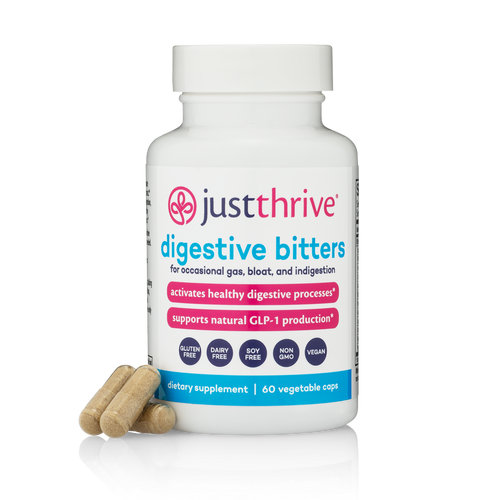
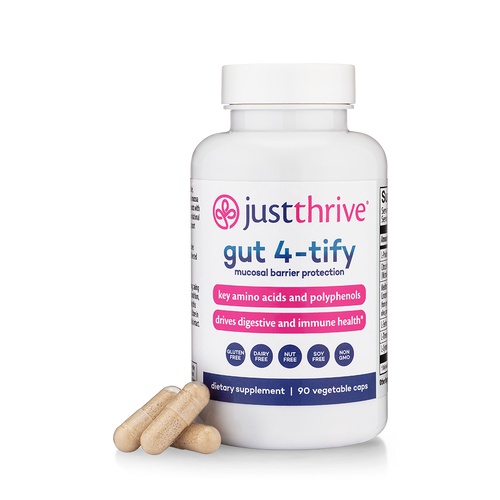

Just Thrive Probiotic Supports a Healthy Gut and a Happy You
When it comes to SIBO, your best course of action is to give your gut the power of spore-based probiotics to maintain proper balance and health.
The 4 proprietary spore strains in Just Thrive Probiotic are proven to quickly establish an environment that keeps your bacterial populations in check, crowding out the bad guys, and helping your good gut microbes grow and flourish.
Plus, only Just Thrive Probiotic contains the 4 most clinically studied strains that can survive the harsh environment of your stomach AND antibiotic therapy.
And if you’re feeling unsure about trying Just Thrive Probiotic, we can help with that.
EVERY Just Thrive purchase is covered by our Bottom of the Bottle, 100% money back guarantee.
So you can try Just Thrive Probiotic to see if it works for you… and we’re confident it will.
But if for any reason you don’t feel a difference, simply ask for a full product refund. Any time. Even if it’s been 2 months or 2 years. Even if the bottle is empty! You’ll get your money back any time, no matter what.
>> Try Just Thrive Probiotic, 100% RISK FREE, and save 30% on your first month’s subscription with code SUB30.

Sources
- Dukowicz AC, Lacy BE, Levine GM. Small intestinal bacterial overgrowth: a comprehensive review. Gastroenterol Hepatol (N Y). 2007;3(2):112-122.
- Ghoshal UC, Srivastava D. Irritable bowel syndrome and small intestinal bacterial overgrowth: meaningful association or unnecessary hype. World J Gastroenterol. 2014;20(10):2482-2491. doi:10.3748/wjg.v20.i10.2482
- Shah A, Morrison M, Burger D, et al. Systematic review with meta-analysis: the prevalence of small intestinal bacterial overgrowth in inflammatory bowel disease. Aliment Pharmacol Ther. 2019;49(6):624-635. doi:10.1111/apt.15133
- Saffouri GB, Shields-Cutler RR, Chen J, et al. Small intestinal microbial dysbiosis underlies symptoms associated with functional gastrointestinal disorders. Nat Commun. 2019;10(1):2012. Published 2019 May 1. doi:10.1038/s41467-019-09964-7


