



Wake up, stretch, and check your sleep tracker. If that’s what your morning routine currently looks like, you’re not alone. Devices like Oura, Whoop, Apple Watch, Garmin, and other wearables have made it easier than ever to track sleep duration, heart rate, heart rate variability (HRV), and other metrics.
But the sleep data doesn’t always tell the full story.
You may have even experienced this yourself, waking up exhausted after earning a high sleep score, or feeling surprisingly energized after a night your tracker rated as average. That’s because feeling physically, emotionally, and mentally restored goes beyond sleep.
While your device might measure some recovery signals, it can’t fully measure things like your mental load or stress levels, things that also impact how refreshed you feel when you start each day.
Let’s take a look at why your sleep tracker may not be telling the whole story, and why factors like stress, mood, and mental recovery matter just as much as sleep itself.
Quick Answer: A sleep tracker can provide useful information about sleep duration, recovery metrics, and overnight patterns, but it doesn’t capture the full picture of how rested you feel. Factors like stress, mental load, emotional well-being, nutrition, hydration, and daily recovery needs can all influence your energy, focus, and mood, regardless of your sleep score. This article explores why high sleep scores don’t always translate to feeling refreshed, the limitations of wearable devices, and the importance of balancing objective sleep data with your own physical and emotional cues. True recovery involves both physical and mental restoration, making overall wellness just as important as sleep itself.
Reason 1: A High Sleep Score Doesn’t Guarantee You’ll Feel Rested
Sleep scores are based on a very specific, and limited, set of measurements. They typically include things like sleep duration, sleep stages, heart and respiratory rates, and even how much you moved overnight.1
These metrics can provide valuable insights into what happened while you were sleeping. But they aren’t the only things that influence how you feel the next morning. That’s why two people with the same score may wake up feeling completely different.
For example, if you start worrying about a high-pressure work situation the minute you open your eyes, you might feel drained throughout the day…even if you earned a high sleep score. Meanwhile, a friend with a less stressful job might wake up with a lower sleep score, yet feel carefree and rested.
Understanding your sleep score can be a helpful tool, but it’s not the whole story. Your own mood and energy levels reveal just as much about how restorative your night truly was.
 Want to listen instead of read? CLICK HERE
Reason 2: Sleep Quality Isn’t the Same as Energy Levels
“I’m tired, I need more sleep.” It’s an easy correlation to make, but it’s not always accurate. To have energy, you do need rest. But rest isn’t just physical.
Many different things can play a role in your energy level:2
- Nutrition
- Hydration
- Physical activity
- Unhealthy lifestyle habits (like alcohol use and smoking)
- Medical conditions
- Stress
A tracker might show that you had a “good” night’s sleep, but that won’t always balance things like a demanding week or eating poorly. To truly feel your best, you also need to look at other parts of your life and how they contribute to your well-being.
Reason 3: Your Tracker Can't Fully Measure Your Mental Load
Mental load refers to the invisible, behind-the-scenes work your brain is doing every day: planning ahead, organizing daily life, balancing priorities, juggling responsibilities, solving problems, managing relationships, and generally keeping track of everything that needs to be done.3
Sound exhausting? It is! And what’s more, your sleep tracker has no real way of measuring it. Wearables can reflect that you slept for a full eight hours, but they can’t reflect how much of your day is spent worrying or planning.
Over time, carrying a heavier mental load can contribute to feeling exhausted, no matter how much sleep you get.4 Add stress into the mix, and your sleep score may not fully explain how you’re recovering each night or feeling each day.
Reason 4: Emotional Stress Doesn’t Always Show Up on Sleep Trackers
Even if your sleep metrics look perfectly normal, stress can affect how restored you feel.5
Stress can sometimes influence your sleep patterns, causing restless nights reflected in your sleep score. But emotional strain doesn’t automatically equal a poor night’s sleep.
Relationship issues, financial challenges, troubles at work, relocating, grief, or even just worrying over “minor” things (which usually aren’t that minor) can all take a toll on your emotional and mental health that a sleep tracker just can’t account for.
For example, you can log adequate sleep duration, and even receive a favorable sleep score, while still carrying a significant amount of tension inside. The data might be on track and positive, but meanwhile, you’re feeling overwhelmed and emotionally drained.
So while you might be well-rested physically, what’s happening on the inside can paint a completely different picture.
Reason 5: Physical Recovery and Mental Recovery Aren’t the Same Thing
Mental and physical recovery often overlap, but they aren’t the same thing…and mental exhaustion may linger longer. You might feel physically refreshed after a good night's sleep, but still have a hard time with concentration, creativity, motivation, or decision-making.
And this is where sleep trackers can miss the mark. The metrics they use, like HRV and recovery scores, measure how your body is responding to rest. But they have no real way of knowing your mental state.
If you’re struggling with things like focus, motivation, decision-making, or just not feeling mentally refreshed, your mind may need additional support, even when your body seems ready for the day.6 Your sleep metrics may look great, but until your stress level and emotional load are balanced, you might still feel mentally exhausted.
Reason 6: Tracking Your Sleep Can Be Stressful
Speaking of stress…although sleep trackers are meant to provide information and insight, for some people, that data can actually become a source of stress. It’s so common that there’s even a term for it: orthosomnia is an obsessive fixation on achieving “perfect” sleep metrics.7
When every morning starts with a score, it’s easy to see your sleep score as a fun challenge and want to optimize it. The problem can begin when you start to fixate on your score or become anxious when it’s lower than expected.
Suddenly, sleep isn’t a natural way to reset and restore, but one more obstacle to overcome. You may start tweaking your lifestyle, spending hours researching online, or find your thoughts (and stress) drifting back to your sleep score throughout the day.
A healthier way to view your sleep metrics is as a tool, not a grade. A lower-than-usual score doesn’t mean that you failed at sleeping. Instead, it’s an opportunity to explore what might have impacted your sleep and how you can best support your mental well-being throughout the day.
Reason 7: Your Body Needs More than Sleep
Your tracker is heavily influenced by what happens at night, but true recovery is a 24-hour process. Sleep, while essential, isn’t the only thing that helps you feel restored.
Your body is constantly under strain. From an intense workout to traveling or even just a few busy days in a row, what your body goes through changes daily. And so do its recovery needs.
A sleep score can tell you something about last night, but it can't always tell you how much recovery your body actually needs right now.
Did you go on a longer bike ride than usual? Physical rest and hydration might be in order.
Coming off a cross-country flight? Your body might need time to readjust to a new schedule.
Spent the week juggling deadlines? You might just need space to slow down and recharge.
While sleep helps, recovery isn’t always covered by a single activity. The amount and type of recovery you need depend on what you’ve been asking of your mind and body.8
Reason 8: Your Own Signals Matter More
So who do you trust when your sleep tracker and the way you feel simply aren’t aligned?
Regardless of what your device says, you’re the only one who actually knows how you feel and what you’re experiencing. And no amount of metrics or insights can override that.
In fact, your energy, focus, motivation, and overall sense of well-being are just as important as the numbers on your sleep tracker.9
If your sleep tracker or recovery score says you’re fully recovered, but you feel exhausted or irritable, pay attention to your body’s signals. Allow yourself more time to rest, eat nutritious meals, drink plenty of water, and lean into self-care until you feel like yourself again.
On the other hand, don’t let a lower score throw your whole day off. If you’re feeling energized and focused, you can still tackle your to-do list, meet up with friends, and enjoy the day you had planned.
For a more holistic understanding, one of the most beneficial things you can do is combine the objective data with your subjective experience. Let the recovery metrics provide helpful context, but trust yourself as the best source of information. Sometimes your body knows something your tracker can’t quite measure.
Reason 9: Daily Mood Support Makes a Difference, Too
Sleep is only one part of the recovery equation. From mood and focus to resilience and your ability to manage everyday stress, how you feel during the day can also influence how restored you feel overall.10
So while tracking data like recovery score or HRV trends can provide helpful insights, it’s also important to support the factors that contribute to your emotional well-being.
Certain nutrients can play a role in helping you feel your best, emotionally and mentally.
- B vitamins: The powerhouse trio of B6, B9 (folate, its water-soluble form), and B12 helps your body regulate chemicals like dopamine, norepinephrine, gamma-aminobutyric acid (GABA), and “the happy hormone” serotonin, which all help support a healthy stress response, balanced mood, and a sense of calm. 11-14
- Bifidobacterium longum 1714™: this “psychobiotic” bacterial strain has been studied for its potential role in supporting the gut-brain connection and emotional well-being.15
Other ways to support your mood throughout the day could include things like exercise, sunlight, mindfulness, spending time in nature, volunteering, and socializing.16
Frequently Asked Questions
Just Thrive Stress Support Products


How Can You Support Recovery Beyond Sleep Tracking?
While your sleep tracker can provide valuable information about what happened overnight, maintaining a balanced mood throughout the day can also help you feel grounded.
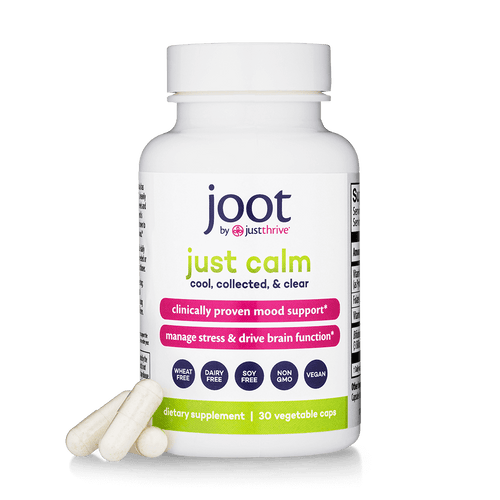
Just Calm provides four ingredients carefully chosen to support a calm mood and healthy stress response as part of a well-rounded wellness routine:
- Vitamin B6, B9 (folate), and B12: This trio helps support nervous system function, neurotransmitter production (including serotonin, dopamine, and norepinephrine), and healthy homocysteine levels linked to feelings of ease and calm
- B. longum 1714™: This strain has been studied for its ability to support a healthy stress response, cognitive function, sleep quality, and emotional well-being
Because recovery involves more than a good night’s sleep, Just Calm can help support a healthy stress response and a calm, balanced mood as part of a well-rounded wellness routine.
>> Look beyond your sleep score and support a calm, balanced mood with Just Calm.
Not sure whether Just Calm will work for you? We can help with that.
Every Just Thrive purchase comes with our Bottom of the Bottle, 100% money back guarantee. So you can try Just Calm to see how you feel.
But if for any reason you don’t feel a difference, simply ask for a full product refund at any time. Even if it’s been 3 weeks, 3 months, or 3 years… Even if the bottle is empty!

Sources
- Robbins R, Seixas A, Masters LW, et al. Sleep tracking: A systematic review of the research using commercially available technology. Curr Sleep Med Rep. 2019;5(3):156-163. doi:10.1007/s40675-019-00150-1
- Mayo Clinic Staff. Fatigue. Mayo Clinic. Updated November 30, 2023. Accessed June 5, 2026. https://www.mayoclinic.org/symptoms/fatigue/basics/causes/sym-20050894
- Cleveland Clinic. Understanding mental load: What it is and how it affects you. Cleveland Clinic Health Essentials. Published December 3, 2024. Accessed June 5, 2026. https://health.clevelandclinic.org/mental-load
- Mizuno K, Tanaka M, Yamaguti K, Kajimoto O, Kuratsune H, Watanabe Y. Mental fatigue caused by prolonged cognitive load associated with sympathetic hyperactivity. Behav Brain Funct. 2011;7:17. doi:10.1186/1744-9081-7-17
- Gavelin HM, Neely AS, Dunås T, Eskilsson T, Järvholm LS, Boraxbekk CJ. Mental fatigue in stress-related exhaustion disorder: Structural brain correlates, clinical characteristics and relations with cognitive functioning. Neuroimage Clin. 2020;27:102337. doi:10.1016/j.nicl.2020.102337
- Kunasegaran K, Ismail AMH, Ramasamy S, Gnanou JV, Caszo BA, Chen PL. Understanding mental fatigue and its detection: a comparative analysis of assessments and tools. PeerJ. 2023;11:e15744. doi:10.7717/peerj.15744
- Jahrami H, Trabelsi K, Vitiello MV, BaHammam AS. The tale of orthosomnia: I am so good at sleeping that I can do it with my eyes closed and my fitness tracker on me. Nat Sci Sleep. 2023;15:13-15. doi:10.2147/NSS.S402694
- Abramson A. Seven types of rest to help restore your body's energy. American Psychological Association. Published May 6, 2025. Accessed June, 2026. https://www.apa.org/topics/mental-health/seven-rest-types
- Nagele AN, Hough J. "The sleep data looks way better than I feel": an autoethnographic account and diffractive reading of sleep-tracking. Front Comput Sci. 2024;6:1258289. doi:10.3389/fcomp.2024.1258289
- Adamsson A, Bernhardsson S. Symptoms that may be stress-related and lead to exhaustion disorder: a retrospective medical chart review in Swedish primary care. BMC Fam Pract. 2018;19(1):172. doi:10.1186/s12875-018-0858-7
- Durrani D, Idrees R, Idrees H, Ellahi A. Vitamin B6: A new approach to lowering anxiety and depression?. Ann Med Surg (Lond). 2022;82:104663. Published 2022 Sep 15. doi:10.1016/j.amsu.2022.104663
- Hepsomali P, Groeger JA, Nishihira J, Scholey A. Effects of Oral Gamma-Aminobutyric Acid (GABA) Administration on Stress and Sleep in Humans: A Systematic Review. Front Neurosci. 2020;14:923. Published 2020 Sep 17. doi:10.3389/fnins.2020.00923
- Liwinski T, Lang UE. Folate and Its Significance in Depressive Disorders and Suicidality: A Comprehensive Narrative Review. Nutrients. 2023;15(17):3859. Published 2023 Sep 4. doi:10.3390/nu15173859
- Sangle P, Sandhu O, Aftab Z, Anthony AT, Khan S. Vitamin B12 Supplementation: Preventing Onset and Improving Prognosis of Depression. Cureus. 2020;12(10):e11169. Published 2020 Oct 26. doi:10.7759/cureus.11169
- Seamans KM, Patterson E, Holz C, et al. Effects of Bifidobacterium longum 1714 on low mood and related symptoms: a randomized, double-blind, placebo-controlled trial. Exp Clin Psychopharmacol. Published online April 30, 2026. doi:10.1037/pha0000839
- Harvard Health Publishing. Mood boosters. Harvard Health. Published April 1, 2020. Accessed June 5, 2026. https://www.health.harvard.edu/mind-and-mood/mood-boosters


