



Are you experiencing that familiar, vague feeling that something is just “off”? Your stomach won’t settle, your energy levels are consistently low (no matter how much sleep you get), your joints feel achy, and there’s a discomfort that you can’t quite explain.
It’s easy to brush these feelings off as stress or something you ate and move on. But when these small, everyday issues start to linger, they could be pointing to something deeper: oxidative stress.
Oxidative stress is a term many people have heard of, but few fully understand. And while it can affect the entire body, your gut is especially sensitive to its effects.
That “slightly off” feeling could be your gut’s way of letting you know that it’s feeling less resilient than it could be. It needs extra support, and that’s where antioxidants come in.
Let’s take a closer look at what oxidative stress actually is and how antioxidants can help your gut while benefiting your overall health and well-being.
Quick Answer: That vague "off" feeling, with low energy, achy joints, and an unsettled stomach, can point to oxidative stress, an imbalance between free radicals and antioxidants in the body. Your gut is especially sensitive to it. A two-step approach helps: lower your free radical load by reducing stress, alcohol, smoke, and processed foods, then raise your antioxidant levels with antioxidant-rich foods. One group of antioxidants stands out for the gut: polyphenols. They neutralize free radicals and also act as prebiotics that feed beneficial gut bacteria. Concentrated sources like olive leaf, grape seed, and green tea make polyphenols an effective way to support a balanced, resilient gut.
What Is Oxidative Stress and Why Does It Matter?
Oxidative stress is an imbalance between free radicals and antioxidants in the body. Free radicals are unstable molecules your body makes naturally, but when too many build up, they can damage cells, and the gut is especially sensitive to that strain.
As your body carries out everyday processes like breathing and breaking down food, it naturally produces reactive molecules called free radicals.[1] Free radicals can also form as part of normal immune responses and inflammation, as well as from lifestyle and environmental exposures.
You can think of free radicals like tiny sparks. A few sparks are normal, and even useful, because your body creates them during regular metabolic activity. But when too many sparks build up, they can start to spread and trigger a chain reaction, damaging nearby tissues over time.
This buildup is what leads to oxidative stress. It occurs when there’s an imbalance between free radicals and antioxidants in the body. Because free radicals are unstable, they can damage cells by reacting with fats, proteins, and DNA if they aren’t kept in check.[1,2]

Antioxidants help keep this process under control. They neutralize free radicals by donating an electron, which stabilizes their unpaired electrons and helps prevent further cellular damage.[1]
Here are just a few everyday factors that can lead to an overload of free radicals.[3,4]
- Chronic stress
- Poor diet
- Lack of sleep
- Radiation
- UV light
- Smoking
- Excessive alcohol
- Overactive immune responses
- Dysbiosis
- Inflammation
- Intense exercise
- Environmental toxins like pesticides, chemicals, pollution, heavy metals, microplastics, and cigarette smoke
 Want to listen instead of read? CLICK HERE
In your gut, this imbalance can show up in noticeable ways, especially through digestive issues. You may feel bloated or gassy after meals. You may notice that you’re dealing with indigestion or abdominal pain, and new food allergies or sensitivities may pop up.[5]
And it’s not just your digestive system that feels it. As your immune system uses more and more energy to combat oxidative stress in your gut, it could leave you feeling drained or with a sensation of “brain fog.”
While these shifts might not seem concerning on their own, they can point to underlying oxidative stress. Over time, this may affect gut balance and resilience.

How Do You Tackle Oxidative Stress?
A two-step approach works best: first lower your free radical load by easing stress, alcohol, smoke, and processed foods, then raise your antioxidant levels with antioxidant-rich foods. Together they help create a more balanced gut environment.
When your gut is overworked, quick fixes won’t do. You need to take proactive steps to create a balanced environment, one in which your gut can function smoothly.
Step 1: Lower your free radical load.
While you cannot eliminate free radicals completely, there are ways to decrease them, such as:[6]
- Reducing stress through meditation, journaling, spending time in nature, yoga, and other mind-body techniques
- Reducing your alcohol intake
- Exercising regularly and moderately
- Avoiding exposure to smoke, pollution, and other environmental toxins when possible
- Swapping high-processed foods in favor of healthier options, like organic fruits and vegetables, lean protein, and healthy fats
Step 2: Increase your antioxidant levels.
Some plant-based foods naturally contain antioxidants, and adding them to your diet will help give your body, and your gut, the support they need.[7]
In general, antioxidant-rich foods include things like:[8]
- Berries: blueberries, raspberries, cranberries, and strawberries
- Dark chocolate, with a cocoa content of 70% or higher
- Leafy greens: kale and spinach
- Nuts, especially pecans and walnuts
- Spices: turmeric, cinnamon, and oregano
- Beverages: coffee, especially espresso, and green tea
Combined, these steps are a powerful combination against oxidative stress. But, there is one more thing you’ll want to consider…
Why Are Polyphenols the Best Antioxidant for Your Gut?
Not all antioxidants are the same, and polyphenols stand out for gut health. They neutralize free radicals and also act as prebiotics, feeding the beneficial bacteria in your gut to support a thriving, diverse microbiome.
This part matters more than you might expect: not all antioxidants are the same. There are a few different groups of antioxidants, and they can all help fight free radicals. And when it comes to gut health, one type of antioxidants stands out: polyphenols.
Polyphenols are found naturally in certain plants, and they’re known for their ability to help neutralize free radicals before they create more disruption.[9] What makes polyphenols especially effective for gut support, though, goes beyond their antioxidant power.
These potent antioxidants also act as prebiotics, providing nourishment for the trillions of beneficial bacteria living in your gut. In addition to helping counter oxidative stress, polyphenols promote “good” bacteria and encourage a thriving, diverse microbiome. In time, they can contribute to a more balanced and resilient gut environment.
Some polyphenols are especially valued for how concentrated and effective they are, supporting your gut right where it needs it the most.
Olive Leaf

Since ancient times, olive trees have been a symbol of health. Today, the science backs up that belief. Olive leaf is a rich source of polyphenols. Along with its potent antioxidant activity, it’s also known for compounds that help support healthy inflammatory responses and microbial balance.[11]
The most prominent polyphenol in olive leaf is oleuropein, although it also contains several others.
Grape Seed

Highly concentrated and powerful, grape seed is another potent source of polyphenols.[12] Small but mighty, it contains three highly effective antioxidants: flavonoids, catechin, and epicatechin. In fact, the polyphenols in grape seeds are known to be more effective than vitamin E or vitamin C.
Grape seed also has other potential health benefits, including cardiovascular and immune support.[13]
Green Tea

Prefer to drink your antioxidants? Then you’re in luck, because green tea is a particularly rich source of polyphenols.[14] Compared to other teas (black or oolong), it has a notably higher concentration of polyphenols. In fact, polyphenols can make up 25–35% of the dry leaf weight!
Green tea has other health benefits as well, including its ability to help support a healthy inflammatory response and maintain balanced blood sugar levels.
Frequently Asked Questions
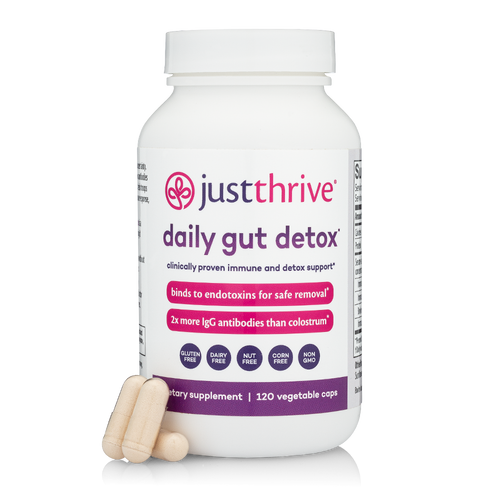
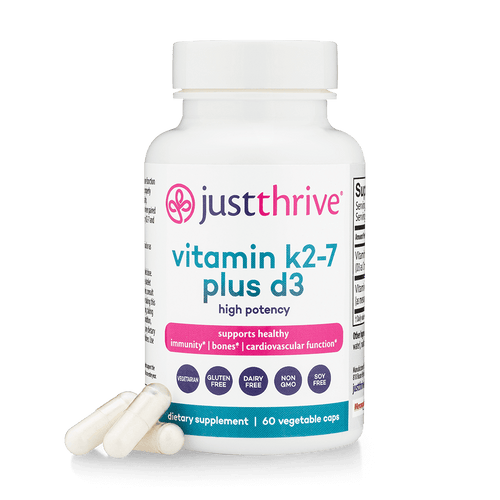
Just Thrive Immune Health Products


Power Up Your Antioxidant Shield with Gut 4-tify
Your gut is constantly working hard behind the scenes to maintain its balance. But oxidative stress can quietly disrupt that balance, leaving your whole body feeling less vibrant and resilient than usual. A targeted approach to gut health, built around antioxidants, can make a meaningful difference in how you feel day to day.
That’s where Gut 4-tify comes in. It’s formulated with Oxxynea® and MicrobiomeX®, two specialized blends of powerful polyphenols that help neutralize free radicals before they can cause damage, including:
- Olive leaf extract
- Grape seed extract
- Pomegranate extract
- Green tea extract
- Grapefruit extract
- Bilberry extract
- White grape extract
- Red grape extract
- Citrus hesperidin
- Sweet orange extract
And to support your overall gut health, Gut 4-tify also contains four amino acids that promote peak digestive and immune function, address leaky gut, and help build and maintain a healthy gut mucosal barrier:
- L-proline
- L-serine
- L-cysteine
- L-threonine
>> Activate your gut’s antioxidant shield with Gut 4-tify.
Not sure if Gut 4-tify will work for you? We can help with that.
Every Just Thrive purchase is covered by our Bottom of the Bottle, 100% money back guarantee. So you can try Gut 4-tify and see how it works for you.
But if for any reason you don’t feel a difference, simply ask for a full product refund at any time. Even if it’s been 3 weeks, 3 months, or 3 years… and even if the bottle is empty.

Sources
- Pham-Huy LA, He H, Pham-Huy C. Free radicals, antioxidants in disease and health. Int J Biomed Sci. 2008 Jun;4(2):89-96. PMID: 23675073; PMCID: PMC3614697.
- Gulcin İ. Antioxidants: a comprehensive review. Arch Toxicol. 2025 May;99(5):1893-1997. doi: 10.1007/s00204-025-03997-2. Epub 2025 Apr 15. PMID: 40232392; PMCID: PMC12085410.
- Jomova K, Raptova R, Alomar SY, Alwasel SH, Nepovimova E, Kuca K, Valko M. Reactive oxygen species, toxicity, oxidative stress, and antioxidants: chronic diseases and aging. Arch Toxicol. 2023 Oct;97(10):2499-2574. doi: 10.1007/s00204-023-03562-9. Epub 2023 Aug 19. PMID: 37597078; PMCID: PMC10475008.
- Pizzino G, Irrera N, Cucinotta M, Pallio G, Mannino F, Arcoraci V, Squadrito F, Altavilla D, Bitto A. Oxidative Stress: Harms and Benefits for Human Health. Oxid Med Cell Longev. 2017;2017:8416763. doi: 10.1155/2017/8416763. Epub 2017 Jul 27. PMID: 28819546; PMCID: PMC5551541.
- Suzuki H, Nishizawa T, Tsugawa H, Mogami S, Hibi T. Roles of oxidative stress in stomach disorders. J Clin Biochem Nutr. 2012 Jan;50(1):35-9. doi: 10.3164/jcbn.11-115SR. Epub 2011 Dec 9. PMID: 22247598; PMCID: PMC3246180.
- Poljsak B. Strategies for reducing or preventing the generation of oxidative stress. Oxid Med Cell Longev. 2011;2011:194586. doi: 10.1155/2011/194586. Epub 2011 Dec 10. PMID: 22191011; PMCID: PMC3236599.
- Abdulrahman HA, Dyary HO, Mohammed RN, Hamad DS, Abdul-Star F, Saeed NM. Preventing free radical damage: The significance of including antioxidants in diet to strengthen immunity. Open Vet J. 2024 Jul;14(7):1526-1537. doi: 10.5455/OVJ.2024.v14.i7.2. Epub 2024 Jul 31. PMID: 39175970; PMCID: PMC11338601.
- Carlsen MH, Halvorsen BL, Holte K, Bøhn SK, Dragland S, Sampson L, Willey C, Senoo H, Umezono Y, Sanada C, Barikmo I, Berhe N, Willett WC, Phillips KM, Jacobs DR Jr, Blomhoff R. The total antioxidant content of more than 3100 foods, beverages, spices, herbs and supplements used worldwide. Nutr J. 2010 Jan 22;9:3. doi: 10.1186/1475-2891-9-3. PMID: 20096093; PMCID: PMC2841576.
- Plamada D, Vodnar DC. Polyphenols-Gut Microbiota Interrelationship: A Transition to a New Generation of Prebiotics. Nutrients. 2021 Dec 28;14(1):137. doi: 10.3390/nu14010137. PMID: 35011012; PMCID: PMC8747136.
- Wang X, Qi Y, Zheng H. Dietary Polyphenol, Gut Microbiota, and Health Benefits. Antioxidants (Basel). 2022 Jun 20;11(6):1212. doi: 10.3390/antiox11061212. PMID: 35740109; PMCID: PMC9220293.
- Barbaro B, Toietta G, Maggio R, Arciello M, Tarocchi M, Galli A, Balsano C. Effects of the olive-derived polyphenol oleuropein on human health. Int J Mol Sci. 2014 Oct 14;15(10):18508-24. doi: 10.3390/ijms151018508. PMID: 25318054; PMCID: PMC4227229.
- Shi J, Yu J, Pohorly JE, Kakuda Y. Polyphenolics in grape seeds-biochemistry and functionality. J Med Food. 2003 Winter;6(4):291-9. doi: 10.1089/109662003772519831. PMID: 14977436.
- Gupta M, Dey S, Marbaniang D, Pal P, Ray S, Mazumder B. Grape seed extract: having a potential health benefits. J Food Sci Technol. 2020 Apr;57(4):1205-1215. doi: 10.1007/s13197-019-04113-w. Epub 2019 Sep 30. PMID: 32180617; PMCID: PMC7054588.
- Khan N, Mukhtar H. Tea Polyphenols in Promotion of Human Health. Nutrients. 2018 Dec 25;11(1):39. doi: 10.3390/nu11010039. PMID: 30585192; PMCID: PMC6356332.


