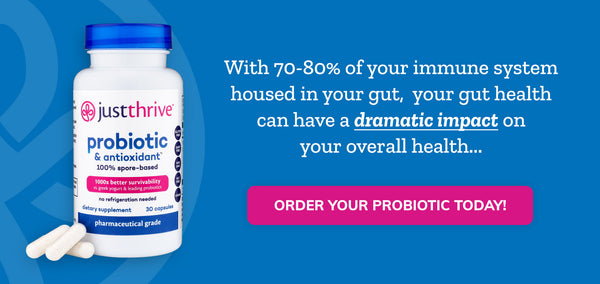


All paths – to disease or wellness – lead back to your gut
That bold statement may sound hyped up, but it’s absolutely true…
The state of your gut microbiome – the trillions of bacteria that live in your gut – plays a critical part in your overall health. That includes:
- how your immune system responds to threats (real or imagined)
- which diseases you get
- how slowly or quickly diseases progress
- which medications will or won’t work for you
- how much you weigh
- whether you sleep well at night
- and so much more
And, now, cutting edge research shows us that the particular bacteria in your gut today can predict how healthy you’ll be years from now… and even how likely you are to die within the next 15 years.
The best news: If you don’t like the future your gut is predicting, you can change it by giving your gut microbiome the right support (more on that below.)
Quick Answer: The makeup of your gut microbiome, the trillions of bacteria living in your gut, offers clues about your current and future health. Two studies found that gut bacteria predicted disease more accurately than genes for 12 of 13 complex conditions, and that people with high levels of a bacteria family called Enterobacteriaceae were 15% more likely to die within 15 years. A balanced microbiome, where beneficial bacteria outnumber pathogens, helps with digestion, immunity, inflammation, and nutrient production. The encouraging part: your microbiome changes constantly, so supporting it with the right spore probiotics can shift the balance back toward better health.

What’s in Your Gut?
Your gut microbiome is the population of trillions of beneficial bacteria (probiotics), harmful bacteria (pathogens), and other microbes living in your gut. In a healthy gut, a diverse mix of probiotics vastly outnumbers pathogens, and that balance shifts daily based on diet, environment, and other factors.
Everyone has a gut microbiome made up of trillions of probiotics (beneficial bacteria) and pathogens (harmful bacteria) along with some other microbes (like yeasts).
When your gut microbiome is in healthy balance, probiotics vastly outnumber pathogens. Plus, a healthy gut microbiome contains a diverse population of bacteria – at least hundreds of different kinds.
And while we all have gut bacteria, our gut microbiomes are unique… even among family members. On top of that, our own microbiomes change all the time – practically no two days are exactly the same.
A lot of factors go into determining which types of bacteria live in your gut microbiome, including things like:
- whether you were born vaginally or by C-section
- if you have pets in your home
- what foods you eat
- which chemicals (like pesticides or household cleaning products) you’ve been exposed to
- how many times you’ve taken antibiotics
- how often you spend time outdoors
- where you’ve traveled
All of those can influence the population in your gut microbiome, determining whether it’s in healthy balance or in dysbiosis – a condition where pathogens outnumber beneficial bacteria, and a root cause of many chronic diseases.
Can Your Gut Send Early Warning Signs of Disease?
Yes. Research suggests the makeup of your gut bacteria can flag health risks early, sometimes more accurately than your genes. In two studies, gut bacteria out-predicted genes for 12 of 13 complex conditions, and a high level of one bacteria family was linked to a 15% higher chance of dying within 15 years.
The makeup of your gut microbiome influences your health in dozens of critical ways. It also offers crucial clues into what diseases you’re facing, and possibly even into your lifespan.
Two new studies shine a bright light on the predictive powers of gut bacteria.
In the first study, researchers found out that gut bacteria offered more accurate diagnostic information about disease than a person’s genes! Overall, gut bacteria were 20% better at distinguishing between sick and healthy people. And when it came to predicting disease, gut bacteria did a better job than genes for 12 (out of 13) complex conditions:
- ulcerative colitis
- colorectal cancer
- Crohn’s disease
- type 2 diabetes
- hypertension (high blood pressure)
- rheumatoid arthritis
- schizophrenia
- inflammatory bowel disease (IBD)
- asthma
- obesity
- Parkinson’s disease
- prostate cancer
The second study showed equally impressive results. Here, researchers learned that people with high levels of a specific family of bacteria called Enterobacteriaceae in their gut microbiomes were 15% more likely to die within the next 15 years. That bacteria family includes some well-known pathogens, including E. coli and salmonella, which can drive the microbiome into dysbiosis.
This research highlights how important your gut microbiome is to your current and future health… and even your life.
By listening to your gut, you can get the jump on some serious conditions before they knock you down.
And by keeping your gut bacteria balanced and healthy, you may be able to keep some of those diseases at bay to live your best (and longest) life.

Why Is Your Gut the Key to Better Health?
A balanced gut microbiome is central to better health because beneficial bacteria handle dozens of critical jobs, from digesting food and producing vitamins and short-chain fatty acids to training the immune system and making neurotransmitters. When dysbiosis sets in, those jobs go undone and harmful compounds build up instead.
Hundreds of studies published in the last few months alone clearly link the gut microbiome to a wide range of diseases. These bacteria control your physical and mental health in surprising ways, including things like the foods you crave and the mood you’re in right now.
That’s because beneficial gut bacteria have dozens of crucial functions, including:
- breaking down proteins, complex carbohydrates, and fats during digestion
- producing short chain fatty acids (SCFAs) such as butyrate and propionate, which are necessary for good health
- producing a wide range of nutrients, including B vitamins, vitamin K, and amino acids
- training the immune system so it doesn’t overreact or under react to threats
- balancing the body’s inflammatory responses
- producing key neurotransmitters, including serotonin and dopamine
When your gut microbiome is plagued by dysbiosis – and pathogenic bacteria outnumber beneficial bacteria – those important jobs don’t get done, at least not completely. On top of that, pathogens also produce compounds, but these compounds are generally harmful and undermine good health.
Changes in your gut microbiome are matched by changes in your health status. Flipping from balanced to dysbiosis can speed up disease progression, increase inflammation, and decrease nutrient absorption. Flipping the other way can reverse damage, reduce inflammation, and restore healthy digestion.
So, focusing on the health of your gut microbiome can bring direct and noticeable health benefits. And, luckily, there’s a simple way to get your gut bacteria back in good balance...
Frequently Asked Questions About Your Gut and Future Health
Can your gut microbiome predict future health?
Research suggests it can offer meaningful clues. In two studies, gut bacteria predicted disease more accurately than a person's genes for 12 of 13 complex conditions, and a high level of one bacteria family was associated with a 15% higher chance of dying within 15 years.
What is the gut microbiome?
The gut microbiome is the population of trillions of bacteria and other microbes living in your gut. It includes beneficial bacteria (probiotics) and harmful bacteria (pathogens), and a healthy microbiome has a diverse mix where probiotics vastly outnumber pathogens.
What is dysbiosis?
Dysbiosis is a state where pathogenic bacteria outnumber beneficial bacteria in the gut. It is considered a root cause of many chronic conditions and can speed disease progression, increase inflammation, and reduce nutrient absorption.
What affects which bacteria live in your gut?
Many factors shape your microbiome, including whether you were born vaginally or by C-section, whether you have pets, the foods you eat, chemical exposures, how many times you have taken antibiotics, time spent outdoors, and where you have traveled.
Can you change your gut microbiome?
Yes. The microbiome changes constantly, so supporting it, including with spore probiotics, can help shift the balance back toward beneficial bacteria, which may reduce inflammation and support healthy digestion.
Balance Your Gut Microbiome with Just Thrive
Just Thrive Probiotics contain four scientifically studied strains of spore probiotics, all known for their health-promoting properties.
Bacillus indicus HU36™ produces several essential vitamins plus highly bioavailable antioxidants including beta-carotene, lycopene, lutein, zeaxanthin, and astaxanthin.
Bacillus coagulans minimizes gut distress by addressing uncomfortable issues like diarrhea, gas, bloating, and abdominal pain.
Bacillus subtilis HU58™ produces natural antibiotics that help crowd out pathogenic bacteria, making it easier to maintain a well-balanced gut microbiome.
Bacillus clausii stimulates antibody production to give your immune system a powerful defensive edge.
Working together, the four spore probiotics in Just Thrive drive a healthy and strong balance in your gut microbiome. Support your gut microbiome today with Just Thrive!