



And how to choose the most effective probiotic for you
Ever look at probiotic labels when you’re at the store? You probably see tons of bottles boasting 40 or 50 billion CFU’s (colony forming units) and 12–15 or even 20+ different strains. And the marketing makes those sound like the best possible choices.
But when it comes to probiotics, more doesn’t mean better.
In fact, stuffing too much into a single capsule can make a probiotic supplement basically useless.
So how do you know which probiotic to pick?
Read on to discover what details you must look for to give your gut what it needs to thrive.
Quick Answer: With probiotics, more is not better. High CFU counts and 15-plus strains sound impressive, but most probiotics die before they reach your gut, and dead probiotics cannot do the job. Packing dozens of strains into one capsule forces them to compete for food and space, so some die off and the formula that reaches you may not match the label. Multi-strain products grown in shared vats also risk cross-contamination. What actually matters is choosing strains proven to survive the trip to your gut and studied together as a formula. A combination of four spore-based Bacillus strains arrives alive and works synergistically to support a balanced microbiome.
Why Do Live Probiotics Matter More Than Quantity?
Probiotics only work when they reach your gut alive, and most die from body heat and stomach acid along the way. That is why a huge CFU count on the label tells you little about how many actually arrive to do their job.
There’s something important you won’t see on probiotic labels: Tens of billions of dead probiotics can’t help you.
Probiotics only work when they make it all the way to your gut microbiome alive. It’s the last stop along the digestive tract, housed in your large intestines, and probiotics must survive the hazards of body heat and stomach acid to get there before they can work their magic.
Most probiotics die along the way.[1] And that’s one reason manufacturers cram 50 billion of them into a capsule. They’re hoping that at least some of them survive the journey from the packaging plant to your gut. That includes boxing, shipping, storage, and display time… exposure to heat and cold… and 50 billion bacteria in a fight club for survival.
How many live probiotics do you actually end up with after all of this? Nowhere near 50 billion. Maybe none at all.
 Want to listen instead of read? CLICK HERE
Do Probiotic Strains Compete With Each Other?
Yes. Jammed into one capsule, billions of probiotics fight for the same limited food and space, and the losers die off. That competition can shift the balance of a multi-strain formula as some strains dominate.
Probiotics are live bacteria. That means they need food to eat and space to exist.
And when they’re jammed into a capsule with 40 or 50 billion of their buddies, they all have to compete for the same limited resources. That competition turns fierce, leading to death of any probiotic bacteria that don’t win their fights.
This can really shift the balance in a multi-strain probiotic formula, as some strains will begin to dominate as others die off.
Do You Really Need 15 Strains?
No. Packing that many strains into a formula can actually lower its overall effectiveness. These “kitchen sink” blends combine strains without knowing how they will interact once they are all together.
Quick answer: No. In fact, packing that many strains into a formula can lead to less overall effectiveness. They’re basically “kitchen sink” formulas, where a supplement company combines a bunch of probiotic strains without really knowing what will happen when they’re all together.
With so many strains in the mix, you can bet these companies aren’t using the highest quality versions. That would spike their costs and lower their profits. So they start with cheaper copies of researched strains and go from there.
And then there’s the reality of the situation. Forcing 15 probiotic strains into a tight space leads to chaos.
Even if a few of the strains are compatible, it’s unlikely that all 15 will just mind their own business and get along. There are the competition issues that can change the formula makeup. Plus, even gentler interactions between antagonistic strains can alter what’s in the bottle. Some strains inhibit the growth and behavior of others. Some strains kill others off.
So while 15 strains go into a capsule, you really have no idea how many are in there by the time you grab the bottle.

Can Multi-Strain Probiotics Get Cross-Contaminated?
It can happen. Commercial probiotics are often grown in shared vats, and even a single leftover bacterium can contaminate a new batch. Without strict DNA verification, what is on the label may not match what is in the bottle.
Commercial probiotics are grown in giant vats. Unlike the highly controlled conditions in research labs, commercial manufacturers often use the same vats to grow many different bacteria strains.
Bacteria are driven to survive, grow, and multiply. Even if a vat has been commercially cleaned between batches, a single remaining bacteria can quickly contaminate a new batch.
And many manufacturers are more concerned with efficiency and cost-control over eventual effectiveness, which means growing multiple strains in single vats. In this scenario, different strains have the potential to cross-multiply, which could lead to the creation of new strains.
Without strict DNA verification testing, there’s really no way of knowing which strains of probiotics come out of a commercial production vat. And it’s unusual for supplement companies to consistently take that extra step.
For you, that means what’s on the label may not match what’s in the bottle. And that can change how the probiotics inside affect your gut and your health.
Does the Research Actually Match the Label?
Often not. Companies frequently borrow strain-specific research, then combine those strains into a new formula they never test as a whole. The only way to know how a probiotic works is to study the finished product as it reaches you.
Hundreds of probiotic strains have been studied individually to see how they affect human health. Many supplement companies glom on to that strain-specific research and cherry pick with strains they’ll use.
They choose strains with strong in-the-lab track records, then produce them commercially and combine them into their own probiotic formula. But they typically don’t do any research on their new formula as a whole, and that’s problematic. Until scientists see how various strains interact, they have no way of knowing what that particular combination will do or how it could impact your health.
The only way to know for sure how a commercial probiotic will work is to test it. After it’s been commercially bottled. With the exact strains being used in combination. After it’s been shipped and stored and purchased. The way it comes to you, the consumer.
So it’s not really surprising that most commercial probiotics fall far short of their promises and intentions.
The best way to choose an effective probiotic has nothing to do with how many billions of bacteria or how many different strains are packed into a capsule. It has to do with carefully selecting synergistic strains of probiotics proven to survive all the way to the gut… and then studying what they can do together.
Why Are Four Spore Probiotics Enough?
Effectiveness comes from the right strains, not the most strains. A specific combination of four synergistic spore probiotics survives digestion to arrive alive and has been shown to work together to support a balanced, diverse microbiome.
When it comes to effective clinically-studied probiotics, the best option is spore-based probiotics.
Spore probiotics are naturally protected by an endospore shell that allows them to:
- survive manufacture, shipping, and storage,
- withstand all the hazards of digestion, including human body temperature, stomach acid, and digestive enzymes,
- and tolerate extreme heat, freezing cold, and other storage issues that kill other probiotics.
That’s how spore probiotics can arrive in your gut 100% alive and able to get to work every time.
And when it comes to effectiveness, spore probiotics dominate the field. A specific combination of four synergistic spore probiotics has been shown to effectively shift gut health balance. That combination includes Bacillus subtilis, Bacillus coagulans, Bacillus indicus, and Bacillus clausii. Research shows that they work together to:
- help increase bacterial diversity, a key component of a healthy microbiome[2]
- strengthen the protective gut barrier, minimizing leaky gut[3]
- promote production of essential short chain fatty acids which are necessary for optimal health[4]
- support healthy inflammatory responses[5]
This is everything you want in a probiotic. It doesn’t take 15 strains and 50 billion CFU. It takes strains that have been clinically studied individually and as a formula. Strains with proven survivability.
| High-CFU, many-strain probiotics | Four synergistic spore probiotics | |
|---|---|---|
| Survive heat, acid, shipping, and storage | Most die before reaching the gut | Protected by an endospore shell, arrive 100% alive |
| Strains compete for food and space | Yes, crowding leads to die-off and shifting balance | Chosen to work together synergistically |
| Risk of cross-contamination in shared vats | Possible without strict DNA verification | Identified, verified strains |
| Studied as a finished formula | Often only individual strains studied | Studied individually and as a combination |
Frequently Asked Questions About Choosing a Probiotic
Is a higher CFU count better for probiotics?
No. A high CFU number mainly reflects how many bacteria went into the capsule, not how many arrive in your gut alive. Most probiotics die along the way, so a big number on the label does not guarantee a more effective product.
Do you need a probiotic with 15 strains?
No. Packing many strains into one capsule can actually reduce effectiveness. The strains compete for resources, some inhibit or kill others, and the formula that reaches you may not match what is on the label.
Why do so many probiotics fail to work?
Most probiotic bacteria die from heat and stomach acid before reaching the large intestine, and many products are never tested as a finished formula after manufacturing, shipping, and storage. Without that, there is no way to know how the combination will actually perform.
What makes spore probiotics different?
Spore probiotics have a natural endospore shell that lets them survive manufacturing, shipping, storage, and the hazards of digestion, so they reach the gut 100% alive and ready to work.
How should you choose an effective probiotic?
Look for carefully selected, synergistic strains proven to survive all the way to the gut and studied together as a formula, rather than the highest CFU count or the most strains.
Just Thrive Gut Health Products

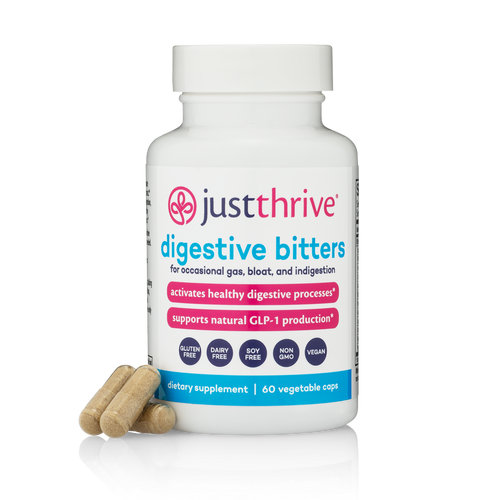
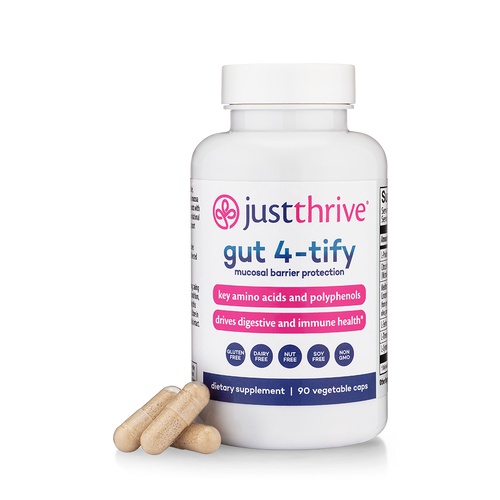

Get Proven Effectiveness in Every Capsule with Just Thrive
Don’t get overwhelmed by probiotic math. You don’t have to look for the most strains or 50 billion CFU.
For true effectiveness, all you need is four spore probiotics with a solid history of working together to support a balanced gut microbiome and overall good health.
Just Thrive Probiotic contains four clinically proven spore probiotic strains that have been studied extensively to demonstrate their effectiveness for gut health:
- Bacillus subtilis HU58™
- Bacillus indicus HU36™
- Bacillus clausii
- Bacillus coagulans
This team of spore probiotics allow a wide variety of beneficial bacteria to flourish, crowding out unwanted bacteria and supporting total wellness.
Just Thrive Probiotic is available in two convenient forms: classic capsules and tasty fruit-flavored gummies. Both forms contain the same four proven strains. And you’ll enjoy the same effectiveness no matter which you choose.
And if you’re unsure about trying Just Thrive Probiotic, we can help with that.
EVERY Just Thrive purchase is covered by our Bottom of the Bottle, 100% money back guarantee.
That means you can try Just Thrive Probiotic in either form to see how well it works for you… and we’re betting that you’ll notice a positive difference.
But if for any reason you’re not satisfied, you can ask for a full product refund at any time. Even if it’s 3 months or 3 years later. Even if the bottle is empty! You’ll get your money back any time, no matter what.

Sources
- Han S, et al. Probiotic Gastrointestinal Transit and Colonization After Oral Administration: A Long Journey. Front Cell Infect Microbiol. 2021 Mar 10;11:609722.
- Marzorati M, Van den Abbeele P, Bubeck S, Bayne T, Krishnan K, Young A. Treatment with a spore-based probiotic containing five strains of Bacillus induced changes in the metabolic activity and community composition of the gut microbiota in a SHIME® model of the human gastrointestinal system. Food Res Int. 2021 Nov;149:110676.
- McFarlin BK, Henning AL, Bowman EM, Gary MA, Carbajal KM. Oral spore-based probiotic supplementation was associated with reduced incidence of post-prandial dietary endotoxin, triglycerides, and disease risk biomarkers. World J Gastrointest Pathophysiol. 2017 Aug 15;8(3):117-126.
- Duysburgh C, Van den Abbeele P, Krishnan K, Bayne TF, Marzorati M. A synbiotic concept containing spore-forming Bacillus strains and a prebiotic fiber blend consistently enhanced metabolic activity by modulation of the gut microbiome in vitro. Int J Pharm X. 2019 Jul 6;1:100021.
- Buhaș MC, Candrea R, Gavrilaș LI, Miere D, Tătaru A, Boca A, Cătinean A. Transforming Psoriasis Care: Probiotics and Prebiotics as Novel Therapeutic Approaches. Int J Mol Sci. 2023 Jul 7;24(13):11225.


