



For a lot of people, the first cup of coffee is followed by a quick trip to the bathroom. If that's you, you're not imagining it, and you're not alone. Research suggests that roughly 3 in 10 people feel an urge to go after drinking coffee.1
The short answer: coffee stimulates muscle activity in your colon, triggers digestive hormones, and often arrives at a time of day when your gut is already primed to move. Caffeine is part of the story, but it isn't the whole story, since decaf can have a similar effect for some people.
Below, we'll cover six things to know: why coffee gets things moving, whether caffeine is the culprit, why it affects some people more than others, whether it's a healthy habit, and how to support regularity that doesn't depend on your morning brew.
Quick answer: Coffee can make you poop because it stimulates contractions in the colon, especially the lower colon, within minutes of drinking it. In one study, regular coffee stimulated colon activity about as strongly as a full meal, roughly 60% more than water and 23% more than decaf.2 Coffee also appears to raise gastrin, a hormone that helps get the gut moving, and it often arrives in the morning, when colon activity is naturally higher. Not everyone responds this way. For most healthy adults, a coffee-related bathroom trip is normal, but regularity shouldn't depend on caffeine alone.
1. Why does coffee make you have to poop?
Coffee stimulates the muscles of your colon to contract, which pushes stool toward the rectum and creates the urge to go. In people who are sensitive to coffee, researchers measuring colon pressure found this effect can begin within about four minutes.2
Several mechanisms seem to work together:
- Colonic motor activity: Coffee increases contractions in the distal colon, the last stretch before the rectum.2
- Gastrin release: Both regular and decaf coffee have been shown to raise levels of gastrin, a hormone that stimulates gut movement.3
- The gastrocolic reflex: When something enters your stomach, especially a warm drink or a meal, your colon gets the signal to make room.
- Other coffee compounds: Coffee contains chlorogenic acids and other compounds that may stimulate stomach acid and bile, both of which play a role in digestion.4
So if caffeine isn't the only factor on that list, how much does it actually matter?
2. Is it the caffeine that makes you poop?
Caffeine contributes, but it isn't the only factor. In the same colon pressure study, decaf still stimulated the colon, just less strongly than regular coffee.2 That suggests other compounds in coffee play a role, too.
Practical takeaway: If you switch to decaf to cut back on caffeine, you may still notice some of the same morning effect.
3. Why does coffee make some people poop but not others?
Sensitivity varies a lot from person to person. In one study of healthy volunteers, about 29% reported that coffee triggered an urge to have a bowel movement.1
Factors that may influence your response include:
- Timing: Colon activity naturally rises after waking and after meals.5
- Habit: A consistent routine of coffee followed by a bathroom visit may reinforce the pattern.
- What's in your cup: Milk, cream, and some sweeteners can affect digestion, especially if you're sensitive to lactose.
- Your individual gut: Differences in digestive sensitivity and gut microbiome makeup may also play a role.4
4. Is it healthy that coffee makes you poop?
For most healthy adults, it's normal and not a cause for concern. A coffee-related bathroom trip is simply your digestive system responding to a warm drink and a stimulant.
That said, a few signs suggest your coffee habit may not be agreeing with your gut:
- Urgent, loose stools after most cups
- Stomach discomfort, cramping, or heartburn
- Feeling like you can't go at all without coffee
It's also worth watching your total intake. The FDA cites about 400 mg of caffeine per day, roughly four or five cups of coffee, as an amount not generally associated with negative effects for healthy adults.6
If you notice ongoing changes in bowel habits, blood in your stool, or persistent abdominal pain, talk with your healthcare provider.
5. How can you stay regular without relying on coffee?
Build habits that keep your digestive system moving on its own. Regularity that depends on a daily stimulant can be fragile, while fiber, water, movement, and a balanced microbiome give your gut steadier support.
| Relying on coffee | A more balanced approach |
| Waiting for caffeine to get things moving | Eating fiber-rich foods at most meals |
| Drinking coffee on an empty stomach | Pairing coffee with a balanced breakfast |
| Drinking coffee instead of water | Drinking water throughout the day |
| Rushing out the door | Giving yourself unhurried time in the morning |
| Sitting most of the day | Light movement, such as a morning walk |
| Overlooking your microbiome | Supporting gut balance with prebiotic and probiotic foods |
Fiber adds bulk and softness to stool, and water helps it move. Movement encourages natural contractions in your gut. And research suggests your gut microbiome plays a role in normal gut motility and transit time.7
6. Where does a spore probiotic fit into your morning routine?
If you want extra daily support for digestion that doesn't hinge on your coffee, a spore probiotic is a simple addition.
Just Thrive Probiotic contains four spore-based Bacillus strains with a natural protective shell that helps them survive stomach acid and arrive in the gut intact, where they help support a balanced microbiome and healthy digestion. It's shelf-stable and best taken with your largest meal, so it's easy to pair with breakfast, coffee included.
For a little extra help, Just Thrive PREbiotic nourishes the beneficial bacteria already in your gut.
Frequently Asked Questions
Just Thrive Gut Health Products

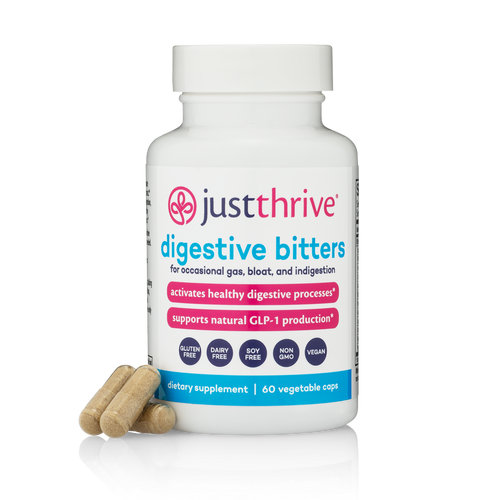
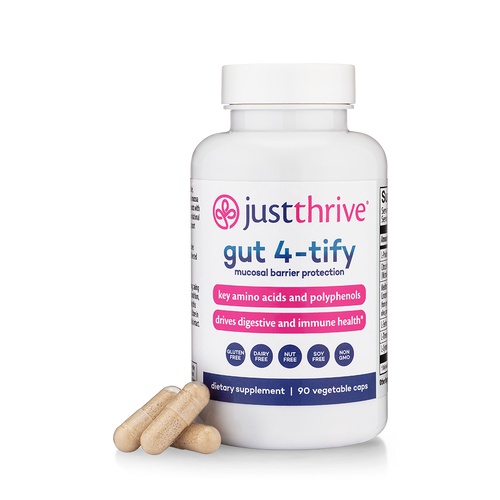

Start Your Morning with Steady Gut Support
Your morning coffee may get things moving, but steady day-to-day regularity depends on more than one cup. It depends on a well-fed, balanced gut microbiome that keeps your digestion on track, whether or not you’ve had your coffee. Spore probiotics and prebiotics give your gut what it needs to host a diverse population of beneficial bacteria.
Just Thrive Probiotic is a great choice because it contains four spore probiotics, proven to work together to encourage a diverse population of beneficial gut bacteria:
- Bacillus subtilis HU58™
- Bacillus indicus HU36™
- Bacillus coagulans
- Bacillus clausii
Just Thrive PREbiotic, which contains organic kiwifruit powder (Actazin®), GOS (Bimuno®), and XOS (PretiX™), three types of prebiotic fiber proven to nourish only beneficial gut bacteria. Plus, it comes in an easy to take capsule and drink mix options. So it's easy to add to the fiber habits that help keep you regular.
>> Give your gut microbiome what it needs every morning with Just Thrive Probiotic and PREbiotic. (Bundle & save here!)
And if you’re not quite sure if this digestive duo is right for you? We’ve got you covered!
We’re confident that when you use our probiotic and prebiotic as directed, you’ll notice a positive difference.
But if you aren’t completely happy, let us know.
Every Just Thrive purchase comes with our Bottom of the Bottle, 100% money back guarantee. So, if you’re not satisfied with your purchase for any reason, you can request a full product refund at any time.
Even if it’s been 3 days… 3 weeks… or 3 months. Even if the bottle is empty!
>> Try our Just Thrive Probiotic and PREbiotic 100% RISK FREE today, and save 30% on your first month’s subscription with code SUB30.

Sources
- Brown SR, Cann PA, Read NW. Effect of coffee on distal colon function. Gut. 1990;31(4):450-453. doi:10.1136/gut.31.4.450
- Rao SS, Welcher K, Zimmerman B, Stumbo P. Is coffee a colonic stimulant? Eur J Gastroenterol Hepatol. 1998;10(2):113-118. doi:10.1097/00042737-199802000-00003
- Acquaviva F, DeFrancesco A, Andriulli A, et al. Effect of regular and decaffeinated coffee on serum gastrin levels. J Clin Gastroenterol. 1986;8(2):150-153.
- Nehlig A. Effects of coffee on the gastro-intestinal tract: a narrative review and literature update. Nutrients. 2022;14(2):399. doi:10.3390/nu14020399
- Rao SS, Sadeghi P, Beaty J, Kavlock R, Ackerson K. Ambulatory 24-h colonic manometry in healthy humans. Am J Physiol Gastrointest Liver Physiol. 2001;280(4):G629-G639.
- U.S. Food and Drug Administration. Spilling the Beans: How Much Caffeine Is Too Much? Updated August 28, 2024. Accessed October 8, 2026.
https://www.fda.gov/consumers/consumer-updates/spilling-beans-how-much-caffeine-too-much
- Dimidi E, Christodoulides S, Scott SM, Whelan K. Mechanisms of Action of Probiotics and the Gastrointestinal Microbiota on Gut Motility and Constipation. Adv Nutr. 2017;8(3):484-494. Published 2017 May 15. doi:10.3945/an.116.014407


