



Answers to all your questions about giving your baby the best head start
You asked, we’re answering!
We get a lot of questions about healthy pregnancies and healthy babies, especially when it comes to gut health.
So we’re here to answer your biggest questions about protecting and fostering your baby’s gut microbiome. And let’s start by talking about exactly what that means.
Quick Answer: Your baby's gut microbiome is established largely from you, first during birth and then through feeding, and the first 1,000 days are a critical window for its development. Many parents ask whether probiotics fit in during pregnancy, breastfeeding, and infancy. Keeping your own gut microbiome in healthy balance helps, because beneficial bacteria pass to your baby through breast milk. Research suggests probiotics during pregnancy and nursing can support a healthier, more diverse microbiome for both of you. Spore-based probiotics survive digestion to reach the gut alive. Always check with your healthcare provider or pediatrician before starting any new supplement for yourself or your baby.
What Is the Gut Microbiome?
The gut microbiome is the community of trillions of bacteria living in your digestive tract. When it is in healthy balance, beneficial bacteria outnumber pathogens and help your body's organs and systems work as they should, and the same is true for your baby.
Your gut microbiome is the foundation for your lifelong wellness. It’s made up of trillions of bacteria. When the microbiome is in healthy balance, beneficial probiotic bacteria vastly outnumber pathogens and keep them under tight control.
Those beneficial bacteria affect every organ and system in your body, helping them function the way they’re supposed to. And the same applies to your baby.
A healthy gut microbiome…
- Trains and directs the immune system to mount proper responses, so it doesn’t overreact or underreact[1]
- Promotes early brain development, affecting cognition, behavior, and mood[2,3]
- Manages healthy blood pressure levels from birth[4]
- Supports healthy aging and extended longevity[5]
That’s just a fraction of the health benefits a well-balanced gut microbiome delivers. And it all starts with your pregnancy.
 Want to listen instead of read? CLICK HERE
How Do Babies Get Their Gut Microbiomes?
Babies receive the bacteria that build their microbiome from their mother, first during the birth process and then through feeding. The first 1,000 days after birth are an especially important window for that microbiome to develop.
The bacteria your baby needs to create a microbiome comes from you, first established during the birth process.
With natural childbirth, the baby picks up gut bacteria from the mother during vaginal delivery. Their microbiome will initially resemble their mother’s diverse gut microbiome. With C-sections, the baby gets first exposed to their mother’s skin bacteria and bacteria in the delivery room environment. This can lead to a less diverse microbiome for the baby, and a greater likelihood of pathogens.[6]
Either way, you can shape your baby’s gut microbiome through feeding, whether you choose breast or bottle.
Research shows that the first 1,000 days after birth are essential for gut microbiome development.[7] What happens then can dictate your baby’s lifelong immunity, wellness, and risk for autoimmune and chronic disorders. So keeping your baby’s gut microbiome healthy is of critical importance, starting on day one.
How Do Probiotics Help?
Probiotics help bring the gut microbiome back into balance and guard against dysbiosis, a state where pathogens overtake beneficial bacteria. That balance matters most during pregnancy and breastfeeding, when your microbiome shifts and influences your baby's.
Your gut microbiome faces a lot of threats that can tip it into a state called dysbiosis. That’s when pathogenic bacteria grow and multiply so much that they overtake beneficial probiotic bacteria. When the gut microbiome falls out of balance and into dysbiosis, it can set off a chain of unhealthy events.
Pathogens stop probiotic bacteria from performing their jobs to support whole-body health. Those harmful bacteria also produce a wide variety of compounds that can undermine wellness by:
- Increasing oxidative stress
- Triggering inflammatory processes
- Causing digestive upset
- Disrupting nutrient absorption
- Sending the immune system into overdrive
- Increasing the risk of mental health issues
- Decreasing brain power
The best way to overcome dysbiosis or to sidestep it completely is with probiotic support. Taking probiotics brings balance to the gut microbiome. And that can be especially critical during pregnancy and breastfeeding.
Should I Take Probiotics While I’m Pregnant?
Pregnancy changes your gut microbiome and can make you more vulnerable to imbalance. Research suggests probiotics during pregnancy may help keep the microbiome in healthy balance, so many providers support their use; always check with your own healthcare provider first.
Your gut microbiome changes dramatically during pregnancy. Those changes help you nurture and nourish your baby. They can also make you more vulnerable to dysbiosis, unfortunately.
Dysbiosis can increase your risk of potential pregnancy problems such as:
- Strep B[8]
- Preeclampsia[9]
- Preterm birth[10]
- Gestational diabetes[11]
Taking probiotics during pregnancy can help keep your gut microbiome in healthy balance. Researchers believe that taking probiotics during pregnancy can help reduce the risk of potential problems related to dysbiosis.[12,13]
As always, please check with your healthcare provider before starting any new supplement.

Can I Take Probiotics While I’m Breastfeeding?
Your breast milk naturally carries probiotic bacteria that help colonize your baby's gut. Taking probiotics while nursing supports a balanced microbiome in you, so you can pass those benefits along; check with your healthcare provider first.
Your breast milk naturally contains probiotic bacteria that helps colonize your baby’s gut microbiome.[14] What passes through depends on what’s in your gut microbiome, so you’ll want to make sure it contains a diverse population of beneficial bacteria.
Taking probiotics while breastfeeding helps keep your gut in healthy balance, so you can pass along those benefits to your baby. Research shows that nursing babies whose moms take probiotics have healthier, more diverse gut microbiomes, healthier weights, and a decreased incidence of colic.[15] One study found that taking probiotics while nursing resulted in greater memory potential and lower levels of IL-6 (interleukin-6, an inflammatory compound).[16]
What About Probiotics for My Baby?
Babies already get probiotic bacteria from breast milk or formula, and they may also benefit from gentle exposure to probiotic supplements. Talk with your pediatrician before introducing any probiotic for your baby.
Whether your baby gets breast milk or formula, they are getting probiotics every time they eat. But they may also benefit from exposure to probiotic supplements just like you do.
Our microbiologist Kiran Krishnan reveals that his children started getting little dabbles of spore probiotics by week two. He follows to explain that this “mimics what’s supposed to happen in nature”. Babies put everything in their mouths to sample the world around them. Ancestral babies would lay on the ground sampling dirt, rocks, everything they could reach, and that helped establish a robust microbiome.[17]
The same is true today. Exposure to beneficial bacteria supports a healthy gut microbiome.
How Do I Give My Baby Probiotics?
A common approach is placing a tiny dab of spore probiotic powder from a capsule on the breast or in the baby's mouth. Check with your pediatrician first, and follow age-appropriate amounts.
First, it’s important to note that not all probiotics are equal. Most probiotics cannot survive the digestive process, meaning they have little to no impact on your or your baby’s health. But spore probiotics are different. These super strains are naturally equipped with an endospore shell that protects them from high temperatures, stomach acid, digestive enzymes, and more, so they are able to reach the gut 100% alive, every time. Once they reach the gut, they get to work establishing a healthy and diverse microbiome, just the foundation your baby needs for lifelong wellness.
You can put a tiny dab of spore probiotic powder from the capsule on the breast or in the baby’s mouth to give them extra probiotic support.
We do recommend checking with your pediatrician first, however here is the suggested daily dose by age:
- Newborns: 6 months: a pinch – 1/4 capsule
- 6 months–3 years: 1/2 capsule
- 3 years and older: 1 full capsule starting slowly – 1/2 capsule daily for the first week
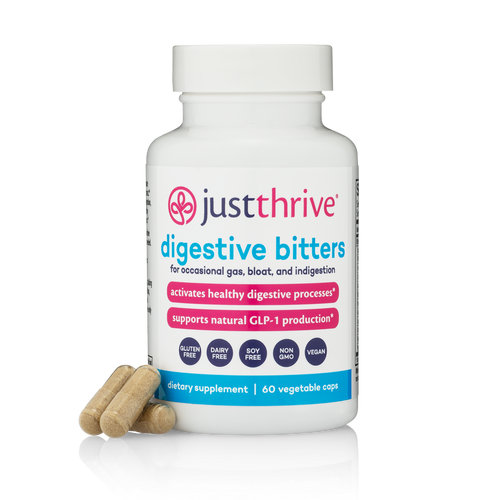
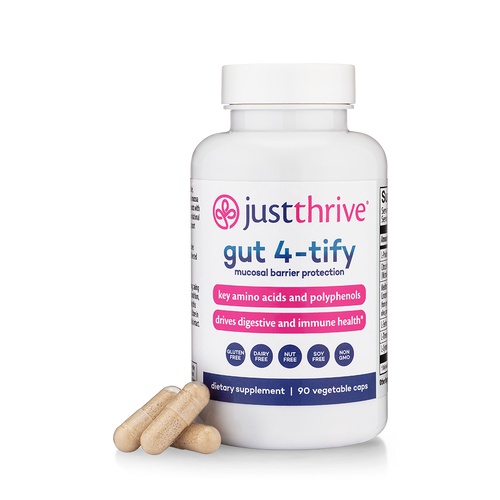
Just Thrive Gut Health Products


Frequently Asked Questions About Probiotics During Pregnancy and Infancy
Is it safe to take probiotics while pregnant?
Many women take probiotics during pregnancy, and research suggests they may help keep the gut microbiome in healthy balance during a time when it shifts significantly. Because every pregnancy is different, the most important step is to check with your own healthcare provider before starting any new supplement.
Can I take probiotics while breastfeeding?
Breast milk naturally contains probiotic bacteria, and what passes to your baby reflects what is in your gut. Supporting your own microbiome while nursing can help you pass along a more diverse population of beneficial bacteria. Talk with your healthcare provider about what is right for you.
When can babies start probiotics?
Babies already receive probiotics through breast milk or formula. Some parents introduce a small amount of spore probiotic powder in infancy, but you should always check with your pediatrician before giving your baby any probiotic supplement.
How do you give a baby probiotics?
A common method is placing a tiny dab of spore probiotic powder from a capsule on the breast or in the baby's mouth. Amounts vary by age, so confirm the right approach with your pediatrician first.
Why do the first 1,000 days matter for gut health?
Research shows the first roughly 1,000 days after birth are a key window for gut microbiome development, which can influence lifelong immunity and wellness. Supporting a balanced microbiome early helps set that foundation.
Trust Just Thrive for Your Baby’s Healthy Gut
You want to do everything you can to give your baby a happy, healthy life. That all stems from a well-balanced gut microbiome, and Just Thrive Probiotic can help make that happen.
Just Thrive Probiotic contains four clinically studied spore probiotics:
- Bacillus indicus HU36™
- Bacillus subtilis HU58™
- Bacillus coagulans (SC-208)
- Bacillus clausii (SC-109)
This proven effective team of spore probiotics helps keep your gut microbiome in healthy balance to support lifelong wellness. Just Thrive Probiotic promotes a healthy gut environment, allowing a diverse population of beneficial bacteria to grow and flourish.
>> Give your baby the best head start right from the beginning with Just Thrive Probiotic.
But if you’re unsure about trying Just Thrive Probiotic, we understand and we can help.
EVERY Just Thrive purchase is covered by our Bottom of the Bottle, 100% money back guarantee.
That means you can try Just Thrive Probiotic risk-free to see how it works for your family… and we’re confident that you’ll notice a positive difference.
But if for any reason you don’t notice any benefits, you can ask for a full product refund at any time. Even if it’s 3 months or 3 years later. Even if the bottle is empty!

Sources
- Thaiss, C., Zmora, N., Levy, M. et al. The microbiome and innate immunity. Nature 535, 65–74 (2016).
- Hunter S, Flaten E, Petersen C, Gervain J, Werker JF, Trainor LJ, Finlay BB. Babies, bugs and brains: How the early microbiome associates with infant brain and behavior development. PLoS One. 2023 Aug 9;18(8):e0288689.
- Yang I, Corwin EJ, Brennan PA, Jordan S, Murphy JR, Dunlop A. The Infant Microbiome: Implications for Infant Health and Neurocognitive Development. Nurs Res. 2016 Jan-Feb;65(1):76-88.
- Liu T, Stokholm J, Zhang M, Vinding R, Sørensen SJ, Zhao N, Mueller NT. Infant Gut Microbiota and Childhood Blood Pressure: Prospective Associations and the Modifying Role of Breastfeeding. J Am Heart Assoc. 2025 Mar 4;14(5):e037447.
- Wilmanski T, et al. Gut microbiome pattern reflects healthy ageing and predicts survival in humans. Nat Metab. 2021 Feb;3(2):274-286.
- Zhang C, Li L, Jin B, Xu X, Zuo X, Li Y, Li Z. The Effects of Delivery Mode on the Gut Microbiota and Health: State of Art. Front Microbiol. 2021 Dec 23;12:724449.
- Pantazi AC, et al. Development of Gut Microbiota in the First 1000 Days after Birth and Potential Interventions. Nutrients. 2023 Aug 20;15(16):3647.
- Morgan JA, Zafar N, Cooper DB. Group B Streptococcus and Pregnancy. [Updated 2024 Aug 11]. In: StatPearls [Internet]. Treasure Island (FL): StatPearls Publishing; 2025 Jan-. Available from: https://www.ncbi.nlm.nih.gov/books/NBK482443/
- Lv LJ, et al. Early-Onset Preeclampsia Is Associated With Gut Microbial Alterations in Antepartum and Postpartum Women. Front Cell Infect Microbiol. 2019 Jun 26;9:224.
- Baldassarre ME, Di Mauro A, Capozza M, Rizzo V, Schettini F, Panza R, Laforgia N. Dysbiosis and Prematurity: Is There a Role for Probiotics? Nutrients. 2019 Jun 5;11(6):1273.
- Dias S, Pheiffer C, Adam S. The Maternal Microbiome and Gestational Diabetes Mellitus: Cause and Effect. Microorganisms. 2023 Aug 31;11(9):2217.
- Baldassarre ME, et a;. Rationale of Probiotic Supplementation during Pregnancy and Neonatal Period. Nutrients. 2018 Nov 6;10(11):1693.
- Brantsaeter AL, et al. Intake of probiotic food and risk of preeclampsia in primiparous women: the Norwegian Mother and Child Cohort Study. Am J Epidemiol. 2011 Oct 1;174(7):807-15.
- Moore RE, Townsend SD. Temporal development of the infant gut microbiome. Open Biol. 2019 Sep 27;9(9):190128.
- Alemu BK, Azeze GG, Wu L, Lau SL, Wang CC, Wang Y. Effects of maternal probiotic supplementation on breast milk microbiome and infant gut microbiome and health: a systematic review and meta-analysis of randomized controlled trials. Am J Obstet Gynecol MFM. 2023 Nov;5(11):101148.
- Gonia S, et al. Maternal oral probiotic use is associated with decreased breastmilk inflammatory markers, infant fecal microbiome variation, and altered recognition memory responses in infants-a pilot observational study. Front Nutr. 2024 Sep 25;11:1456111.
- Blum WEH, Zechmeister-Boltenstern S, Keiblinger KM. Does Soil Contribute to the Human Gut Microbiome? Microorganisms. 2019 Aug 23;7(9):287.


