

It’s official... Per a recent survey of dietitians, the low-carb, high fat, moderate protein keto diet is, yet again, the most popular diet in the United States.
And it’s easy to see why. For many people, ketogenic diets can deliver a wide variety of health benefits. Whether you’re looking to boost your wellness, manage your weight, dial in your cognitive function or just get better sleep, a keto diet may help you reach those goals.
Here’s a short list of potential big health wins courtesy of keto:
- Increases energy
- Supercharges weight loss efforts
- Stops cravings
- Lowers your triglycerides
- Balances your blood sugar
- Improves your cholesterol levels
But before you race out to the grocery store to stock up on grass fed butter and MCT oil, know this:
All of the potential keto benefits will only show up if your body can properly manage the keto diet. That calls for a huge assist from your gut microbiome – the trillions of bacteria that live in your gut…
Because if your gut microbiome is out of balance, your keto diet may not work the way you want it to… despite all the effort, sacrifice, and willpower you pour into it.
Quick Answer: A keto diet shifts your body to burning fat for fuel, but the benefits depend heavily on a balanced gut microbiome. Because keto is very low in carbs, it can leave you short on the prebiotic fiber that beneficial gut bacteria need, which may tip the gut out of balance. A healthy microbiome helps you get more from a keto diet in five key ways: maximizing nutrient absorption, supplying vitamins and antioxidants, breaking down dietary fats, producing short chain fatty acids, and keeping your metabolism active. Supporting your gut with probiotics, prebiotics, and gut barrier care can help you reap the full benefits of going keto.
How Do Keto Diets Work?
A keto diet works by training your body to burn fat instead of sugar for energy, a state called ketosis. You reach it by eating mostly fats, some protein, and very few carbs.
The primary thrust of a keto diet is to train your body to use fat instead of sugar for energy – a state known as ketosis. This shift in fuel sources can do wonders for your wellness and weight… but only if you do it the right way.
There are plenty of variations of the keto diet, but the basics involve eating:
- Mostly fats (75-85%)
- Some protein (10-20%)
- Minimal carbs (around 5%)
For a successful keto diet, you need to focus on high quality foods to get the maximum nutritional value from everything you eat. And when you’re not eating plenty of fruits and veggies – many of which fall into the carb category – it’s tough to reap all the health benefits of plant foods such as:
- Essential vitamins and minerals
- Antioxidants
- Polyphenols (plant chemicals that support wellness)
- Fiber – especially prebiotic fiber
That’s why you need a healthy gut microbiome – to get the most out of every bite you eat.

How Does the Keto Diet Affect Your Gut Microbiome?
The research is mixed. Keto may lower some inflammation-producing bacteria, but its low fiber content can also cause digestive upset and encourage less helpful bacteria, so the diet can either support or unbalance your gut.
Your gut microbiome contains both beneficial probiotic bacteria and harmful pathogenic bacteria. In a healthy gut, probiotics vastly outnumber pathogens – and those probiotics deliver countless crucial health benefits.
But when your gut is out of balance, and pathogens outnumber probiotics, your gut will be in a state of dysbiosis – and that can undermine your health and weight management.
On top of that, dysbiosis can damage your gut barrier, which can result in a condition known as leaky gut – where harmful toxins and pathogens leak out of your gut and into your bloodstream.
There’s no shortage of things can shift the balance in your gut microbiome… anything from antibiotics to stress to what you eat for dinner. And the jury’s still out on whether the keto diet acts as friend or foe when it comes to the bacterial balance of your gut microbiome.
That’s because there’s some conflicting evidence regarding how a keto diet affects your gut.
👉 Keto/Gut Health Pros:
Following a keto diet may help reduce levels of inflammation-producing bacteria. And some research shows that following this very low-carb, high-fat diet may help relieve some symptoms of diarrhea-dominant IBS.
👉 Keto/Gut Health Cons:
Some evidence indicates that keto diets may
- Cause digestive upset, including constipation and diarrhea, mainly due to their lack of prebiotic fiber
- Encourage growth of pathogenic bacteria
- Cause dysbiosis and increase inflammation
So is the keto diet good or bad for your microbiome?
The existing evidence seems to point both ways, and it’s a little unclear if the diet supports your gut or knocks it out of healthy balance.
| Potential gut benefits of keto | Potential gut drawbacks of keto |
|---|---|
| May reduce levels of inflammation-producing bacteria | Lack of prebiotic fiber can cause digestive upset, including constipation and diarrhea |
| May help relieve some symptoms of diarrhea-dominant IBS | May encourage growth of pathogenic bacteria |
| Supports a lower-sugar environment in the gut | May contribute to dysbiosis and increased inflammation |
But there are two things we do know for sure:
First, it’s nearly impossible to get enough prebiotic fiber – the preferred food of beneficial gut bacteria – when you’re eating very few carbs.
Second, a healthy, well-balanced gut microbiome is one of your best allies for getting the most from your keto diet.

What Are 5 Ways a Healthy Gut Boosts Keto Benefits?
A balanced gut microbiome boosts keto benefits in five ways: it maximizes nutrient absorption, supplies essential nutrients and antioxidants, helps absorb dietary fats, produces healthy short chain fatty acids, and keeps your metabolism active.
Even if you strictly follow keto diet guidelines, your health quest can’t fully succeed without the support of a healthy gut microbiome. Here are five crucial ways a well-balanced gut microbiome helps you reap the health benefits of the keto diet.
1. It maximizes nutrient absorption:
Probiotic bacteria help your body break down foods and extract the nutrients you need to stay alive and well.
2. It supplies essential nutrients and antioxidants:
When your gut is in healthy balance, the probiotic bacteria can produce essentials such as B vitamins and vitamin K. And if you’re supporting your gut with spore probiotic strains – particularly Bacillus indicus HU36 – your body will produce a variety of superhero antioxidants, including:
- Beta carotene
- Lycopene
- Astaxanthin
- Lutein
- Zeaxanthin
3. It absorbs fats properly:
For the keto diet, this is the key that unlocks the kingdom. A healthy gut can boost production of digestive enzymes that break down dietary fats which are the source of the majority of calories in a keto diet. This then allows the body to use the fats for energy.
4. It produces healthy short chain fatty acids (SCFAs):
A balanced gut creates the conditions for healthy bacteria to thrive. And when your healthy bacteria thrive, they’re able to convert prebiotic fiber into SCFAs, such as butyrate and propionate. SCFAs perform many critical health functions including:
- Helping protect and regulate gut barrier function
- Balancing blood sugar
- Managing appetite
- Supporting healthy immune responses
- Regulating blood pressure and cholesterol levels
5. It keeps you burning calories at a healthy pace:
When your microbiome is in balance, your body is able to keep your metabolism in the “on” position. This allows you to burn calories even when you’re not being active.
As you can see, supporting your gut microbiome can greatly help you maximize your keto results...
And for a healthy microbiome that's supported by a steady supply of beneficial probiotics, the perfect food for your probiotics, and great gut barrier care, Just Thrive has got your back.
How Do You Keep Your Gut Balanced for the Best Keto Results?
To get the most from keto, keep your gut microbiome balanced and your gut barrier strong. A probiotic, a prebiotic to feed beneficial bacteria, and gut barrier support work together to do this.
To get the most out of your keto diet, it's a smart decision to keep your gut microbiome balanced and support a strong gut barrier. You can do both with three core gut health products from Just Thrive:
- Just Thrive Probiotic, to introduce a steady supply of healthy bacteria that arrive fully alive in your gut and ready to drive a diverse population
- Precision Prebiotics, to selectively feed only the beneficial bacteria so it can grow and flourish
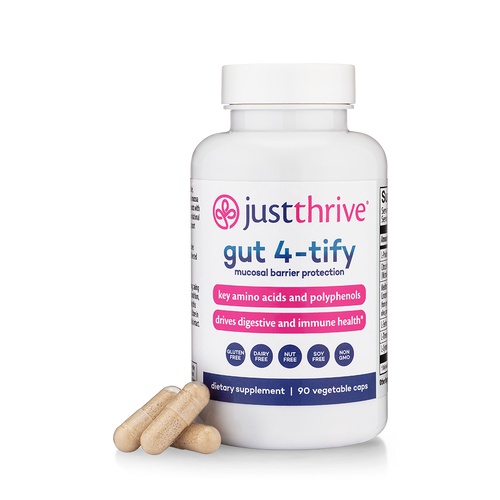
- Gut-4tify, to support the optimal health, protection, and strength of your gut barrier
Ramp up your keto results with this trio of gut-supportive supplements from Just Thrive.
Frequently Asked Questions About Keto and Gut Health
Is the keto diet good or bad for your gut microbiome?
The evidence points both ways. Keto may reduce some inflammation-producing bacteria, but its low fiber content can also cause digestive upset and shift the balance of gut bacteria. Supporting your gut while on keto helps you stay on the beneficial side.
Why does a keto diet make it hard to get enough fiber?
Prebiotic fiber comes mostly from carb-containing plant foods like fruits, vegetables, and whole grains. Because keto keeps carbs very low (around 5% of calories), it is difficult to eat enough of these foods to feed your beneficial gut bacteria.
How does a healthy gut microbiome help you get more from keto?
A balanced gut helps you absorb nutrients, produce vitamins and antioxidants, break down dietary fats for energy, make short chain fatty acids, and keep your metabolism active. Each of these supports the goals people pursue on a keto diet.
What are short chain fatty acids and why do they matter on keto?
Short chain fatty acids (SCFAs) like butyrate and propionate are made when beneficial bacteria ferment prebiotic fiber. They help support gut barrier function, balance blood sugar, manage appetite, and support healthy immune responses, all of which are relevant when you change how you eat.
Can probiotics and prebiotics help while following a keto diet?
Adding a probiotic introduces beneficial bacteria, a prebiotic feeds those bacteria, and gut barrier support helps maintain a strong gut lining. Together they help keep your microbiome balanced when your diet is low in fiber.