



Have you been gaining weight and struggling to shed those extra pounds? Feeling hungry all the time? Dealing with blood sugar spikes and slumps?
Those frustrating issues crop up when your metabolic health needs attention… and giving your body the right kind of support can really turn things around.
Imagine a natural way to jumpstart your metabolism and switch it to fat-burning mode. Something that at the same time keeps blood sugar balanced and turns off the “hungry hormone” that would otherwise trick you into overeating.
Here’s the good news: Mother Nature already has a simple solution that ramps up metabolic effectiveness to keep digestive hormones like GLP-1 in healthy balance.
Quick Answer: Metabolic health covers how your body turns food into energy, including blood sugar control, fat burning, and hunger and fullness signals. Many of these processes are guided by hormones and peptides like GLP-1. Digestive bitters can support metabolic health by activating bitter taste receptors (T2Rs) found throughout the body, not just on the tongue. When these receptors are activated, they help modulate GLP-1, ghrelin, CCK, and GIP, which can curb excess hunger, support steady blood sugar, and encourage fat burning. Traditional bitters such as dandelion root, artichoke leaf, sweet wormwood, barberry, and bitter melon are now backed by research. Taking bitters before meals, including in capsule form, can help prepare the body for digestion.
Why Do So Many People Struggle With Appetite, Blood Sugar, and Weight Gain?
Metabolic health depends on chemical reactions involving enzymes, hormones, and peptides like GLP-1 that govern hunger, blood sugar, fat handling, and energy. Factors such as aging, stress, poor sleep, and diet can make these processes less efficient, leading to extra hunger, blood sugar swings, and stubborn weight gain.
Metabolic health is all about chemical reactions that involve enzymes, hormones, and peptides like GLP-1. Those reactions set off key digestive processes including:
- Sending hunger and satiety (fullness) cues
- Balancing blood sugar
- Managing fat burning and storage
- Transforming food into energy
- Optimizing nutrient absorption
Unfortunately, sluggish metabolism can sneak up on you and make all of these processes less efficient and effective. Things like getting older, feeling stressed, not getting enough sleep, and poor diet can negatively affect metabolic health.
That means feeling like you’re hungry when you really aren’t, blood sugar peaks and valleys, stubborn fat accumulation, especially around your abdomen, and generally feeling tired and sluggish.
And while these issues are incredibly frustrating, you’re not stuck with them. Let’s explore the traditional remedies that hold the key to getting your metabolic health back on track.
 Want to listen instead of read? CLICK HERE
How Do Digestive Bitters Promote Metabolic Health?
Digestive bitters can support metabolic health by helping turn hunger cues off when fuel is not needed, supporting after-meal blood sugar control, encouraging insulin release and uptake, and upregulating fat burning. They work by modulating the hormones and peptides that digestion triggers.
Plants are full of compounds that affect health and well-being in dozens of ways. And plants that contain bitter compounds can transform your metabolic health for the better.
Digestive bitters have been widely used for centuries. And while they can positively affect general digestive issues, we know now that bitter substances do so much more. Bitters can help:[1,2,3,4,5]
- Turn off hunger cues when your body doesn’t need more fuel
- Improve after-meal blood sugar control
- Encourage insulin release and uptake
- Upregulate fat burning
- Protect healthy liver function
Bitters work so effectively because they modulate the hormones and peptides like GLP-1 triggered by digestion. And thanks to scientific research, we know exactly how they can accomplish these metabolic feats.
How Do Bitters Spark Metabolic Action?
Bitter compounds activate bitter taste receptors (T2Rs) found throughout the body, not just on the tongue. Once activated, these receptors turn key signaling proteins up or down, including GLP-1, ghrelin, CCK, and GIP, which together influence appetite, blood sugar, and fat metabolism.
Bitter tastes affect more than just your tongue. Your body has bitter receptors, called T2Rs, throughout your body, including your stomach and intestines.[6] When bitter receptors get activated by bitter compounds, they set off a chain of events that directly affect metabolic health. These highly bioactive compounds work by turning specific signaling proteins (like hormones and peptides) up or down. Here’s how that works on the main metabolic proteins…
GLP-1
GLP-1 (glucagon-like peptide-1), is a popular peptide well-known for regulating blood sugar balance and body weight.[7] GLP-1 plays a huge part in metabolic health…[8,9,10,11]
- Slowing digestion
- Promoting feelings of fullness (satiety)
- Reducing appetite
- Signaling insulin release
- Controlling blood sugar levels
- Preventing formation of new fat cells
- Stimulating fat burning (called thermogenesis)
- Maintaining desired body weight
Bitters activate and increase GLP-1 to help deliver all of these metabolic benefits.[12]
Ghrelin
Ghrelin, the hunger hormone, tells your brain that you’re hungry to stimulate appetite and encourage eating. This powerful protein can override physical feelings of fullness, like pressure in your stomach, so your brain thinks you need more food when you really don’t.[13] When bitters turn on T2Rs in the gut (rather than the mouth), it modulates ghrelin levels. A clinical study found that giving people bitter compounds in capsule form before meals helped them consume 14% fewer calories.[14]
CCK
CCK (cholecystokinin), is a peptide hormone that’s critical for bile and digestive enzyme release, nutrient absorption, and suppressing appetite to control food intake.[15] Bitter compounds activate T2Rs that release CCK during digestion.[16]
GIP
GIP (Glucose-dependent insulinotropic polypeptide), is an incretin hormone that helps balance blood sugar by increasing insulin release. It also regulates appetite and energy expenditure, which plays a key role in weight management.[17] Bitter substances stimulate GIP release to keep blood sugar and appetite under control.[7]
And on top of all that, bitters are proven to provide liver protection, especially when it comes to minimizing fat accumulation. They do that by stimulating bile production, the substance responsible for breaking down fats and halting fatty build-up.[18,19]
It’s no wonder that research into the beneficial metabolic effects of bitters has been ramping up.
Which Traditional Digestive Bitters Are Backed by Modern Science?
Researchers have documented the metabolic effects of several traditional bitters, including dandelion root, artichoke leaf, sweet wormwood, barberry, and bitter melon. Each supports metabolic health in its own way, such as helping balance blood sugar, encouraging bile production, or supporting fat metabolism.
When bitters activate T2Rs, metabolic magic happens. That’s why researchers are quickly documenting the metabolic powers of many traditional digestive bitters and how they interact with peptides like GLP-1. Here’s a quick look at just a few of the groundbreaking bitters powers they’ve discovered.
- Dandelion root has been found to help control blood sugar levels, regulate sugar metabolism, and protect liver health.[20,21,22]
- Artichoke leaf supports healthy blood sugar levels and liver health, encourages bile production to promote fat metabolism, and stimulates GLP-1.[20,23,24]
- Sweet wormwood helps sensitize cells to insulin reception, balance blood sugar, and stimulate fat metabolism.[20,25]
- Barberry stimulates GLP-1 release, helps control blood sugar, and promotes satiety cues.[26,27,28]
- Bitter Melon helps regulate blood sugar and weight, and promotes insulin release and uptake.[29,30]
Introducing bitters at the beginning of every meal helps your body prepare for the food that’s coming, stimulating the pathways and processes that lead to optimal metabolic health. And if you can’t stomach bitter tastes, you can have your bitters in capsule form, no bad taste, same stunning results.
Just Thrive Gut Health Products


Frequently Asked Questions About Digestive Bitters and GLP-1
What is GLP-1 and why does it matter for metabolism?
GLP-1 (glucagon-like peptide-1) is a peptide well known for helping regulate blood sugar and body weight. It supports slowed digestion, feelings of fullness, reduced appetite, insulin signaling, and fat burning, which makes it a kind of master protein for metabolic health.
How do digestive bitters support GLP-1?
Bitters activate bitter taste receptors (T2Rs) located throughout the body, including the gut. When these receptors are activated, they help increase and modulate GLP-1, which can support the metabolic benefits it provides.
What other metabolic hormones do bitters affect?
Beyond GLP-1, bitters can modulate ghrelin (the hunger hormone), CCK (which supports bile and enzyme release and appetite control), and GIP (which helps balance blood sugar). Together these signals support appetite, blood sugar, and fat metabolism.
Which bitters are best for metabolic health?
Traditional bitters now studied for metabolic support include dandelion root, artichoke leaf, sweet wormwood, barberry, and bitter melon. Each interacts with metabolic pathways in its own way, such as supporting blood sugar balance, bile production, and fat metabolism.
When should I take digestive bitters?
Bitters are traditionally taken at the beginning of a meal to help the body prepare for digestion. If you do not enjoy the bitter taste, capsule forms offer the same activation of bitter receptors without the harsh flavor.
Take Your Metabolic Health to the Next Level with Just Thrive Digestive Bitters
If you like stable blood sugar levels… knowing when you truly feel full… and not watching your weight every minute… nature provides the perfect metabolic encouragement.
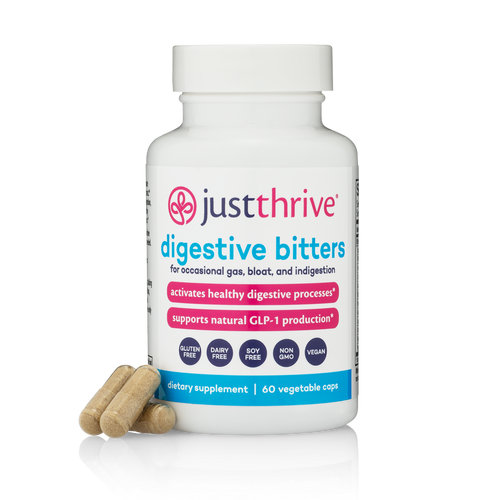
Just Thrive Digestive Bitters is the first product of its kind. It gives you all the benefits of bitters in capsule form, sidestepping the harsh taste while still activating your body’s bitter receptors. Those bitter receptors then stimulate the hormones and peptides your body needs to maintain healthy metabolic balance.
Just Thrive Digestive Bitters delivers a comprehensive holistic blend of 12 time-tested bitters including:
- Dandelion root
- Artichoke leaf
- Sweet wormwood
- Barberry
- Bitter melon
- Plus, seven other time-tested bitters that contribute to metabolic health in their own unique ways
>> Turn up the heat on your metabolic health with Just Thrive Digestive Bitters before every meal.
But if you’re not sure about trying Just Thrive Digestive Bitters… we can help with that.
EVERY Just Thrive purchase is covered by our Bottom of the Bottle, 100% money back guarantee.
So you can try Just Thrive Digestive Bitters, risk-free, to see if it works for you… and we’re confident that it will.
But if for any reason you don’t feel a difference, simply request a full product refund at any time. Doesn’t matter if it’s 3 months or even 3 years later. It doesn’t even matter if the bottle is empty! You’ll get your money back any time, no matter what

Sources
- Palatini Jackson KM, Mhawish R, Komarnytsky S. Bitter Phytochemicals Acutely Lower Blood Glucose Levels by Inhibition of Glucose Absorption in the Gut. Endocrines. 2024; 5(3):304-322.
- Chou WL. Therapeutic potential of targeting intestinal bitter taste receptors in diabetes associated with dyslipidemia. Pharmacol Res. 2021 Aug;170:105693.
- Xie C, Wang X, Young RL, Horowitz M, Rayner CK, Wu T. Role of Intestinal Bitter Sensing in Enteroendocrine Hormone Secretion and Metabolic Control. Front Endocrinol (Lausanne). 2018 Sep 27;9:576.
- Rezaie P, Bitarafan V, Horowitz M, Feinle-Bisset C. Effects of Bitter Substances on GI Function, Energy Intake and Glycaemia-Do Preclinical Findings Translate to Outcomes in Humans? Nutrients. 2021; 13(4):1317.
- Hassan L, Newman L, Keast R, Danaher J, Biesiekierski JR. The effect of gastrointestinal bitter sensing on appetite regulation and energy intake: A systematic review. Appetite. 2023 Jan 1;180:106336.
- D'Urso O, Drago F. Pharmacological significance of extra-oral taste receptors. Eur J Pharmacol. 2021 Nov 5;910:174480.
- Osakabe N, et al. Gastrointestinal hormone-mediated beneficial bioactivities of bitter polyphenols. Food Bioscience. Volume 61, October 2024, 104550
- Astrup, A. Reflections on the discovery GLP-1 as a satiety hormone: Implications for obesity therapy and future directions. Eur J Clin Nutr 78, 551–556 (2024).
- Holst JJ. The physiology of glucagon-like peptide 1. Physiol Rev. 2007 Oct;87(4):1409-39. doi: 10.1152/physrev.00034.2006. PMID: 17928588.
- Bu T, Sun Z, Pan Y, Deng X, Yuan G. Glucagon-Like Peptide-1: New Regulator in Lipid Metabolism. Diabetes Metab J. 2024 May;48(3):354-372.
- Beiroa D, et al. GLP-1 agonism stimulates brown adipose tissue thermogenesis and browning through hypothalamic AMPK. Diabetes. 2014 Oct;63(10):3346-58.
- Kok BP, Galmozzi A, Littlejohn NK, Albert V, Godio C, Kim W, Kim SM, Bland JS, Grayson N, Fang M, Meyerhof W, Siuzdak G, Srinivasan S, Behrens M, Saez E. Intestinal bitter taste receptor activation alters hormone secretion and imparts metabolic benefits. Mol Metab. 2018 Oct;16:76-87. doi: 10.1016/j.molmet.2018.07.013. Epub 2018 Aug 4. PMID: 30120064; PMCID: PMC6158035.
- Micioni Di Bonaventura E, Botticelli L, Del Bello F, Giorgioni G, Piergentili A, Quaglia W, Cifani C, Micioni Di Bonaventura MV. Assessing the role of ghrelin and the enzyme ghrelin O-acyltransferase (GOAT) system in food reward, food motivation, and binge eating behavior. Pharmacol Res. 2021 Oct;172:105847.
- Andreozzi P, et al. The Bitter Taste Receptor Agonist Quinine Reduces Calorie Intake and Increases the Postprandial Release of Cholecystokinin in Healthy Subjects. J Neurogastroenterol Motil. 2015 Oct 1;21(4):511-9.
- Cawthon CR, de La Serre CB. The critical role of CCK in the regulation of food intake and diet-induced obesity. Peptides. 2021 Apr;138:170492. doi: 10.1016/j.peptides.2020.170492. Epub 2021 Jan 8. PMID: 33422646.
- Chen MC, Wu SV, Reeve JR Jr, Rozengurt E. Bitter stimuli induce Ca2+ signaling and CCK release in enteroendocrine STC-1 cells: role of L-type voltage-sensitive Ca2+ channels. Am J Physiol Cell Physiol. 2006 Oct;291(4):C726-39. doi: 10.1152/ajpcell.00003.2006. Epub 2006 May 17. PMID: 16707556.
- Pelle MC, et al. Role of a Dual Glucose-Dependent Insulinotropic Peptide (GIP)/Glucagon-like Peptide-1 Receptor Agonist (Twincretin) in Glycemic Control: From Pathophysiology to Treatment. Life (Basel). 2021 Dec 25;12(1):29.
- Xu J, Cao K, Li Y, Zou X, Chen C, Szeto IM, Dong Z, Zhao Y, Shi Y, Wang J, Liu J, Feng Z. Bitter gourd inhibits the development of obesity-associated fatty liver in C57BL/6 mice fed a high-fat diet. J Nutr. 2014 Apr;144(4):475-83. doi: 10.3945/jn.113.187450. Epub 2014 Feb 12. PMID: 24523491.
- Kania-Dobrowolska M, Baraniak J. Dandelion (Taraxacum officinale L.) as a Source of Biologically Active Compounds Supporting the Therapy of Co-Existing Diseases in Metabolic Syndrome. Foods. 2022 Sep 15;11(18):2858.
- Awwad A., Poucheret P., Idres A.Y., Bidel L.P.R., Tousch D. The Bitter Asteraceae: An Interesting Approach to Delay the Metabolic Syndrome Progression. NFS J. 2020;18:29–38.
- Pfingstgraf IO, Taulescu M, Pop RM, Orăsan R, Vlase L, Uifalean A, Todea D, Alexescu T, Toma C, Pârvu AE. Protective Effects of Taraxacum officinale L. (Dandelion) Root Extract in Experimental Acute on Chronic Liver Failure. Antioxidants (Basel). 2021 Mar 24;10(4):504.
- Saénz Rodriguez T, García Giménez D, de la Puerta Vázquez R. Choleretic activity and biliary elimination of lipids and bile acids induced by an artichoke leaf extract in rats. Phytomedicine. 2002 Dec;9(8):687-93. doi: 10.1078/094471102321621278. PMID: 12587687.
- Mahboubi,M. Cynara scolymus (artichoke) and its efficacy in management of obesity. Bulletin of Faculty of Pharmacy, Cairo University. Volume 56, Issue 2, December 2018, Pages 115-120
- Choi EY, Park CY, Ho SH, Park SJ, Kim D, Han B, Kim SH. Anti-Obesity Effects of Artemisia annua Extract in Zucker Fatty Rats and High-Fat Diet Sprague Dawley Rats through Upregulation of Uncoupling Protein 1. J Obes Metab Syndr. 2021 Mar 30;30(1):32-43. doi: 10.7570/jomes20097. PMID: 33479187; PMCID: PMC8017327.
- Yu Y, Hao G, Zhang Q, Hua W, Wang M, Zhou W, Zong S, Huang M, Wen X. Berberine induces GLP-1 secretion through activation of bitter taste receptor pathways. Biochem Pharmacol. 2015 Sep 15;97(2):173-7.
- Nazari A, Ghotbabadi ZR, Kazemi KS, Metghalchi Y, Tavakoli R, Rahimabadi RZ, Ghaheri M. The Effect of Berberine Supplementation on Glycemic Control and Inflammatory Biomarkers in Metabolic Disorders: An Umbrella Meta-analysis of Randomized Controlled Trials. Clin Ther. 2024 Feb;46(2):e64-e72. doi: 10.1016/j.clinthera.2023.10.019. Epub 2023 Nov 27. PMID: 38016844.
- Park HJ, Jung E, Shim I. Berberine for Appetite Suppressant and Prevention of Obesity. Biomed Res Int. 2020 Dec 12;2020:3891806. doi: 10.1155/2020/3891806. PMID: 33415147; PMCID: PMC7752296.
- Hsu PK, Pan FFC, Hsieh CS. mcIRBP-19 of Bitter Melon Peptide Effectively Regulates Diabetes Mellitus (DM) Patients' Blood Sugar Levels. Nutrients. 2020 Apr 28;12(5):1252.
- Basch E, Gabardi S, Ulbricht C. Bitter melon (Momordica charantia): a review of efficacy and safety. Am J Health Syst Pharm. 2003 Feb 15;60(4):356-9. doi: 10.1093/ajhp/60.4.356. PMID: 12625217.


