



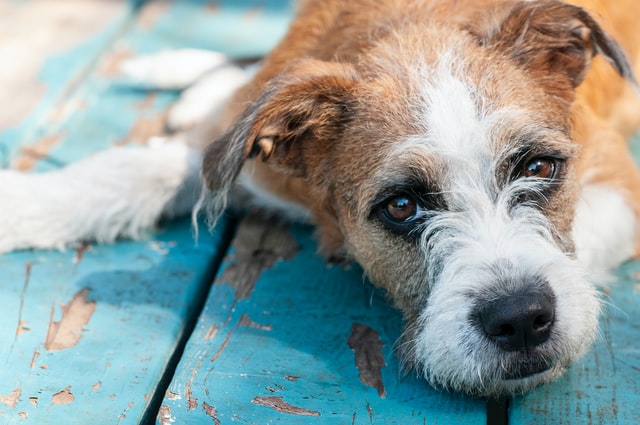
Trash… grass… socks... poop… dead animals…
Let’s face it. Dogs will eat anything they come across.
As Newton famously stated, “For every action, there is an equal and opposite reaction.” In the case of your dog’s undesirable eating habits, this equates to some less than pleasant things coming out the other end.
Case in point: Dogs diarrhea
Dogs get diarrhea pretty frequently. In fact, most unscheduled vet visits involve gastrointestinal (GI) issues – especially diarrhea.
More than 56% of dog owners reported diarrhea issues in their dogs, with some dogs experiencing diarrhea well more than would be categorized as normal.
And while you may not be able to stop your dog from eating something he shouldn’t, you can help minimize his GI upset… and the amount of diarrhea cleanup you’ll have to deal with.
Quick Answer: Dog diarrhea is extremely common and is about frequency and urgency as much as loose, watery, or oddly colored stool. Most cases are self-limiting and resolve with simple care: withhold food for about 12 hours (never for puppies under 6 months), then reintroduce bland foods like boiled chicken and white rice. A few specks of surface blood are usually not dangerous, but dark, tarry stool warrants a vet call. Because most dog diarrhea traces back to an unbalanced gut microbiome (dysbiosis), supporting your dog's gut with a probiotic formulated specifically for dogs, ideally a spore-based formula, can help soothe upset and reduce future bouts.
How Do You Know If Your Dog Has Diarrhea?
Dog diarrhea is about frequency and urgency as much as color, odor, or texture. Signs include frequent, urgent, soft, loose, watery, or thin stools, yellow or green color, or mucus. Surface blood is usually not dangerous, but dark, tarry stool warrants a vet call.
You may think you’ll know if your dog has diarrhea when you see it – or smell it – but there’s actually more to diarrhea than watery, foul-smelling poop. Dog diarrhea is about frequency as much as color, odor, or texture – though those can all be affected.
Signs of dog diarrhea include:
- Frequent stools with unusual urgency
- Soft stool, the consistency of pudding
- Loose stool, too watery to pick up
- Thin stool
- Yellow or green stool
- Mucus in the stool
Sometimes your dog’s diarrhea will have specks of blood on it – and that can look frightening. Blood on the surface of stool comes from the large intestine, picked up on the way out. It’s disconcerting, but generally not dangerous unless it’s happening frequently.
On the other hand, dark black stool means there’s blood in the poop, which can be a sign of a more serious issue. If your dog has dark, tarry poop, give your vet a call.
Most cases of dog diarrhea are self-limiting with a little TLC from you. That starts with not feeding your dog – unless it’s a puppy under 6 months old – for at least 12 hours, especially if he doesn’t want to eat.
Once the diarrhea has slowed down or stopped, you can feed some bland foods like boiled chicken (very small pieces) and white rice.
But the most important step for doggie gut health?
Give your pet probiotics specially formulated for dogs.
Why Do Dogs Need Probiotics?
Dogs have a gut microbiome too, and it is easily knocked out of balance (dysbiosis) by things like spoiled food, lawn chemicals, antibiotics, or stress. Dysbiosis can drive GI issues, especially diarrhea, so keeping the gut balanced with a dog-formulated probiotic helps support digestion and overall health.

And that dysbiosis can lead to all sorts of GI issues in your dog – especially diarrhea.
That’s why keeping your dog’s gut microbiome in healthy balance with a proven probiotic supplement is so important. Along with minimizing pathogen populations, probiotics help your dog:
- Stay healthy and energetic
- Digest food completely
- Absorb essential nutrients
- Fight off potentially infectious microbes (like viruses)
- Reduce allergic reactions
- Avoid the complications of leaky gut (yes, dogs get that too)
- Relieve or prevent bouts of diarrhea
Probiotics will soothe your dog’s upset stomach now and improve your dog’s gut health over the long term. Like you, your dog needs probiotics to keep his gut in healthy balance… but the probiotics that work for you will not work well for your dog.
How Do Dog Probiotics Work?
Probiotics only help if they reach the gut alive, and spore-based strains are built to survive digestion and do exactly that. Probiotics formulated for dogs work better than human formulas, and in one clinical study a dog-focused spore probiotic offered significant relief for dogs with diarrhea and vomiting.
Research shows that the right probiotics can make an enormous difference in your dog’s gut health.
Most vets agree that probiotics made for humans probably won’t hurt your dog… but they definitely won’t work as well as probiotics tailored to a dog’s specific gut microbiome. And depending on what’s in the probiotic and the size of your pup, some people probiotics may actually cause diarrhea.
That’s why it’s best to give your dog specially formulated, clinically proven spore probiotics, and here’s why:
Probiotics can only offer their full benefits if they can make it all the way to your dog’s gut microbiome. Spore probiotics are the only probiotics designed by nature to do just that.
A recent clinical study found that a specially formulated spore probiotic supplement offered significant relief for dogs suffering with diarrhea and vomiting. The supplement contained two dog-focused probiotic strains, Bacillus subtilis and Pediococcus acidilactici.
Researchers gave the spore probiotic supplement to 11 dogs, and they all experienced positive results, such as:
- Significant decrease – or complete disappearance – of GI issues and symptoms
- Dramatic decrease in leaky gut markers
- Less gas, even in healthy dogs
- No negative effects for any dogs in the study
Those stunning results clearly demonstrate the overwhelming benefits of probiotics for your pup… as long as you use a spore probiotic supplement specially formulated for your dog’s gut microbiome.
Frequently Asked Questions About Dog Diarrhea
What are the signs of dog diarrhea?
Signs include frequent stools with unusual urgency, soft pudding-like or loose watery stool, thin stool, yellow or green color, and mucus. Diarrhea is about frequency as much as appearance.
What should you feed a dog with diarrhea?
For most dogs, withhold food for about 12 hours (never for puppies under 6 months or dogs that need to eat), then reintroduce small amounts of bland food like boiled chicken in small pieces and white rice once the diarrhea slows.
When should you call the vet about dog diarrhea?
A few specks of blood on the surface of the stool are usually not dangerous unless frequent. Dark, black, tarry stool can signal a more serious issue, so call your vet. Also call if diarrhea is frequent or persistent.
Can you give a dog human probiotics?
Most vets agree human probiotics probably will not hurt a dog, but they will not work as well as a probiotic formulated for a dog's gut microbiome, and some may even cause diarrhea depending on the formula and the dog's size.
What is the best probiotic for dog diarrhea?
A probiotic formulated specifically for dogs, ideally a spore-based formula that survives digestion. In one study, a spore probiotic with Bacillus subtilis and Pediococcus acidilactici helped dogs with diarrhea and vomiting.
Help support the optimal health and protection of your dog’s gut with Just Pets Probiotic.
Just Pets Probiotic contains Bacillus subtilis and Pediococcus acidilactici, two strains of probiotics proven effective for supporting your pup’s digestive and immune health. A single, daily capsule – taken whole or mixed into your dog’s food – can help:
- Keep your dog’s gut microbiome in healthy balance
- Protect and support healthy gut barrier function
- Give your dog’s immune system solid support
Keep your dog’s gut happy with Just Pets Probiotic.


