



Spring is nature’s reset button. As soon as the days grow longer and the air grows warmer, everything begins to feel new again. Wildflowers bloom, animals emerge from hibernation, and the urge to throw open the windows ushers in an annual tradition: spring cleaning.
But while we often think of spring as a time to clean our homes, it’s just as powerful a time to gently reset ourselves. Our rituals, our habits, and (most importantly) our health.
Leaning into spring’s energy doesn’t mean punishing workout regimens or restrictive diets. Instead, it invites a gentler approach. Spring’s naturally uplifting momentum brings a gentle, joyful energy that encourages renewal in ways that feel supportive, not stressful.
By working with the rhythm of the season through small, intentional shifts, you can help your body realign and recalibrate. Energy returns. Your mind sharpens. And you’ll begin to feel lighter, more balanced, and more like yourself again.
This is your guide to resetting your system this spring, from the inside out.
1. Light Outdoor Movement

After months of cold weather and extra time spent indoors, it’s natural for spring’s warm, sunny days to draw you outside. And this brings an opportunity to move in ways that feel energizing and sustainable.
Light outdoor movement combines two health-supporting habits: spending time in nature and getting gentle exercise. It’s an effective way to reset your body, working on multiple levels at once.
Just 20 minutes of light outdoor movement, practiced consistently, can:
- Reduce stress and mental fatigue, possibly lowering the production of stress hormones.[1]
- Improve your mood, energy levels, and resilience.[2]
- Increase your self-esteem.[3]
- Improve your fitness level and cardiovascular health, which can help support a healthy weight, maintain a normal blood pressure, and promote healthy metabolic function.[3]
 Want to listen instead of read? CLICK HERE
And that’s just the beginning. Depending on the type of exercise you do, you can help build strength, endurance, flexibility, and balance. And on a deeper level, it’s a signal from your body that it’s time to shift out of winter’s slower rhythm and begin a springtime reawakening.
So where do you begin? There are countless exercises that you can do outside; choose one that makes you feel good physically and emotionally.
Walking is one of the simplest and easiest exercises. (It’s also our founder, Tina’s, personal favorite.) A daily walk at lunchtime or after work, now that the days are longer, can support both physical and mental health, from cardiovascular function and bone density to cognitive abilities and sleep quality.[4] Other forms of light outdoor exercise can include stretching in your yard, practicing yoga or tai chi in the park, exploring a new hike or bike trail, and even working in your garden.
The key is consistency, not intensity. You don’t have to push yourself to exhaustion or chase unattainable goals. Instead, this is your chance to connect with your body. To listen to its needs. To honor what your body can do today. In many ways, it’s one of the simplest forms of gratitude. Move your body to show appreciation and respect for it carrying you not just through this season, but through the entire year.
2. Mood-Lifting Nutrition

As the weather lightens, so does the food your body naturally craves. Instead of the heavy, hearty meals that felt comforting on a cold winter day, you may find yourself reaching for fresh, light foods.
This is just as nature intended. The foods that grow abundantly in spring are rich in mood-supporting nutrients that help you feel energized throughout the day. Think leafy greens, crisp vegetables, fresh berries, and flavorful herbs.
Spring diets aren’t about restriction; they’re about addition. Adding more color. More freshness. More whole, organic foods.
Some foods that can help you feel your best, mood-wise, may include:
- Foods high in quercetin, which can improve mood by increasing serotonin and dopamine levels. This includes apples, berries, kale, and onions.[5]
- Plant-based foods that contain tryptophan, which can increase serotonin, like broccoli, leafy greens, peas, and sunflower seeds.[6]
- Foods that contain mood-supporting thiamine (vitamin B1), such as asparagus, lentils, macadamia nuts, peas, salmon, and soybeans.[7]
- Antioxidant-rich foods such as berries, cherries, dark chocolate, and dark leafy greens, which can help support mental well-being and a healthy mood.[8]
At the same time, spring is an excellent time to say goodbye to food that weighs down your system. Ultra-processed snacks, added sugars, and trans fats can cause blood sugar spikes and crashes that can leave you feeling sluggish, irritable, and depleted of energy. It’s hard to feel your best, physically or mentally, when your diet centers around unhealthy foods.
And it’s not just food that can affect your mood. Hydration is another essential piece of your spring reset. Even being mildly dehydrated can contribute to feelings of fatigue and difficulty concentrating. Drinking enough water can help flush out metabolic waste, improve your sleep, and help balance your mood.
Even small tweaks to your diet can help your body and mind rebalance, supporting clearer thinking, sustained energy, and an overall better mood.
3. Gradual Goal-Setting

With January in the past, many New Year’s resolutions have also quietly fallen away. And that’s okay. Spring is here to remind us that change can begin at any time of the year, and it doesn’t have to happen all at once, or under intense pressure. Just as the days lengthen slowly and buds bloom at their own pace, change can unfold slowly and sustainably.
This season, consider taking a more compassionate approach to reaching your goals.
Instead of overhauling your routine overnight or pushing yourself to exhaustion, focus on small, manageable shifts that build over time. These subtle changes are easier to repeat consistently, which makes them far more likely to last. Over time, small actions compound into meaningful transformation, without overwhelming your nervous system or disrupting your sense of balance.
Here’s a simple system for gradual goal-setting.
- First, identify one or two goals you would like to accomplish.
- Then, break each goal down into smaller, more approachable steps. For example, if you want to read one book a month, your first step might be asking friends for book recommendations or choosing a book that truly excites you.
- Next, take small, tangible actions that move you forward. Create your TRL (To Read List). Purchase or borrow your first book. Place it somewhere visible as a gentle reminder.
- Finally, anchor your goal to a simple, repeatable habit. Maybe you’ll read on your commute, during your lunch break, or with your morning coffee. Focus on consistency.
- As these changes begin to feel natural, layer in the next step or goal, slowly and steadily.
Over time, even small actions can add up to meaningful transformation, without overwhelming your nervous system or disrupting your peace. This is how lasting change becomes part of your identity.
Just Thrive Core Health Products

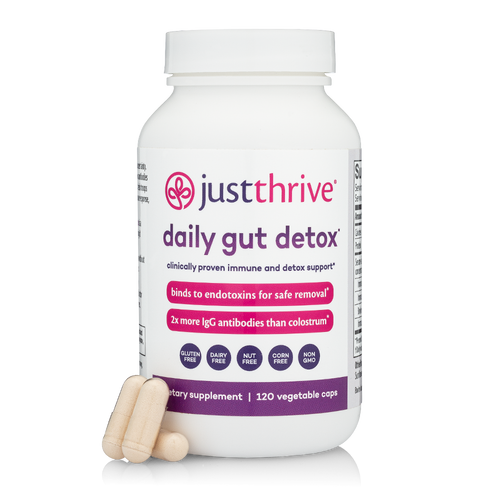
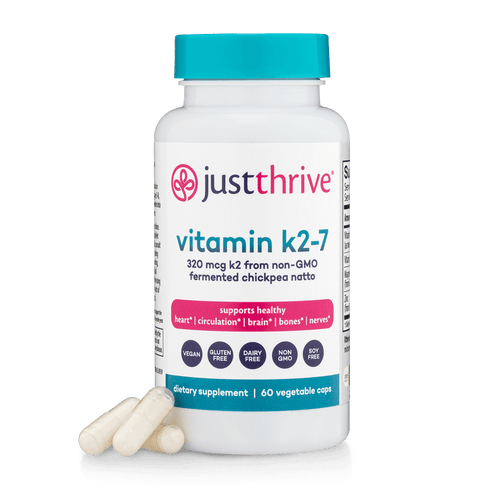

Support Your Spring Reset with Just Thrive
There’s one last crucial step to spring cleaning your health: resetting your gut health.
Your gut microbiome impacts almost every aspect of your overall wellness, including your physical, emotional, and mental health. A balanced microbiome can help optimize the results of all the other positive changes you’re making this season.
The Just Thrive Core Health Bundle contains two powerful supplements that help promote beneficial bacteria.
Just Thrive Probiotic is a spore probiotic, covered by a thick endospore “armor” that guarantees its four potent bacterial strains “arrive alive” in your gut microbiome:
- Bacillus indicus HU36™
- Bacillus subtilis HU58™
- Bacillus coagulans
- Bacillus clausii
Together, these probiotic bacteria aid healthy digestion, support immune function, encourage the production of antioxidants right at the site of peak absorption, and promote your overall gut health.
Just Thrive PREbiotic delivers three “smart” fibers that are clinically proven to feed only beneficial bacteria. And when combined with Just Thrive Probiotic, it can more than double the population of good bacteria in your gut.
>> Support your body from the inside out this season. Try Just Thrive Probiotic and PREbiotic today. (Bundle and save!)
Not sure if Just Thrive Core Health will work for you? We’ve got you covered.
Every single Just Thrive purchase is covered by our Bottom of the Bottle, 100% money back guarantee. So you can try Just Thrive Probiotic and PREbiotic to see if they work for you.
But if for any reason you don’t feel a difference, simply ask for a full product refund at any time. Even if it’s been 3 weeks, 3 months, or 3 years… even if the bottle is empty!

Sources
- Eigenschenk B, Thomann A, McClure M, et al. Benefits of Outdoor Sports for Society. A Systematic Literature Review and Reflections on Evidence. Int J Environ Res Public Health. 2019;16(6):937. Published 2019 Mar 15. doi:10.3390/ijerph16060937
- Pretty J, Peacock J, Sellens M, Griffin M. The mental and physical health outcomes of green exercise. Int J Environ Health Res. 2005 Oct;15(5):319-37. doi: 10.1080/09603120500155963. PMID: 16416750.
- Gladwell, V.F., Brown, D.K., Wood, C. et al. The great outdoors: how a green exercise environment can benefit all. Extrem Physiol Med 2,3 (2013). https://doi.org/10.1186/2046-7648-2-3
- Ungvari Z, Fazekas-Pongor V, Csiszar A, Kunutsor SK. The multifaceted benefits of walking for healthy aging: from Blue Zones to molecular mechanisms. Geroscience. 2023 Dec;45(6):3211-3239. doi: 10.1007/s11357-023-00873-8. Epub 2023 Jul 26. PMID: 37495893; PMCID: PMC10643563.
- Haytowitz DB, Eldridge AL, Bhagwat S, et al. Flavonoid Content of Vegetables. USDA. http://www.ars.usda.gov/SP2UserFiles/Place/80400525/Articles/AICR03_VegFlav.pdf. Accessed June 2, 2015.
- Wurtman RJ, Wurtman JJ, Regan MM, McDermott JM, Tsay RH, Breu JJ. Effects of normal meals rich in carbohydrates or proteins on plasma tryptophan and tyrosine ratios. Am J Clin Nutr. 2003;77:128-132.
- Benton D, Donohoe RT. The effects of nutrients on mood. Public Health Nutr. 1999 Sep;2(3A):403-9. doi: 10.1017/s1368980099000555. PMID: 10610080.
- Gautam M, Agrawal M, Gautam M, Sharma P, Gautam AS, Gautam S. Role of antioxidants in generalised anxiety disorder and depression. Indian J Psychiatry. 2012 Jul;54(3):244-7. doi: 10.4103/0019-5545.102424. PMID: 23226848; PMCID: PMC3512361.


