



You’re probably familiar with probiotics, live microorganisms that work with your body to power your best health… But how much do you know about prebiotics?
Though prebiotics don’t get as much press or attention, these specialized plant fibers are vital to your overall health and wellness. In fact, you can’t be truly healthy without them.
In this blog, we'll explore the many ways prebiotics promote good health (beyond just your digestion), their impact on your entire body, plus how to choose the right prebiotics and ensure you're getting enough for optimal wellness.
Quick Answer: Prebiotics are a special class of plant fiber that your body cannot digest, so they become food for the beneficial bacteria in your gut. Think of them as fertilizer for your gut "garden." The right prebiotics support health in four key ways: they promote a diverse, probiotic-rich microbiome, help reduce pathogenic bacteria, promote the production of short-chain fatty acids, and support balanced immune function. Beyond digestion, research links prebiotics to dozens of benefits across the body. The catch is choosing the right type: well-tolerated fibers like GOS, XOS, and certain pectins like kiwifruit powder feed beneficial bacteria which can be gentler on digestion than some other prebiotic fibers.
What Are Prebiotics & How Do They Differ From Probiotics?
Quick Answer: Prebiotics are a special type of plant fiber that your body cannot digest, so they pass through to feed the beneficial bacteria in your gut. They are not the same as probiotics; instead, they are probiotics’ favorite food source.
First things first, despite what you might see on social media, prebiotics are not the same as probiotics. Not even close. Probiotics are beneficial bacteria that live in your gut microbiome and help keep your digestive system, immune system, and nearly every critical system in your body running smoothly and efficiently. PREbiotics, on the other hand, are probiotics’ favorite food source, helping them grow, multiply, and flourish in the gut.
They’re a special class of fiber found naturally in fruits, vegetables, whole grains, and legumes. Our bodies can’t digest prebiotic fiber, making it fully available to be eaten by the bacteria in your gut.
Prebiotics work for probiotics the way fertilizer works for your garden. They nourish beneficial bacteria and help them take root in the gut, allowing for a healthy and diverse probiotic population. Unfortunately, just like some fertilizers promote weed growth, some types of prebiotics feed harmful pathogenic bacteria… and that can lead to an imbalance, like a garden overrun with weeds.
That’s why it’s so important to choose prebiotics that probiotic bacteria love but pathogens aren’t interested in. These “intelligent” prebiotics preferentially nourish beneficial bacteria only, keeping your gut “garden” in healthy balance. They include:1
- Organic kiwifruit powder (comprised of pectin (dietary fiber), actinidin (enzyme), and polyphenols)
- Galactooligosaccharides
- Xylooligosaccharides
While there are other types of prebiotics out there, you can’t be sure they won’t feed the weeds. So if you decide to try prebiotics, look for forms specifically designed to sustain only beneficial probiotic bacteria.

 Want to listen instead of read?CLICK HERE
What Are the 4 Ways the Right Prebiotics Keep You Healthy?
Quick Answer: The right prebiotics support your health in four main ways: they promote a diverse, probiotic-rich gut microbiome, help reduce pathogenic bacteria, promote the production of short-chain fatty acids, and support balanced immune function.
Numerous clinical studies demonstrate that prebiotics important to overall health and wellness,2 as they help carry out important tasks throughout the body, including:
- Promoting a diverse and balanced gut microbiome by nourishing beneficial bacteria3
- Helping to create a gut environment that favors beneficial bacteria over less helpful microbes, with some research suggesting prebiotics can make it harder for those microbes to adhere to the intestinal wall.4
- Promoting the production of short-chain fatty acids (SCFAs). Probiotics ferment prebiotics to produce SCFAs, which play important roles in digestive and overall health.5
- Encouraging healthy immune function.6 By nourishing beneficial gut bacteria, prebiotics help support healthy immune signaling and a balanced inflammatory response.Support healthy and balanced immune system function.
How Do Prebiotics Affect the Rest of Your Health?
Quick Answer: Beyond feeding probiotic bacteria, research has linked prebiotics to a variety of health-supporting functions, including supporting digestive health, gut barrier integrity, a healthy inflammatory response, metabolic health, bone health, and the gut-brain axis.
The main job of prebiotics is feeding probiotic bacteria… but they do so much more for your overall health and wellness. And there’s growing research demonstrating their various health benefits.7 Studies show that prebiotics help support:
- digestive health8
- colon health9
- gut barrier integrity8
- healthy inflammatory responses10
- healthy cholesterol metabolism11
- healthy blood sugar metabolism12
- bone health13
- cardiovascular health14
- metabolic health15
- healthy stress response16
- emotional well-being17
- focus and attention18
- sleep quality19
- complete mineral absorption20
- healthy weight management21,22
This is just a sample of the many ways prebiotics keep you happy and healthy, and we’re learning more about these amazing nutrients every day.
Getting more prebiotics is a great way to support your best health… The trick is making sure you use the right prebiotic supplements.

How Do You Choose the Right Prebiotics?
Quick Answer: Look for well-tolerated prebiotics like GOS, XOS, and organic kiwifruit powder, which feed the most important beneficial bacteria with less likelihood of causing gut distress. Inulin and oligofructose commonly cause gas and bloating, making them harder to tolerate.
There are several different types of prebiotics, but they don’t all work the same way.
Some of the most common prebiotics include:
- Galactooligosaccharides (GOS)
- Fructooligosaccharides (FOS)
- Xylooligosaccharides (XOS)
- Other oligosaccharides and oligofructose
- Pectin
- Inulin
And here’s where you need to use caution. Some prebiotics, such as oligofructose and inulin, commonly cause GI distress, like gas and bloating.23 That makes them much harder to tolerate.
Luckily, prebiotics like GOS, XOS, and certain pectins like those in kiwifruit powder are known to be gentler on digestion, making them a more comfortable choice. Plus, GOS, XOS, and kiwifruit power specifically feed the most important beneficial bacteria in your gut microbiome which helps promote healthy diversity.
| Prebiotic type | GOS, XOS, & Certain Pectins | Oligofructose & inulin |
|---|---|---|
| Digestive tolerance | Not known to cause gut distress | Commonly cause gas and bloating |
| Who they feed | Target key beneficial bacteria | Less selective |
| Everyday comfort | A more comfortable choice for most | Harder for many people to tolerate |
What Are the Best Food Sources of Prebiotics?
Quick Answer: Great food sources include apples, citrus fruits, berries, pears, carrots, guavas, and kiwis (pectin); legumes like lentils, chickpeas, and beans (GOS); barley hulls, almond shells, and corn cob fiber (XOS). Diet alone, though, may not supply enough of the right kind.
It’s always a great idea to incorporate foods naturally rich in the right kind of prebiotic fiber. Some of the best options include:
Pectins: apples, citrus fruits, berries, pears, carrots, guavas, and kiwis
Galactooligosaccharides (GOS): legumes such as lentils, chickpeas, and beans
Xylooligosaccharides (XOS): barley hulls, gram husk, almond shells, bamboo, corn cob, and straw
Fructooligosaccharides (FOS): garlic, onion, leeks, blue agave, yacon root, chicory root, Jerusalem artichokes, and asparagus. (Note: While these can be beneficial lower quantities, higher amounts can cause mild gas, bloating, or stomach discomfort.)
Here’s the only rub about limiting your prebiotic intake to food alone: It’s not always possible to get enough of the right kind of prebiotics through diet alone.
Frequently Asked Questions
Just Thrive Gut Health Products

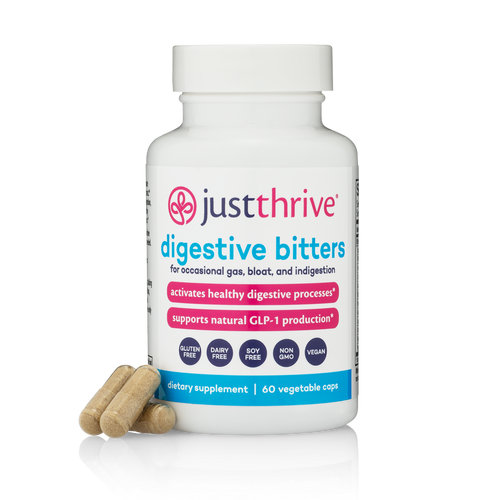
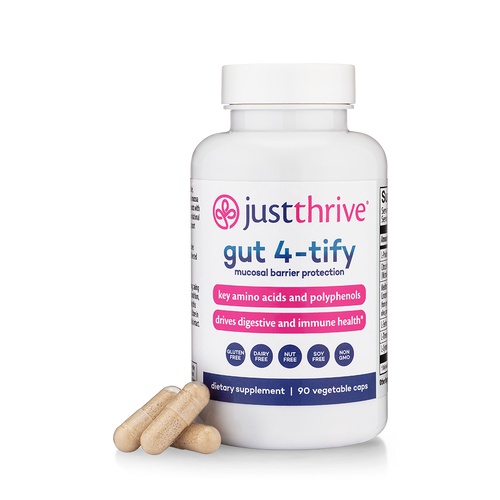

The Easiest Way To Get Your Daily Dose Of Prebiotics
Because it can be challenging to get the right amount of prebiotics your body needs daily through diet alone, many people choose to supplement with a high-quality prebiotic like Just Thrive PREbiotic.
Just Thrive PREbiotic contains an exclusive blend of GOS, XOS, and organic kiwifruit powder (Actazin®) specifically designed to feed the diverse population of beneficial bacteria you want in your gut microbiome. It acts like fertilizer for only probiotic bacteria, nourishing the most desirable strains.
Plus, Just Thrive PREbiotic helps maintain your wellness by supporting healthy:
- digestion
- immunity
- moods
- healthy weight
- metabolism
- and so much more!
Be proactive about staying healthy by giving your body what it needs to thrive.
>> Try Just Thrive PREbiotic today and save 22% when you choose a subscription.
And remember:
EVERY Just Thrive purchase is covered by our Bottom of the Bottle, 100% money back guarantee.
That means you can try Just Thrive PREbiotic to see how well it works for you… and we’re betting that you’ll notice a positive difference.
But if for any reason you don’t feel a difference, you can ask for a full product refund at any time. Even if it’s 3 months or 3 years later… Even if the bottle is empty!

Sources
- Pham VT, Calatayud M, Rotsaert C, et al. Antioxidant Vitamins and Prebiotic FOS and XOS Differentially Shift Microbiota Composition and Function and Improve Intestinal Epithelial Barrier In Vitro. Nutrients. 2021;13(4):1125. Published 2021 Mar 29. doi:10.3390/nu13041125
- Neri-Numa IA, Pastore GM. Novel insights into prebiotic properties on human health: A review. Food Res Int. 2020;131:108973. doi:10.1016/j.foodres.2019.108973
- Bedu-Ferrari C, Biscarrat P, Langella P, Cherbuy C. Prebiotics and the Human Gut Microbiota: From Breakdown Mechanisms to the Impact on Metabolic Health. Nutrients. 2022;14(10):2096. Published 2022 May 17. doi:10.3390/nu14102096
- Davani-Davari D, Negahdaripour M, Karimzadeh I, et al. Prebiotics: Definition, Types, Sources, Mechanisms, and Clinical Applications. Foods. 2019;8(3):92. Published 2019 Mar 9. doi:10.3390/foods8030092
- Holmes ZC, Villa MM, Durand HK, et al. Microbiota responses to different prebiotics are conserved within individuals and associated with habitual fiber intake. Microbiome. 2022;10(1):114. Published 2022 Jul 29. doi:10.1186/s40168-022-01307-x
- Pujari R, Banerjee G. Impact of prebiotics on immune response: from the bench to the clinic. Immunol Cell Biol. 2021;99(3):255-273. doi:10.1111/imcb.12409
- Hills RD Jr, Pontefract BA, Mishcon HR, Black CA, Sutton SC, Theberge CR. Gut Microbiome: Profound Implications for Diet and Disease. Nutrients. 2019;11(7):1613. Published 2019 Jul 16. doi:10.3390/nu11071613
- Camilleri M. Human Intestinal Barrier: Effects of Stressors, Diet, Prebiotics, and Probiotics. Clin Transl Gastroenterol. 2021;12(1):e00308. Published 2021 Jan 25. doi:10.14309/ctg.0000000000000308
- Mahdavi M, Laforest-Lapointe I, Massé E. Preventing Colorectal Cancer through Prebiotics. Microorganisms. 2021;9(6):1325. Published 2021 Jun 18. doi:10.3390/microorganisms9061325
- McLoughlin RF, Berthon BS, Jensen ME, Baines KJ, Wood LG. Short-chain fatty acids, prebiotics, synbiotics, and systemic inflammation: a systematic review and meta-analysis. Am J Clin Nutr. 2017;106(3):930-945. doi:10.3945/ajcn.117.156265
- Mahboobi S, Rahimi F, Jafarnejad S. Effects of Prebiotic and Synbiotic Supplementation on Glycaemia and Lipid Profile in Type 2 Diabetes: A Meta-Analysis of Randomized Controlled Trials. Adv Pharm Bull. 2018;8(4):565-574. doi:10.15171/apb.2018.065
- Nath A, Molnár MA, Csighy A, et al. Biological Activities of Lactose-Based Prebiotics and Symbiosis with Probiotics on Controlling Osteoporosis, Blood-Lipid and Glucose Levels. Medicina (Kaunas). 2018;54(6):98. Published 2018 Dec 3. doi:10.3390/medicina54060098
- Whisner CM, Weaver CM. Prebiotics and Bone. Adv Exp Med Biol. 2017;1033:201-224. doi:10.1007/978-3-319-66653-2_10
- Wu H, Chiou J. Potential Benefits of Probiotics and Prebiotics for Coronary Heart Disease and Stroke. Nutrients. 2021;13(8):2878. Published 2021 Aug 21. doi:10.3390/nu13082878
- You S, Ma Y, Yan B, et al. The promotion mechanism of prebiotics for probiotics: A review. Front Nutr. 2022;9:1000517. Published 2022 Oct 5. doi:10.3389/fnut.2022.1000517
- Schmidt K, Cowen PJ, Harmer CJ, Tzortzis G, Errington S, Burnet PW. Prebiotic intake reduces the waking cortisol response and alters emotional bias in healthy volunteers. Psychopharmacology (Berl). 2015;232(10):1793-1801. doi:10.1007/s00213-014-3810-0
- Ansari F, Pourjafar H, Tabrizi A, Homayouni A. The Effects of Probiotics and Prebiotics on Mental Disorders: A Review on Depression, Anxiety, Alzheimer, and Autism Spectrum Disorders. Curr Pharm Biotechnol. 2020;21(7):555-565. doi:10.2174/1389201021666200107113812
- Serra MC, Nocera JR, Kelleher JL, Addison O. Prebiotic Intake in Older Adults: Effects on Brain Function and Behavior. Curr Nutr Rep. 2019;8(2):66-73. doi:10.1007/s13668-019-0265-2
- Thompson RS, Roller R, Mika A, et al. Dietary Prebiotics and Bioactive Milk Fractions Improve NREM Sleep, Enhance REM Sleep Rebound and Attenuate the Stress-Induced Decrease in Diurnal Temperature and Gut Microbial Alpha Diversity. Front Behav Neurosci. 2017;10:240. Published 2017 Jan 10. doi:10.3389/fnbeh.2016.00240
- Whisner CM, Castillo LF. Prebiotics, Bone and Mineral Metabolism. Calcif Tissue Int. 2018;102(4):443-479. doi:10.1007/s00223-017-0339-3
- Bertuccioli A, Cardinali M, Biagi M, Moricoli S, Morganti I, Zonzini GB, Rigillo G. Nutraceuticals and Herbal Food Supplements for Weight Loss: Is There a Prebiotic Role in the Mechanism of Action? Microorganisms. 2021; 9(12):2427. https://doi.org/10.3390/microorganisms9122427
- Ben Othman R, Ben Amor N, Mahjoub F, Berriche O, El Ghali C, Gamoudi A, Jamoussi H. A clinical trial about effects of prebiotic and probiotic supplementation on weight loss, psychological profile and metabolic parameters in obese subjects. Endocrinol Diabetes Metab. 2023 Mar;6(2):e402.
- Bonnema AL, Kolberg LW, Thomas W, Slavin JL. Gastrointestinal tolerance of chicory inulin products. J Am Diet Assoc. 2010;110(6):865-868. doi:10.1016/j.jada.2010.03.025


