



When you first find out you have an autoimmune disease, you may feel overwhelmed, scared, and a little relieved. Overwhelmed and scared because autoimmune conditions last forever, and the drugs doctors use to treat them come with a frightening list of side effects. Relieved because your symptoms finally make sense, and you can put a name to the cause.
Once you’re diagnosed, your doctor may say there’s not much they can do other than offer you powerful drugs. But that’s not your only option.
Luckily, you can help your body manage the disease and keep symptoms to a minimum. To do that, you’ll have to pay attention to a part of your body you may never have heard of before: your mucosal gut barrier.[1]
Quick Answer: Your gut is home to roughly 80% of your immune system, and it is lined by a protective mucosal barrier that decides what passes into your bloodstream. When that barrier is damaged, a condition often called leaky gut, larger particles and LPS toxins can slip through and trigger the kind of immune overreaction linked with autoimmune flare-ups. Researchers have connected gut barrier integrity to the onset and severity of conditions like psoriasis, lupus, and Hashimoto’s. That is why supporting the mucosal gut barrier, with the mucus-building protein MUC2, antioxidants, and citrus polyphenols, is a foundational way to help calm the immune system and keep symptoms to a minimum.
How Common Are Autoimmune Diseases?
Autoimmune conditions are common: there are more than 80 of them, and together they affect over 23 million Americans. What they share is an immune system that mistakenly attacks the body’s own cells.
There are more than 80 autoimmune diseases, and they affect more than 23 million Americans.[2] The most common autoimmune conditions include:
- Hashimoto’s thyroiditis (autoimmune thyroid)
- Inflammatory bowel diseases (IBD), including Crohn’s disease and ulcerative colitis
- Celiac disease
- Graves’ disease
- Rheumatoid arthritis
- Type 1 diabetes
- Multiple sclerosis (MS)
- Lupus (SLE, systemic lupus erythematosus)
- Sjögren’s disease
- Psoriasis
These diseases affect different parts of the body and cause different symptoms. But they all have something crucial in common: Your own immune system is overreacting and attacking you by mistake. So to address the problem… or at least calm it down… you need to help your immune system stay in control.

 Want to listen instead of read?CLICK HERE
What Causes Autoimmune Disease?
In autoimmune disease the immune system misidentifies the body’s own cells as invaders and attacks them. No one is sure exactly why this happens, but the result is chronic inflammation and a wide range of symptoms.
Your immune system protects you from all sorts of invaders from infectious bacteria to viruses to toxins. It has an army of cells and organs designed to defend you from threats so you don’t get sick all the time.
In some people, the immune system gets confused and starts attacking itself. And while no one is completely sure why this happens, they do know the how: Your immune system misidentifies your own cells as invading cells, and then acts like it would if you were facing a real threat. ..
And since the “mistaken identity” cells are there all the time, your immune system goes into overdrive to get rid of them.
Its first line of attack is inflammation, a hallmark symptom of autoimmune conditions.[3] And depending on which cells your immune system is attacking, you’ll develop other symptoms such as:
- Pain
- Food sensitivities
- Extreme fatigue
- Digestive problems – gas, bloating, diarrhea, constipation
- Rashes
- Dry eyes
- Hair loss
- Unexplained weight loss or gain
- Headaches
- Anxiety and depression
- Unexplained fevers
- Memory loss, brain fog, and confusion
When your symptoms suddenly get worse, you’re in a flare-up, a more extreme immune overreaction. Sometimes those come without warning, sometimes you’ll be able to sense that they’re coming.
Either way, flare-ups can knock you out for days at a time. So reducing those flare-ups is the key to quieting your immune system and managing your autoimmune disease.
And one of the most important – and overlooked – steps in calming your immune system is fortifying your mucosal gut barrier.
What Is the Mucosal Gut Barrier and Why Does It Matter?
The mucosal gut barrier is a thick protective layer of mucus lining the gut that selectively lets nutrients through while keeping toxins and harmful microbes locked inside. Because about 80% of the immune system lives in the gut, a strong barrier is central to keeping the immune system calm.
Around 80% of your immune system lives in your gut, so it’s not surprising that the most important autoimmune support starts there.[4] Your gut is lined by a thick layer of protective mucus – the mucosal gut barrier – that act as the first line of defense against all sorts of threats.[5]
When everything is working properly, your gut mucosal barrier acts sort of like a flour sifter. It lets the smallest molecules through – things like vitamins, minerals, and other healing compounds – while holding on to the bigger, undesirable particles. This “sorting system” is called selective permeability: some stuff gets through, other stuff doesn’t.
Your mucosal gut barrier uses that system to lock toxins, infectious microbes, and harmful bacteria inside your gut so your body can get rid of them easily. In this way, it prevents those troublemakers from sneaking into your bloodstream and circulating where they can cause problems.
Unfortunately, especially nasty LPS toxins (lipopolysaccharides) know just how to weaken your mucosal gut barrier, and they attack it constantly.
When your mucosal barrier gets damaged by the non-stop attacks, bigger particles – including LPS toxins – can slip through.
When that happens, everything that’s supposed to be securely stowed in your gut can break through the mucosal barrier into your circulation. That’s called leaky gut[6]… and it can cause intense autoimmune flare ups.[7]

How Does Leaky Gut Trigger Autoimmune Flare-Ups?
When a damaged barrier lets bacteria and LPS toxins leak into the bloodstream, the immune system responds by releasing inflammatory compounds called cytokines. That fuels a cycle of inflammation that can intensify autoimmune symptoms and flare-ups.
When bacteria and LPS toxins “leak” into your bloodstream, your immune system correctly tags them as “bad,” and starts to mount defenses. Part of the immune defense strategy is releasing powerful inflammatory compounds called cytokines such as:
- tumor necrosis factor-alpha (TNF-α)
- interleukin-6 (IL-6)
- interleukin-8 (IL-8)
- interleukin-1-beta (IL-1β)
All of those cytokines create a cycle of inflammation, which can be devastating when you’re struggling with an autoimmune condition. Your immune system gets kicked into an even higher gear, so you end up suffering from more AND more intense symptoms.
In fact, leaky gut has been directly linked to the onset and symptom severity of many autoimmune conditions including psoriasis[8], lupus[9], and Hashimoto’s thyroiditis.[10]
So how do you break free of this flare up cascade? You have to target the root of the problem – The leaks in your mucosa by giving this protective barrier the nourishment it needs.
How Do You Strengthen Your Mucosal Gut Barrier?
A resilient mucosal gut barrier needs three things: the building blocks to make thick MUC2 mucus, antioxidants to neutralize free radicals, and citrus polyphenols that nourish and protect the barrier while feeding beneficial gut bacteria.
A healthy mucosal gut barrier effectively prevents harmful compounds from tunneling out. But thanks to our modern, toxic world, the integrity of your mucosal is under constant attack. To address autoimmune struggles and stay strong and healthy enough to knock down flare ups, this crucial barrier require 3 things.
First, your mucosal gut barrier needs plenty of thick, gel-like mucus on its outer perimeter to block LPS toxins. To create that, your body requires a highly specialized building block protein called MUC2.[11] [12]
To create enough MUC2 to ensure your mucosa stays in great shape, your body call on the help of four key amino acids:[13]
- L-proline
- L-serine
- L-cysteine
- L-threonine
Second, you need protection against free radicals that can damage the mucosal barrier.[14] Free radicals damage the growth and survival of every cell in your body. And they’ve been shown to be especially harmful to your gut barrier.[15] Luckily nature supplies us with antioxidants that easily conquer free radicals, as long as we have enough antioxidant power in place.
Third, your mucosal gut barrier needs special citrus polyphenols that protect, preserve, and nourish it. Citrus polyphenols are unique beneficial plant chemicals that support healthy gut barrier function[16] by promoting a healthy inflammatory responses.[17] They also work as prebiotic plant fiber to nourish probiotic gut bacteria… key allies for taming LPS toxins and boosting barrier protection.
Frequently Asked Questions About Leaky Gut and Autoimmune Flare-Ups
Is leaky gut connected to autoimmune flare-ups?
Research has linked gut barrier integrity to the onset and symptom severity of several autoimmune conditions, including psoriasis, lupus, and Hashimoto’s thyroiditis. When the barrier is damaged, toxins can enter the bloodstream and drive the inflammation associated with flare-ups.
What is the mucosal gut barrier?
It is a thick, gel-like layer of protective mucus lining the gut. It works through selective permeability, letting small molecules like vitamins and minerals pass while holding back larger particles, toxins, and harmful microbes.
What are LPS toxins?
LPS (lipopolysaccharides) are toxins produced by certain gut bacteria. They can weaken the mucosal gut barrier, and when they slip into the bloodstream the immune system tags them as threats and mounts an inflammatory response.
How can you support a healthy mucosal gut barrier?
Supporting the barrier means supplying the amino acids that build MUC2 mucus (L-proline, L-serine, L-cysteine, and L-threonine), antioxidants that protect against free-radical damage, and citrus polyphenols that nourish the barrier and feed beneficial bacteria.
Why is the gut so important for the immune system?
Around 80% of the immune system lives in the gut, so the health of the gut lining has an outsized influence on how the immune system behaves. Keeping that barrier strong is a foundational way to help the immune system stay balanced.
Just Thrive Gut Health Products

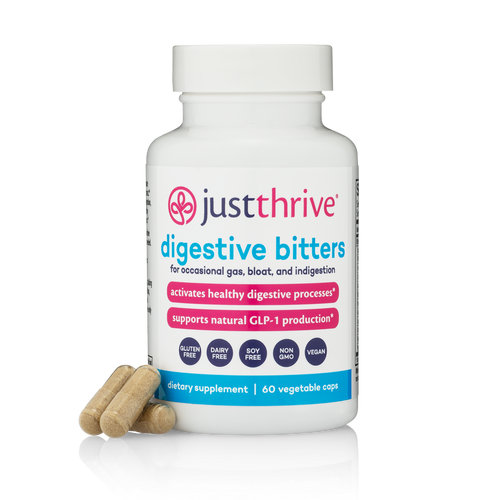
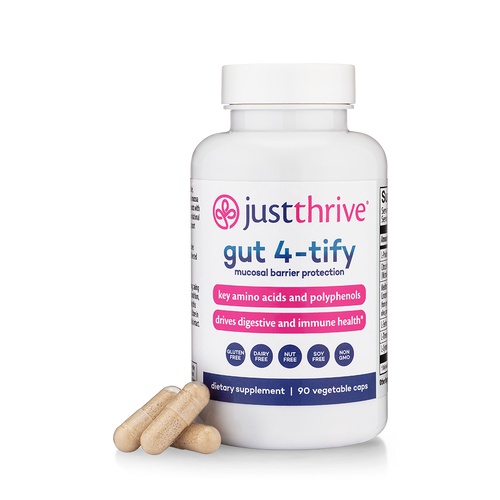

The Simple, Clinically Proven Way to Support Your Mucosal Gut Barrier
When you’re living with an autoimmune condition, keeping your crucial systems calm and balanced is the name of the game. Your mucosal gut barrier works hard to keep dangerous toxins and particles locked safely inside your gut… so they can’t circulate and wreak havoc.
A healthy mucosal gut barrier is a fundamental part of a properly functioning immune system so that you can tackle autoimmune issues and feel your best – And the easiest way to support the strength of your mucosal barrier is with Gut 4-tify.
Gut 4-tify is the first product of its kind developed to build a healthy mucosal barrier. Microbiologist formulated, and backed by rigorous testing, Gut 4-tify provides the support your mucosal gut barrier needs every day:
- 4 key amino acids that drive crucial production of MUC2:
- L-proline
- L-serine
- L-cysteine
- L-threonine
- A powerful antioxidant blend that can protect against free radical damage
- And a natural citrus polyphenol extract that supports optimal gut barrier function
To keep your mucosal gut barrier strong and prepared so you can feel your best…
>> Try Gut 4-tify TODAY and save 21% with a subscription
Here’s more good news –
EVERY Just Thrive purchase is covered by our Bottom of the Bottle, 100% money back guarantee.
So you can try Gut 4-tify to see if it works for you… and we’re betting it will.
But if for any reason you don’t love the way you feel, simply ask for a full product refund at any time. Even if it’s been 3 months… or 3 years. Even if the bottle is empty!
>> Test drive Gut 4-tify 100% RISK FREE TODAY

RESOURCES
1 Di Tommaso N, Gasbarrini A, Ponziani FR. Intestinal Barrier in Human Health and Disease. Int J Environ Res Public Health. 2021 Dec 6;18(23):12836.
2 Autoimmune diseases: What you need to know. NIH Medline Plus Magazine. April 13, 2023.
3 Duan L, Rao X, Sigdel KR. Regulation of Inflammation in Autoimmune Disease. J Immunol Res. 2019 Feb 28;2019:7403796. doi: 10.1155/2019/7403796. PMID: 30944837; PMCID: PMC6421792.
4 Wiertsema SP, van Bergenhenegouwen J, Garssen J, Knippels LMJ. The Interplay between the Gut Microbiome and the Immune System in the Context of Infectious Diseases throughout Life and the Role of Nutrition in Optimizing Treatment Strategies. Nutrients. 2021 Mar 9;13(3):886.
5 Vancamelbeke M, Vermeire S. The intestinal barrier: a fundamental role in health and disease. Expert Rev Gastroenterol Hepatol. 2017 Sep;11(9):821-834.
6 Iacob S, Iacob DG. Infectious Threats, the Intestinal Barrier, and Its Trojan Horse: Dysbiosis. Front Microbiol. 2019 Aug 7;10:1676. doi: 10.3389/fmicb.2019.01676. PMID: 31447793; PMCID: PMC6692454.
7 Morris G, Berk M, Carvalho AF, Caso JR, Sanz Y, Maes M. The Role of Microbiota and Intestinal Permeability in the Pathophysiology of Autoimmune and Neuroimmune Processes with an Emphasis on Inflammatory Bowel Disease Type 1 Diabetes and Chronic Fatigue Syndrome. Curr Pharm Des. 2016;22(40):6058-6075. doi: 10.2174/1381612822666160914182822. PMID: 27634186.
8 Polak K, Bergler-Czop B, Szczepanek M, Wojciechowska K, Frątczak A, Kiss N. Psoriasis and Gut Microbiome-Current State of Art. Int J Mol Sci. 2021 Apr 26;22(9):4529.
9 Ma L, Morel L. Loss of Gut Barrier Integrity In Lupus. Front Immunol. 2022 Jun 20;13:919792.
10 Cayres LCF, et al. Detection of Alterations in the Gut Microbiota and Intestinal Permeability in Patients With Hashimoto Thyroiditis. Front Immunol. 2021 Mar 5;12:579140.
11 Tadesse S, Corner G, Dhima E, Houston M, Guha C, Augenlicht L, Velcich A. MUC2 mucin deficiency alters inflammatory and metabolic pathways in the mouse intestinal mucosa. Oncotarget. 2017 Apr 6;8(42):71456-71470.
12 Cornick S, Tawiah A, Chadee K. Roles and regulation of the mucus barrier in the gut. Tissue Barriers. 2015 Apr 3;3(1-2):e982426. doi: 10.4161/21688370.2014.982426. PMID: 25838985; PMCID: PMC4372027.
13 Faure M, Mettraux C, Moennoz D, Godin JP, Vuichoud J, Rochat F, Breuillé D, Obled C, Corthésy-Theulaz I. Specific amino acids increase mucin synthesis and microbiota in dextran sulfate sodium-treated rats. J Nutr. 2006 Jun;136(6):1558-64. doi: 10.1093/jn/136.6.1558. PMID: 16702321.
14 Dryden GW, Song M, McClain C. Polyphenols and gastrointestinal diseases. Curr Opin Gastroenterol. 2006 Mar;22(2):165-70. doi: 10.1097/01.mog.0000208463.69266.8c. PMID: 16462174; PMCID: PMC4216723.
15 Yajie Wang, Y. Wang, Yue Chen, Y. Chen, Xiaoyu Zhang, X. Zhang, Yangpeng Lu, Y. Lu, & Haixia Chen, H. Chen. (0000). New insights in intestinal oxidative stress damage and the health intervention effects of nutrients: A review. Journal of functional foods, 75, 104248. doi: 10.1016/j.jff.2020.104248
16 Stevens Y, Rymenant EV, Grootaert C, Camp JV, Possemiers S, Masclee A, Jonkers D. The Intestinal Fate of Citrus Flavanones and Their Effects on Gastrointestinal Health. Nutrients. 2019 Jun 27;11(7):1464. doi: 10.3390/nu11071464. PMID: 31252646; PMCID: PMC6683056.
17 Nakajima VM, Moala T, Caria CREP, Moura CS, Amaya-Farfan J, Gambero A, Macedo GA, Macedo JA. Biotransformed citrus extract as a source of anti-inflammatory polyphenols: Effects in macrophages and adipocytes. Food Res Int. 2017 Jul;97:37-44. doi: 10.1016/j.foodres.2017.03.034. Epub 2017 Mar 22. PMID: 28578062.

